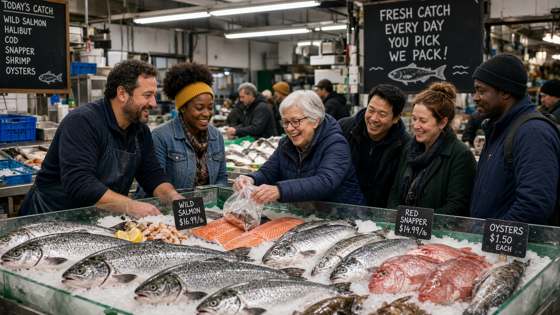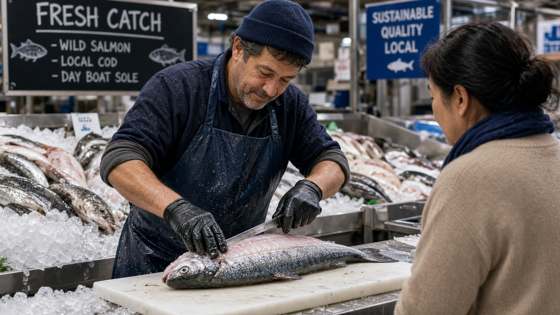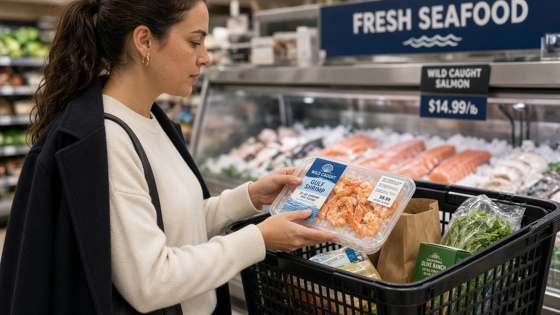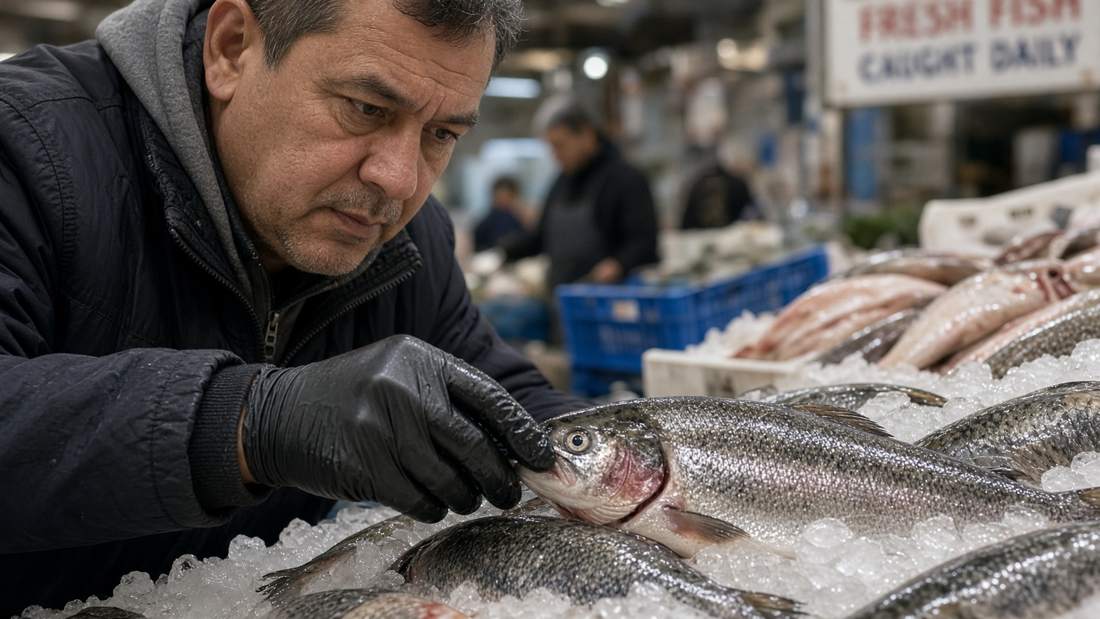
Product descriptions that sell seafood are written to make a fillet or a bag of shrimp sound irresistible, and some of them also tell you exactly what you need to know. The skill is separating the facts from the flourish. Once you can do that, you can compare listings fairly and avoid paying extra for words that mean very little.
What product descriptions that sell seafood should tell you
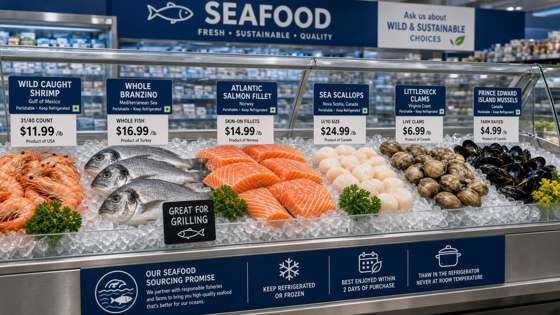
Good descriptions are specific. These details are worth looking for on any seafood listing:
- Species name. "Atlantic salmon," "Pacific cod" or "Gulf shrimp" tells you more than "premium fish."
- Wild-caught or farmed. This should be stated clearly. See farmed vs. wild market positioning for how each is presented.
- Origin. Country or region of catch or farm. In the US, country of origin labeling applies to many seafood products; see country of origin labeling (COOL) explained.
- Form and size. Fillet, steak, whole, shell-on, peeled and deveined, plus weight or count per pound.
- Fresh or frozen. And whether "fresh" means never frozen. Many fish sold as "fresh" at counters were frozen earlier, and that is normal and can be a good thing.
- Certifications. A named program such as the Marine Stewardship Council or the Aquaculture Stewardship Council can be checked.
Words that sound good but say little
Product descriptions that sell seafood with vague terms
"Premium," "gourmet," "artisan," "chef's choice," "ocean fresh" and "sustainably sourced" are not defined the same way by every seller. They are not necessarily false, but they are not evidence. If a description leans on these words without giving species, origin or a certification you can verify, treat them as decoration.
"Natural" and "no additives"
Check the ingredient list. Some shrimp and scallops are treated with phosphates that hold water, which increases weight and can dilute flavor. Products labeled "dry" scallops are usually sold without that treatment. If the label does not say, you can ask.
"Sushi-grade"
This is a marketing term rather than an official standard in most places. If you plan to eat fish raw, ask how it was handled and frozen, and check current guidance from the FDA on raw and undercooked fish.
A quick reading checklist
- Is the species named precisely?
- Is the origin given, and is it wild or farmed?
- Is the weight clear, and is it net of glaze or packaging?
- Is the product raw, cooked, smoked or marinated?
- Are claims backed by a named certification or a way to verify?
- Are storage and cooking instructions included?
Sellers who answer all six tend to be proud of their product. More on how sellers present sustainability is in sustainability as a selling point, and our guide to reading seafood labels and certifications covers common labels in depth.
Remember that product descriptions that sell seafood are working for the seller, and that is fine as long as the facts are there. Look for the species, origin, form and handling first, enjoy the nice wording second, and ask a question whenever the description leaves a gap.