Seafood shop reviews are useful only when they describe what actually happened, and many do not. A one-line "great fish!" tells you little, while a detailed note about a clean-smelling counter or a late delivery gives you something to act on.
What useful seafood shop reviews contain
- Specifics: the species bought, how it looked and smelled, how it cooked.
- Service details: whether staff answered questions, offered to fillet or suggested alternatives.
- Price context, such as "pricier than the supermarket but fresher."
- For online orders: packaging, how cold the box was on arrival and delivery timing.
How to find patterns in seafood shop reviews
Seafood shop reviews: read the middle, not just the extremes
Three-star and four-star reviews tend to be balanced. Look for the same comment repeated by different people over months: "fish smelled off" several times is a signal; one complaint is not.
Check dates and recency
A shop can change owners or suppliers. Reviews from the last several months matter most. If the newest reviews are much worse than older ones, take note.
Signs of unreliable reviews
Be cautious when you see many similar, vague, very recent five-star posts, or a burst of angry reviews that mention unrelated issues. Reviewers who have posted only once may be real customers, but a profile with a long history is easier to trust. Also remember that people review more when they are upset, so a few bad reviews do not tell the whole story.
What owner replies tell you
A calm, specific reply, such as offering a refund or explaining a delay, shows the seller cares. Defensive or copy-pasted replies suggest otherwise. Our article on handling complaints in seafood retail explains what a good response looks like from the shopper's side.
Check in person or on the order page
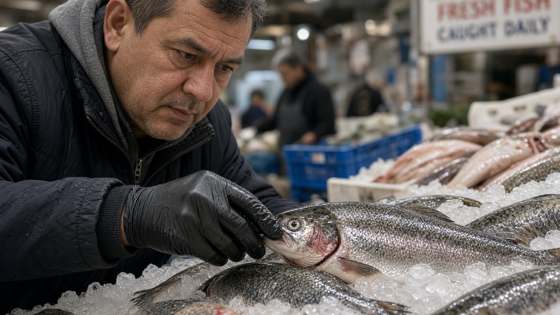
Reviews are a guide, not a guarantee. When you visit, use your own senses: clean smell, firm flesh and fish held on ice. Recognizing freshness in fish has a checklist. For online sellers, confirm contact details, return policy and delivery terms, and see buying seafood online. The Better Business Bureau can also show complaint records for businesses.
Leave a review that helps
If you want to help other shoppers, include the species, date, price and what you noticed. If you had a problem, contact the seller first. If fish made you ill, report it to your local health department; the FDA's seafood safety guidance explains what to do with suspect fish.
A quick method for scoring a shop in ten minutes
- Scan the most recent 20 reviews and note how many mention freshness, service and price.
- Look for the same words repeated, such as "always fresh" or "smelled fishy," from different people.
- Read two or three of the lowest-rated reviews in full and ask whether the complaint would matter to you.
- Check whether the owner has replied and how.
- Compare the shop with one or two others nearby.
This simple routine is more reliable than glancing at the star average, which can hide a lot.
Reviews of delivery and online sellers
For shipped seafood, look for comments about how cold the box was on arrival, whether orders came on the promised day and how the seller handled problems. A seller can have lovely fish and poor shipping, and reviews are often where that shows up first. Be wary if every review praises the product but none mention delivery.
Why reviews can mislead
- Bad day, good shop: one off day can generate a harsh review that does not reflect usual quality.
- Wrong comparison: a reviewer expecting supermarket prices may complain about cost at a specialist shop.
- Taste is personal: comments about flavor depend on what the reviewer likes and how they cooked the fish.
- Incentives: some businesses ask happy customers to review and say nothing to unhappy ones, which skews the average.
Questions about seafood reviews
How many reviews are enough?
There is no magic number, but a few dozen spread over time tell you more than five very recent ones. A newer shop with fewer reviews may still be good, so visit and judge for yourself.
Should I trust photos?
Photos of the actual fish, the counter or the box on arrival are more useful than glossy images. Look for ice, clear eyes on whole fish and clean displays.
What if reviews disagree with my visit?
Trust what you see and smell. Reviews are secondhand, and your own check at the counter is the final word.
Reading seafood shop reviews well means looking for detail, repeated patterns and recent comments, then confirming what you read with your own eyes at the counter.