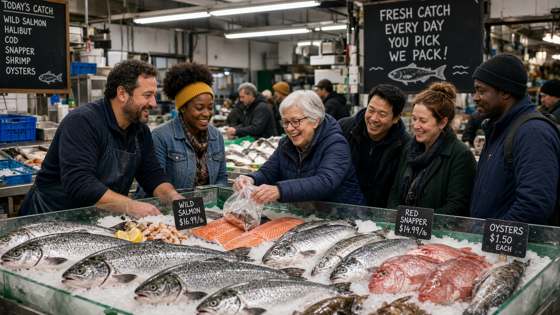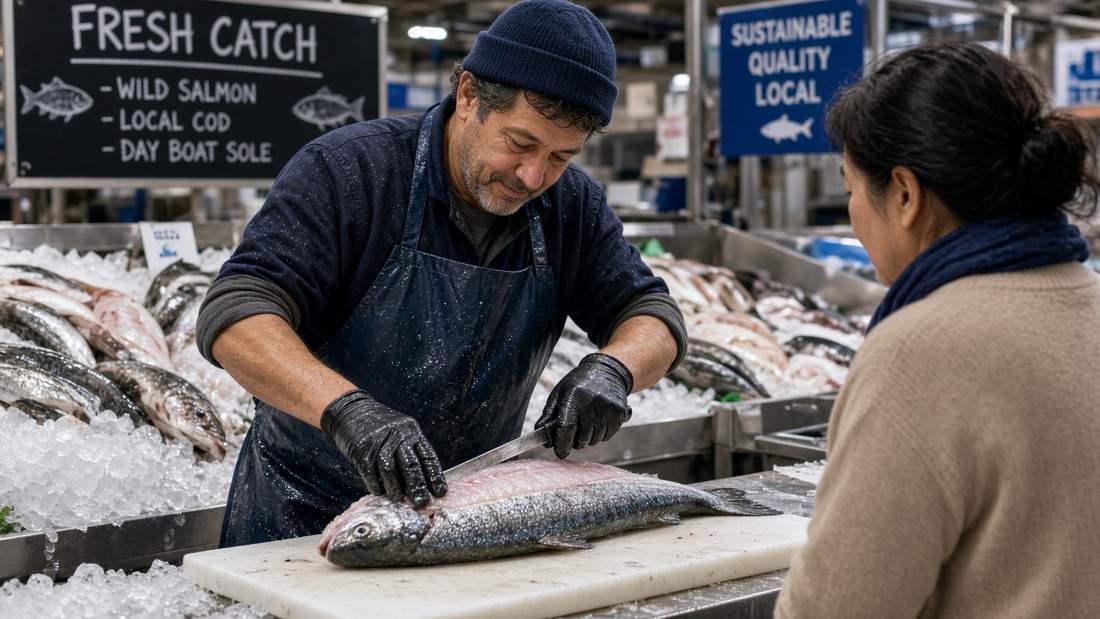
Finding a good local seafood shop starts with a search, and searching "seafood market near me" returns shops, grocery counters, restaurants and wholesalers in one mixed list, so a little reading pays off before you leave the house. Sellers work to appear in those results, and what they put on their listing tells you a lot about whether the shop is right for your dinner.
What a good listing tells you
A complete map or search listing usually shows the address, opening hours, phone number, photos and a short description. Complete does not mean good, but a shop that keeps its hours current and posts real photos of its counter is at least paying attention. Look for these details:
- Hours that match the day you plan to shop. Many fish counters close early or on Mondays.
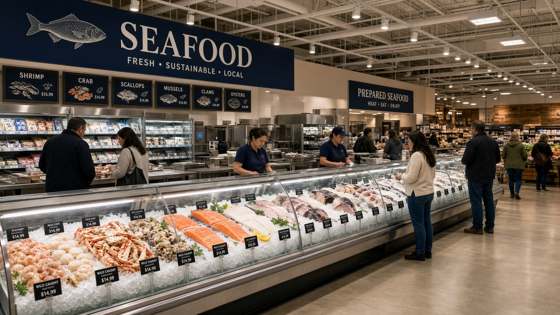
- Photos of the actual display case, with fish on ice, not only stock images.
- Whether the shop is retail, wholesale only or a restaurant with a market.
- Services listed, such as filleting, shucking, steaming or special orders.
Call the local seafood shop first
A two-minute call saves a wasted trip. Ask whether they have what you want, when the last delivery came in and whether they can clean or portion it for you. The staff's willingness to answer plainly is a good sign. Pay attention to how clearly they describe the fish, since vague answers about origin or freshness usually mean the counter does not track them well. For safe handling afterward, the FDA guide to selecting and serving fresh and frozen seafood is worth a read.
Reading local seafood shop reviews
Reviews are most useful in the middle. Skim past the five-star one-liners and the angry one-star posts and read reviews that describe specifics: the fish smelled clean, the staff offered a sample, the price was higher than a supermarket but the fish was better. Look for patterns across several reviews. One complaint about a closed shop is noise; five comments about fish that seemed old is a warning.
Sellers can answer reviews publicly, and a calm, specific reply to a complaint is a better sign than silence. Our guide on reviews and reputation explains how to weigh them.
Signs the shop knows its fish
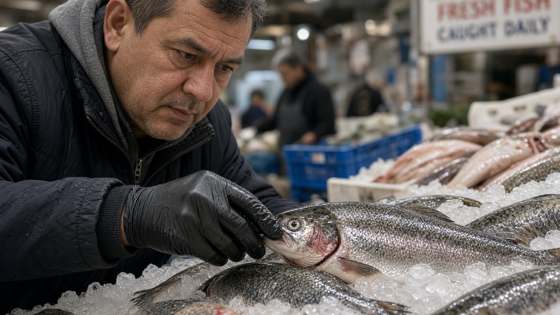
When you arrive, check what the listing promised. Whole fish should have clear, bright eyes and firm flesh, and fillets should look moist, not dried or gaping. The counter should smell like the sea, not strongly fishy. For a full checklist, see recognizing freshness in fish. Ask where the fish came from and when it arrived; the answer should be specific. The NOAA FishWatch buying guidance is a good reference for what to ask.
Comparing options without driving everywhere
Pick two or three candidates and compare by phone or listing: price per pound for a staple item you buy often, such as salmon fillets, plus services like free scaling. Pricing varies for good reasons, including species, season and cut, so compare like with like. If you are weighing a small shop against a chain, the questions to ask your fishmonger can settle it.
A good local seafood shop online listing is a starting point. Confirm hours, call ahead, and judge the fish yourself once you are standing at the counter.