Buying seafood online can give you better choice than your local supermarket, but only if the seller freezes, packs and ships it properly. The biggest risks are fish that arrives warm, fish that is not what the listing said, and a final price much higher than the headline number once shipping is added.
Buying seafood online: check how it is frozen and shipped
Frozen is usually the safer bet online
Most seafood sold online ships frozen, and that is a good thing. Fish frozen shortly after catch can be as good as or better than "fresh" fish that spent days in transit. See our comparison of fresh vs. frozen nutrition and taste. Look for terms such as flash frozen, individually quick frozen (IQF) or vacuum packed; the listing should say how it is packed.
If it says "fresh", ask more questions
Fresh seafood shipped overnight is possible, but it has little margin for delay. Check the delivery days, whether weekend deliveries happen, and what the company does if a package is late. Avoid ordering fresh fish on a Thursday or Friday unless the seller guarantees delivery before the weekend.
Read the listing like a label
- Exact species: "White fish" or "snapper" can mean many different fish. Look for the full common name and, ideally, the Latin name.
- Wild or farm-raised, and origin: A good seller states both. Our guide to reading seafood labels and certifications explains the terms.
- Weight: Check whether the weight is before or after glazing (ice coating) and whether it is per portion or per pack.
- Additives: Shrimp and scallops are sometimes treated with phosphates or sulfites. The listing should say, and allergy information should be clear.
- Certifications: Logos from groups such as the Marine Stewardship Council should be traceable to a certified product, not just decoration.
Compare the real price
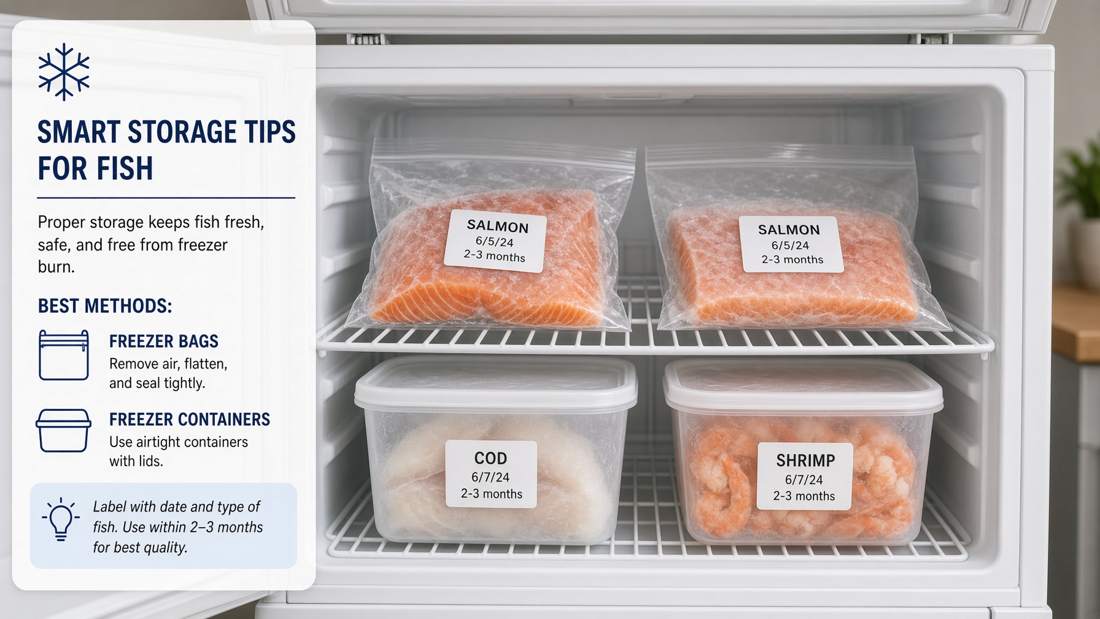
Work out price per pound or kilogram of edible product after shipping, not the price per package. Cold shipping can cost as much as the fish. Subscription boxes can be good value if you will really use every item, but check how to pause or cancel. Also check minimum order sizes: free shipping thresholds that push you to buy more than you can store are not a deal. If your freezer is small, the tips in frozen storage rotation (FIFO) systems help you keep it organized.
Check the seller
- Is there a physical address, phone number and customer service contact?
- Does the seller clearly state a replacement or refund policy for warm or damaged deliveries?
- Are reviews recent and specific about packaging and arrival temperature, not just taste?
- Are importer or processor names given, and does the seller answer questions about origin?
When the box arrives
- Be home or arrange a safe delivery spot, and open it straight away.
- Frozen items should be solid or covered in ice crystals. Fresh items should feel very cold, close to refrigerator temperature.
- Photograph the box and contents if anything is thawed, leaking or smells off, and contact the seller the same day.
- Move everything to the freezer or refrigerator immediately.
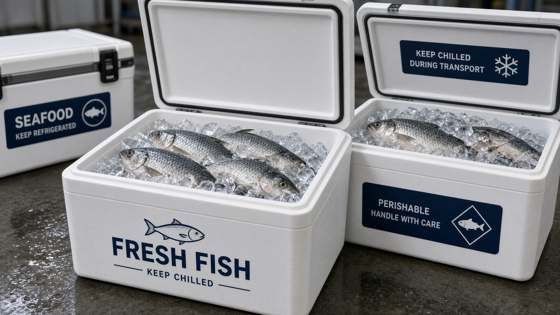
If seafood arrives fully thawed and warm, do not eat it to avoid waste. Follow current guidance on handling thawed seafood, such as the FDA advice on fresh and frozen seafood. Learn more about packaging in packaging for shipping fresh seafood.
Buying seafood online works best when you treat the first order as a trial: start small, check arrival condition and compare quality to your local fish counter before you commit to a bigger box.