A retail seafood case is set up the way it is for a reason, and once you understand the layout you can pick better fish in less time. Behind the glass, a well-run counter is arranged around temperature, separation and turnover, so the same features that help the seller also help you spot freshness.
The layout of a well-run counter
Ice first, fish second
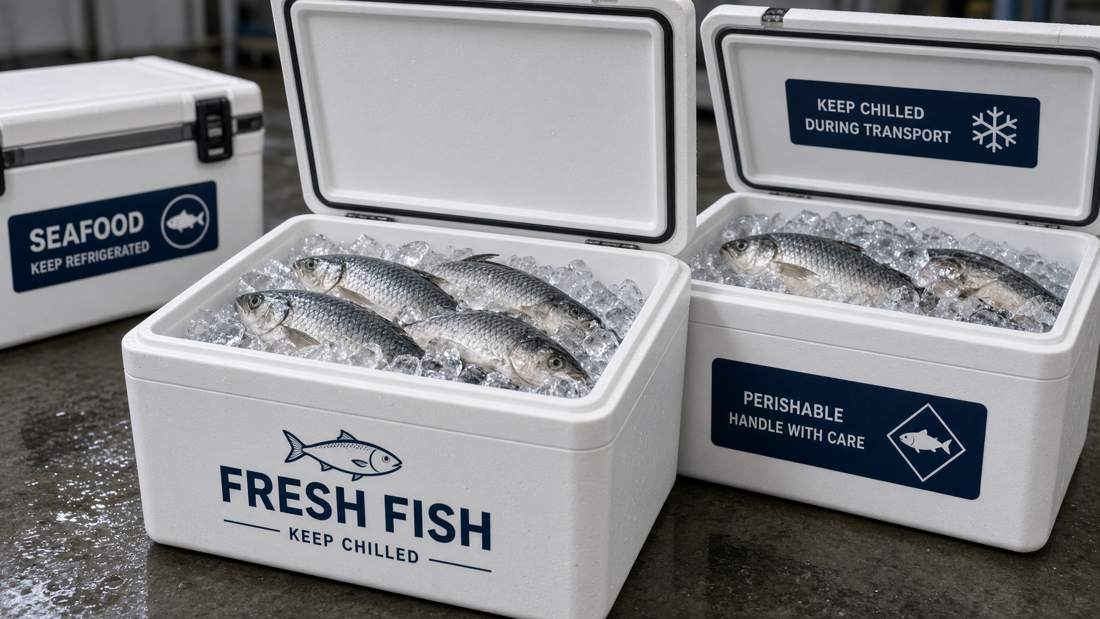
The base of a good case is a deep bed of clean ice, sloped so meltwater drains away. Fillets are often set on trays or paper over ice; whole fish sit directly in it. The product should never rest in water. If you see pooled liquid or fish piled high above the ice line, the display is not doing its job. Our companion article on display case temperature standards explains the numbers.
Species grouped sensibly
Sellers usually group fish by type: whole fish, fillets, shellfish, then shrimp and cooked items. Strong-smelling or oily fish should sit apart from mild ones so flavors do not carry. Raw and ready-to-eat items belong in separate sections with their own tongs, scoops and trays, which reduces cross-contact. For why that matters at home too, read cross-contamination risks in seafood handling.
Shellfish get their own treatment
Live clams, mussels and oysters are typically kept on ice or in a refrigerated unit, not submerged in tap water, and the shellfish tags that track the harvest area are kept on file. Ask to see them if you are buying raw oysters. The Interstate Shellfish Sanitation Conference explains the programs that govern shellfish harvest.
Labels and signs to read
- Name of the species, ideally the common name, so you know exactly what you are buying.
- Wild or farmed and the country of origin, which US retailers must provide for most fish and shellfish under country of origin labeling.
- Previously frozen notes. Plenty of excellent fish is thawed at the counter, and a clear label helps you decide whether to cook it today.
- Sustainability marks such as MSC or ASC, if you care about those. See msc.org for what the blue label means.
- Price per pound matched to the right cut, with no hidden charge for the ice or packaging.
Signs the case is managed well
Staff wear gloves, sleeves are clean, and the counter is wiped down between customers. Fish is rotated, with the oldest product moved to the front or marked down. The counter is not crowded; a case stuffed with product usually has some that has been there too long. Whole fish look glossy, fillets are moist, and nothing smells strong.
Signs to walk away
- Fish in pools of cloudy water or displayed in bare warm trays.
- Dull, gaping or discoloured fillets, brown edges or a milky slime.
- Cooked shrimp sitting beside raw fish with shared tools.
- Staff cannot tell you when the fish arrived or where it came from.
- A fishy smell that is sharp, sour or like ammonia.
Using the layout to your advantage
Ask what came in today, what is on special, and what you should cook first. Many counters mark down fish near its best-by point, which is a good deal if you will cook it that evening. Request a custom cut or pin-bone removal, and ask for the fillet to be wrapped separately from ice so it stays dry. For identifying quality in the fish itself, see recognizing freshness in fish.
Once you can read the setup, your trips to the fish counter get faster and more confident; a tidy, cold, well-labelled retail seafood case setup is the best sign you will go home with fish worth the price.