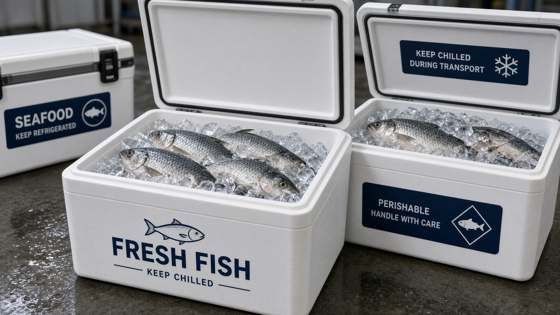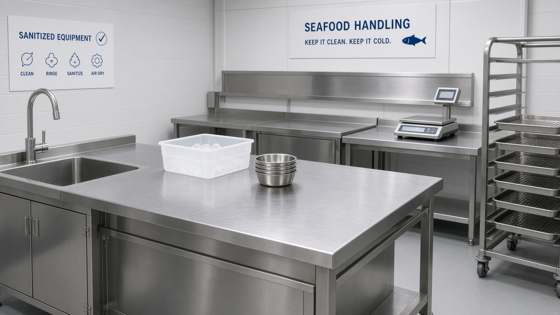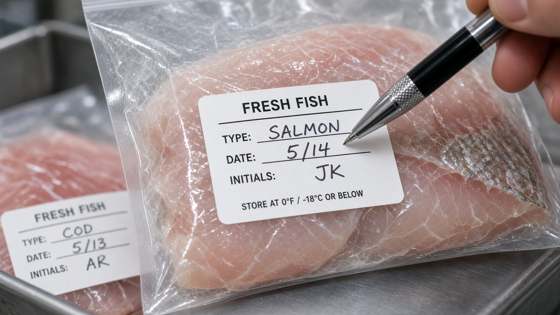
Display case temperature standards are the quiet rules behind a good fish counter, and you can check many of them yourself without a thermometer. Fresh seafood is among the most temperature-sensitive foods in the store, so a counter that runs warm shows up quickly in smell, texture and shelf life, and sometimes in safety.
The numbers behind the glass
The FDA Food Code, which most US states use as the basis of their retail rules, sets 41 degrees F or colder as the cold-holding limit for foods that need temperature control, including fresh fish. Home guidance is slightly different, at 40 degrees F for the refrigerator. For fish on ice, the practical target is close to 32 degrees F, the temperature of melting ice. Rules vary by state and locality, so check current local rules if you need the exact requirement.
Frozen seafood should be kept at 0 degrees F or lower. If it is solid, glossy and free of heavy frost, it is likely to have stayed frozen.
Why the case matters to you
Bacteria multiply faster as temperature climbs, and some fish also develop histamine when warm, which cooking does not remove. The article on histamine and scombroid poisoning prevention explains why tuna and similar fish need extra care. A properly cold case is your first protection.
How to judge a case in 30 seconds
Check the ice and the setup
- Fish is displayed on a deep bed of clean ice, with water draining away.
- Fillets and whole fish are arranged below the load line or fill line of the case, not piled over it.
- Whole fish are nestled in the ice with the belly cavity packed, not left bare.
- Raw and cooked or ready-to-eat items are kept apart, with separate tongs.
Our guide to ice quality and why it matters explains what the ice itself should look like.
Use your senses
Fresh fish smells clean, like the sea or cucumber, not sharp or ammonia-like. Eyes on whole fish should be clear, flesh should spring back when pressed, and fillets should look moist, not dull or gapped. For a full walk-through, see recognizing freshness in fish.
Look for a thermometer
Many reputable counters show a thermometer on the case. If you do not see one, ask. A seller who monitors temperature will usually be pleased to answer, and staff should know when the case was last checked.
Red flags
- Standing, cloudy water in the tray.
- Fish piled above the cold line, warm to the touch or sweating.
- A case that smells strongly even before you get close.
- Displayed fish with brownish gills, sunken eyes or dull, sticky flesh.
- Frozen fish with ice crystals, frost or torn packaging, suggesting it thawed and refroze.
Buying and carrying home
Choose the counter last in your shopping trip, ask for the fish to be packed on ice or in an insulated bag, and go straight home. If the trip is more than about 30 minutes, bring a cooler. Once home, refrigerate at 40 degrees F or colder and cook within a day or two, unless the seller advises otherwise.
The FDA outlines how seafood businesses must control temperature in its Fish and Fishery Products Hazards and Controls Guidance, a detailed document for professionals that explains the reasoning behind these rules. For shoppers, the NOAA FishWatch site is a plain-language place to learn species and preparation tips.
The easiest rule of thumb for display case temperature standards: if the fish looks cold, drains well and smells clean, you can trust the case; if not, shop elsewhere.