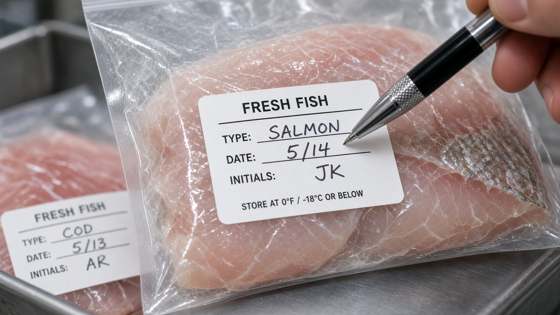
The seafood cold chain is the unbroken series of chilled or frozen steps that carries fish from harvest to your kitchen, and as a shopper you can judge it in seconds: the fish should be on plenty of clean ice or frozen solid, and it should go from store to refrigerator without warming up. Seafood is among the most perishable foods sold, so each warm hour costs flavor and texture, and in some species it also raises safety risk. Knowing where the chain is weak makes you a better buyer.
Why the Seafood Cold Chain Matters for Fish
Fish flesh is high in moisture and low in connective tissue, and the bacteria and enzymes already present on a fish become active the moment it dies. Cold slows both. Chilling does not stop spoilage; it stretches the time before quality falls. Warm-water fish and those prone to histamine formation, such as tuna, mahi-mahi and mackerel, are especially sensitive to time spent above refrigeration temperature.
The general food safety "danger zone" runs from 40 F to 140 F (4 C to 60 C). Food kept in that range for more than two hours, or more than one hour when the air is above 90 F, should not be eaten. Federal food safety guidance states these limits plainly, and they apply to a fillet in a warm car just as much as to a chicken breast.
Stage One: Harvest and Onboard Chilling
The chain starts on the vessel or at the farm harvest tank. Quick bleeding, gutting where appropriate, and fast chilling are the three habits that separate a fish that reaches the market in excellent condition from one that does not. Boats typically use crushed ice, refrigerated seawater or slurry ice, which is a fine mix of ice and water that surrounds the fish and cools it quickly without bruising. Many commercial operations aim to bring fish close to 32 F (0 C) as soon as practical.
Shellfish follow different rules. Live bivalves such as oysters and clams are harvested under state shellfish programs, tagged, and kept cool and alive rather than frozen. You can read about the national framework through the Interstate Shellfish Sanitation Conference.
What Good Onboard Handling Looks Like
- Fish are chilled promptly after capture, not left on deck in the sun.
- Ice is clean and used generously, with fish packed so that meltwater drains away.
- Catch is sorted and stored by species and size to avoid crushing.
- Time and temperature are tracked for sensitive species.
Stage Two: Landing, Processing and Freezing
At the dock, fish are offloaded, graded and either iced for the fresh market or sent to a processor. Processors cut, trim and pack the product, and many freeze it. Freezing at the processing plant or even on the vessel locks in quality, which is why a well-frozen fillet can taste better than a "fresh" one that spent days in transit. To compare the two choices in depth, see fresh versus frozen nutrition and taste.
Seafood processors in the United States selling fish and fishery products are expected to operate under a hazard analysis system. The FDA publishes guidance on this, including its Seafood HACCP program, which requires processors to identify hazards and set controls such as time and temperature limits.
Stage Three: Transport and Distribution
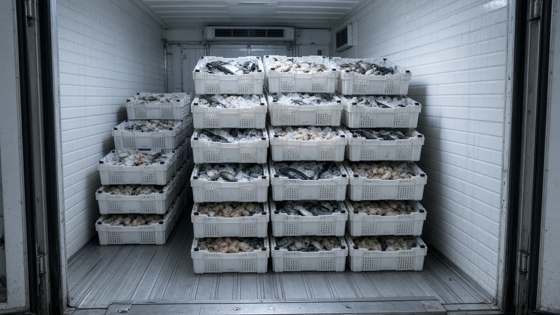
Trucks, air freight and cold stores carry product to wholesalers and retailers. The main risks here are temperature swings: doors left open on a loading dock, pallets sitting on a warm tarmac, or insulated boxes that run out of coolant. Frozen product should stay hard-frozen, and fresh product should arrive in ice or in refrigerated trucks. If you order seafood online, the box should arrive cold to the touch with coolant still frozen or partly frozen; insulated boxes and gel packs explains what to expect and when to refuse a delivery.
Warning Signs of a Broken Seafood Cold Chain
- Frozen fish with heavy frost inside the bag or ice crystals clinging to the flesh, which can point to thawing and refreezing.
- Liquid pooled in the bottom of a frozen package.
- Fresh fillets sitting in cloudy, milky liquid.
- Packaging that feels warm or soft when it should be cold or firm.
Stage Four: The Retail Case
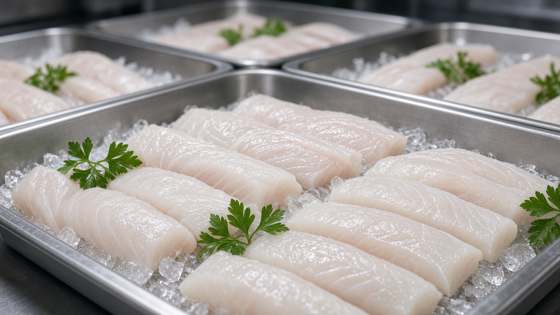
A well-run seafood counter holds fresh fish on a bed of ice or in a refrigerated case, keeps product covered, and monitors case temperature. Fish should look moist and bright, with no dried edges. If you are unsure about a counter, look at the ice: it should be clean and plentiful, not melted to a puddle. Learn more about what to look for in recognizing freshness in fish.
Stage Five: Your Part of the Cold Chain
The last link is the one you control, and it is where many otherwise perfect chains fail. Buy seafood last on a shopping trip, ask for it to be bagged separately, and get it into a cooler or cold bag if the trip home is long or the weather is warm. At home, the refrigerator should be at 40 F (4 C) or below, and the freezer at 0 F (-18 C). The FDA explains why an appliance thermometer is worth the few dollars in its guidance on refrigerator thermometers.
- Pick up seafood at the end of your shop.
- Keep it in a cooler with ice packs if the trip is long.
- Refrigerate fresh seafood immediately, ideally on the lowest shelf over a tray so drips cannot reach other foods.
- Use fresh fish within a day or two, or freeze it right away.
- Thaw frozen fish in the refrigerator rather than on the counter.
Quick Reference: Temperatures at Each Stage
| Stage | Target |
|---|---|
| Fresh fish on ice | Near 32 F (0 C) |
| Home refrigerator | 40 F (4 C) or below |
| Home freezer | 0 F (-18 C) |
| Danger zone | 40 F to 140 F (4 C to 60 C) |
| Cooked fish, minimum internal | 145 F (63 C) |
Questions Worth Asking at the Counter
- When did this come in, and was it ever frozen? "Fresh" fish is sometimes thawed from frozen, which is fine but should be cooked soon and not refrozen.
- Where was it caught or farmed?
- Can you pack it on ice for the trip home?
Money tip: a well-frozen fillet from a bag in the freezer aisle often costs less per serving than counter "fresh" fish that has traveled a long way, and it keeps for weeks, so there is less waste.
Keeping the Chain Intact
A strong seafood cold chain is mostly boring discipline: ice early, cold trucks, honest thermometers and a quick ride home. When you ask your fishmonger how long a fish has been out of the water and where it was held, you are checking each link for yourself. Treat the cold chain as part of the ingredient, and the fish on your plate will taste the way its catcher intended.