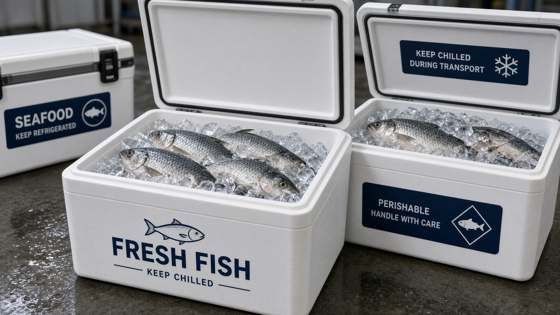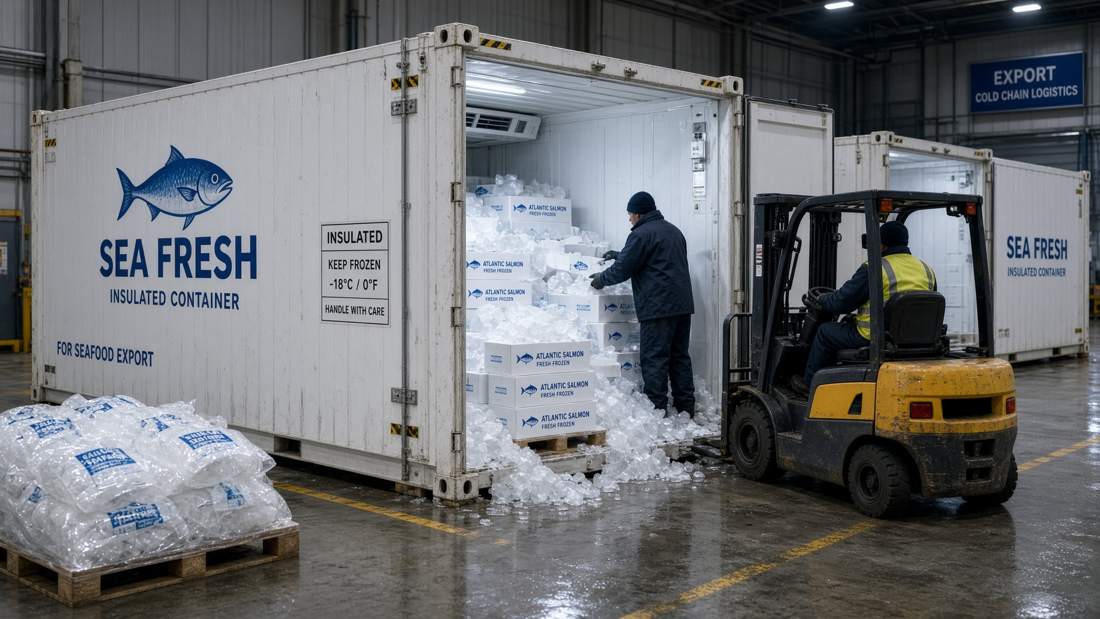
Insulated boxes and gel packs do two different jobs, and mixing them up is a common reason fish arrives or travels warm. The box slows heat from getting in; the coolant absorbs the heat that does get in. A great box with no coolant, or a lot of coolant in a thin box, will both fail before your fish gets home.
How insulation works
Insulation is trapped air, or material that resists heat. Thicker walls and tight lids matter more than the brand. A cooler with a gap in the lid or a thin foam wall will warm fast in a hot car, however much ice you add.
Common box types
- Molded foam boxes: Light and cheap, with good insulation for their weight. Often used for shipping. Usually single-use.
- Hard coolers: Heavier and sturdy with thick walls. Best for long trips and reusable for years.
- Soft insulated bags: Convenient for the grocery run home, though less effective over several hours.
- Insulated liners or wraps: Thin reflective or fibre layers used inside cartons. Fine for short, cool-weather journeys.
Gel packs, ice and dry ice compared
Gel packs
Gel packs are sealed and do not leak water, so they are tidy and do not soak the fish. They are typically frozen well below 32 degrees F, so keep them from direct contact with delicate fillets by wrapping the fish or placing a layer between. Refreeze them for reuse.
Ice
Ice holds fresh fish close to 32 degrees F, which is ideal, and its meltwater needs draining. Use bagged or crushed ice and keep fish sealed so it does not sit in water. Our article on ice quality and why it matters covers what good ice looks like.
Dry ice
Dry ice is solid carbon dioxide at a very low temperature. It is useful for keeping frozen seafood frozen, but it can freeze fresh fish solid and burn bare skin. Handle it with gloves, never seal it in an airtight container, and keep it away from children and enclosed spaces such as a closed car, where carbon dioxide can build up. Shipping rules for dry ice vary by carrier, so check their current requirements.
How long do they last?
Duration depends on the box, the amount of coolant, the outside temperature and how often you open the lid. As a rough guide for shoppers: a good cooler with plenty of ice handles a half-day trip; shipped foam boxes are designed for about a day or two. Treat any figure as an estimate, and use a thermometer if your fish matters to you.
Packing a cooler for seafood
- Chill the cooler first by putting ice or a frozen pack inside for 15 to 30 minutes.
- Put a layer of ice or frozen packs on the bottom.
- Place the fish, sealed in bags or containers, on top.
- Add more ice or packs on top and fill any gaps so there is no empty space.
- Keep the cooler in the air-conditioned part of the car, not the trunk, and out of the sun.
Read transporting seafood in personal vehicles for trip times and safe limits.
After you unpack
Move fish to the refrigerator at 40 degrees F or colder, or the freezer at 0 degrees F or below, as soon as you arrive. Wash and dry the cooler with hot soapy water and let it air out so odors do not linger. Check your seafood against the guidance on the FDA's advice about eating fish if it has been out of the cold for long. If you plan to order online, packaging for shipping fresh seafood shows what a good delivery box looks like, and NOAA FishWatch offers species-specific tips.
Pairing the right box with the right coolant is the whole secret of insulated boxes and gel packs: get both right and your fish will arrive as good as it left the counter.