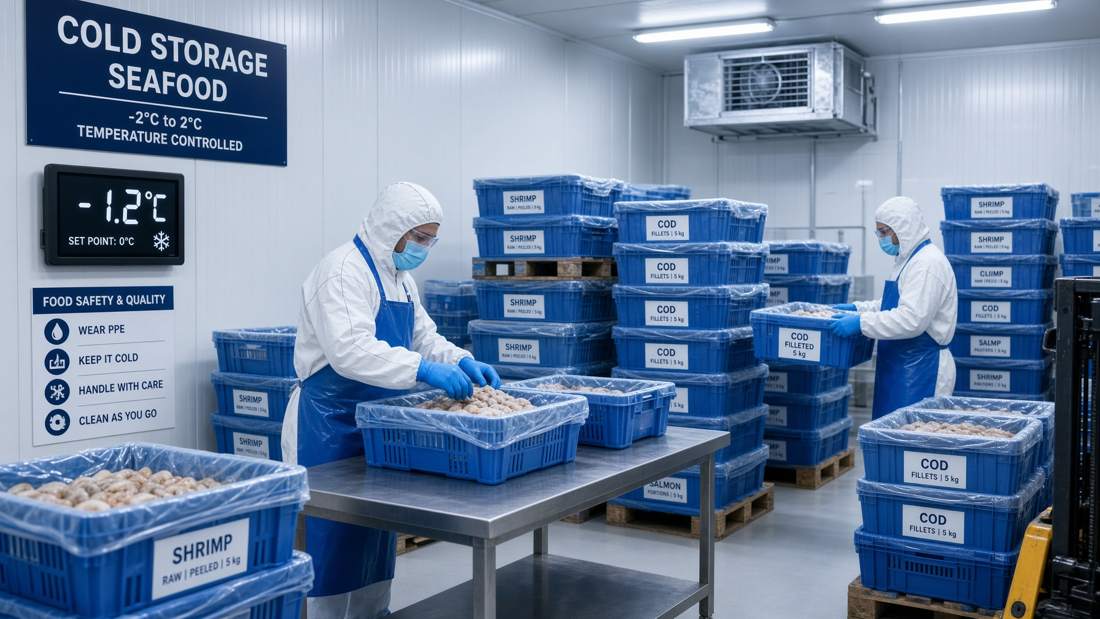
Good packaging for shipping fresh seafood is what separates a delightful online order from a warm, leaking disappointment. When you buy fish by mail, you are trusting a cardboard box to hold cold for one to two days, so knowing what proper packaging looks like helps you choose a reliable seller and judge your delivery on arrival.
What a well-packed box contains
- An outer corrugated carton that holds its shape and does not crush.
- An insulated liner, usually thick foam or a thermal insulated wrap, that slows warming.
- Coolant, either frozen gel packs or dry ice, placed around the product.
- Sealed inner packaging, such as vacuum-sealed fillets or bagged shellfish, to stop leaks and odors.
- A leak barrier such as a liner bag or absorbent pad.
- Clear labels showing contents, a keep-refrigerated or keep-frozen message and the packing date.
Our explainer on insulated boxes and gel packs goes deeper into how the materials differ.
Fresh versus frozen shipments
Fresh fish
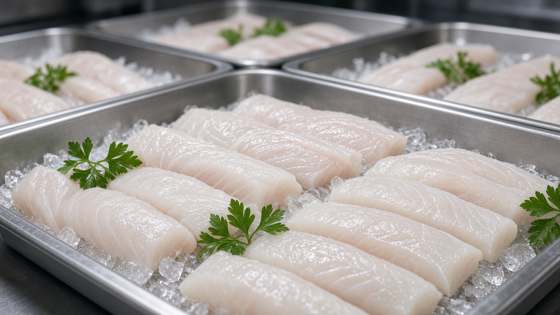
Fresh seafood travels on gel packs or ice and is usually shipped overnight or two-day. It should arrive cold to the touch, ideally at or below 40 degrees F. Shellfish are typically shipped to arrive alive, with extra ventilation.
Frozen fish
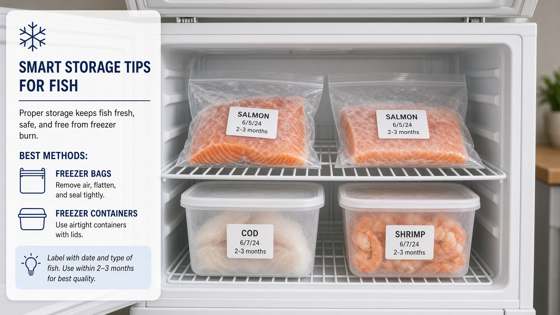
Frozen seafood is far more forgiving. Pieces should be hard when they arrive, with dry ice or well-frozen packs. If gel packs are fully thawed but the fish is still frozen solid, it is generally fine to refreeze or cook, but check the label or the FDA guidance if you are unsure.
Check your order the minute it arrives
- Open it promptly, ideally within an hour of delivery.
- Feel the product: fresh should be cold and firm, frozen should be solid.
- If you have a probe thermometer, fresh fish should read 40 degrees F or below.
- Look for leaks, split vacuum bags or crushed packaging.
- Smell it: sea-fresh or neutral is good, sour or sharp is not.
Move it to the refrigerator or freezer at once. For a longer shopping checklist, see buying seafood online: what to check.
If the box arrives warm
Take photos of the box, the contents and the label. Measure the temperature of the product if you can. Contact the seller the same day; most reputable companies replace or refund orders that arrive warm. Do not eat seafood that was above 40 degrees F for more than two hours, or that smells off. The FDA advises that when in doubt, throw it out, as described in its advice about eating fish.
Smart ordering habits
Choose delivery dates early in the week so parcels do not sit in a depot over a weekend. Make sure someone is home to receive the box, or ask for a signature. In hot weather, request extra coolant and expedited shipping. Check the seller's policy on late or warm deliveries before you pay, and price the shipping fee into the cost per pound, as it can change which option is the better deal.
You can compare species and quality guidance at NOAA FishWatch before you order. With these checks, packaging for shipping fresh seafood stops being a mystery and becomes a simple way to hold sellers to a clear standard.