Shipping live seafood legally depends mainly on the seller, not the buyer, but knowing the basics helps you choose a trustworthy source and handle the delivery. Live lobsters, crabs, oysters, clams and mussels do travel by overnight courier, and the rules covering them vary by species, state and carrier. When in doubt, check current rules with your state agency and the seller.
Who is responsible for what
As a buyer, you are rarely the one who needs permits. The company that harvests, holds and ships live seafood is responsible for licences, tagging and transport rules. What you can do is ask the questions that reveal whether they are operating properly, and make sure the product is legal to receive where you live.
Rules that commonly apply
Shellfish tags and records
Shellfish such as oysters, clams and mussels must be harvested from approved waters and tagged with harvester and area information. Dealers keep those tags on file, and a reputable seller can tell you where your shellfish came from. The Interstate Shellfish Sanitation Conference publishes background on the national shellfish safety program.
State and species limits
Some states restrict certain species, sizes, or the sale of products from particular areas, and some regulate how live animals can be moved across state lines. Lobster size limits, crab seasons and bans on certain invasive or protected species are examples. Ask the seller whether they ship to your state.
Carrier requirements
Courier companies publish their own policies for perishable and live animals, including packaging, shipping days and refusal of certain destinations. Reputable sellers pack according to those policies and avoid shipping on a Friday to prevent weekend delays.
Questions to ask before you order
- Do you ship to my state, and are there local restrictions I should know?
- When will it be delivered, and what happens if the courier is late?
- What do you guarantee if the seafood arrives dead or damaged?
- Where were the shellfish harvested, and do you keep the tags?
- Do you offer a dead-on-arrival replacement or a refund?
Our article on buying seafood online adds a wider checklist.
What a legitimate delivery looks like
The box should be insulated, labelled as perishable and packed with gel packs. Lobsters and crabs are generally shipped cold and sluggish, with damp packing material, not submerged in water. Shellfish should be cool and closed, or close when tapped. For the packing basics, see packaging for shipping fresh seafood.
When it arrives
- Open the box immediately and check that the animals are alive. Lobsters and crabs should move their legs or claws when touched.
- Discard any shellfish with broken shells, or clams, mussels and oysters that stay open when tapped.
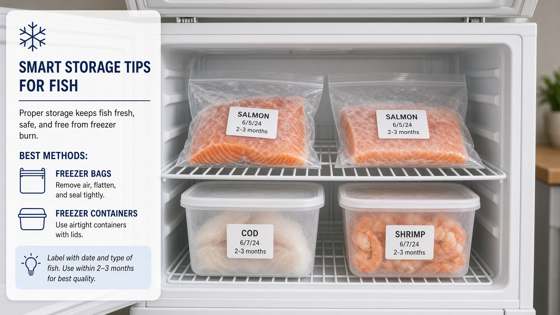
- Refrigerate at 40 degrees F or colder, covered with a damp cloth, not in fresh tap water.
- Cook live lobster and crab soon, ideally the day they arrive.
For storage and care once received, see live lobster and crab care.
If something seems wrong
Photograph the contents and packaging and contact the seller the same day. A seller who cannot give a clear origin or tag information, or who does not offer a replacement policy, is worth avoiding. The FDA summarizes safe handling in its consumer advice about eating fish, and NOAA FishWatch explains species and sourcing.
In short, shipping live seafood legally is the seller's duty; yours is to ask good questions, receive carefully and cook promptly.