Ice quality matters more than most shoppers realize, because ice is the quiet partner in nearly every fresh fish purchase. Fish held in clean, plentiful ice stays firm, bright and mild-smelling. Fish held in meltwater or on thin, dirty ice softens, smells sooner and loses moisture in the wrong way.
What good ice actually does
Fresh fish keeps best close to 32 degrees F, the temperature of melting ice. Ice does two jobs: it lowers the temperature quickly, and it keeps the surface moist. Because it melts slowly at that exact temperature, it pulls heat out of the fish without freezing it, which is why displays are built on beds of ice rather than in dry cold air.
Why the type of ice changes the result
Flake and crushed ice
Flake or finely crushed ice touches more of the fish and cools it evenly. It is gentle on soft flesh, so delicate fillets and whole fish rest on it without bruising. This is the type you will usually see at a good fish counter.
Cubes and blocks
Large cubes leave air gaps and can press into soft fish, leaving marks. Block ice melts slowly, which is useful on long trips, but it does not wrap around the fish. For a home cooler, crush or break cubes into smaller pieces if you can.
Dry ice and gel packs
Dry ice is far colder than 32 degrees F and can freeze or damage fresh fish and cause injury if handled bare-handed. Gel packs are cooler than room temperature but can leave the fish warmer than ice does. Our explainer on insulated boxes and gel packs compares the options for shipping.
Signs of poor ice at the counter
- Fish sitting in pooled, cloudy water instead of draining ice.
- Ice that is thin, patchy or already mostly melted.
- Fillets lying directly on a bare, wet tray with no ice at all.
- Ice that looks dirty, smells off or has debris in it.
- Cooked and raw fish sharing the same ice bed.
Any of these suggests the seller is not managing the case well. Compare it with the points in display case temperature standards.
Using ice at home
If you buy fish and will not cook it for a few hours, or you are carrying it a distance, treat the cooler like a mini display. Place a layer of ice on the bottom, set the sealed fish in a bag or container on top, and cover it with more ice. Keep the fish out of contact with water, because soaking washes out flavor and can spoil the texture. Drain meltwater periodically. For storage times, see how long can seafood stay on ice.
In the refrigerator, a pan of ice under a covered tray of fish extends the cold. Replace the ice as it melts, and keep the fish itself in a sealed container or wrap so it never sits in meltwater. Keep the refrigerator at 40 degrees F or colder, and see NOAA FishWatch for species-specific handling advice.
Is the ice itself safe?
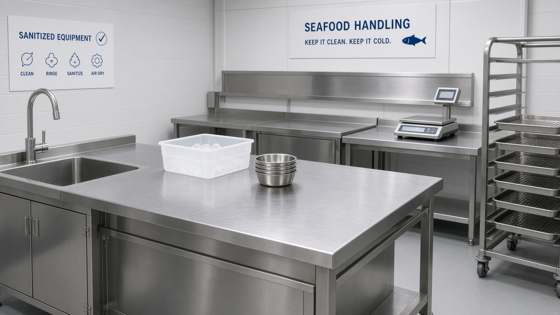
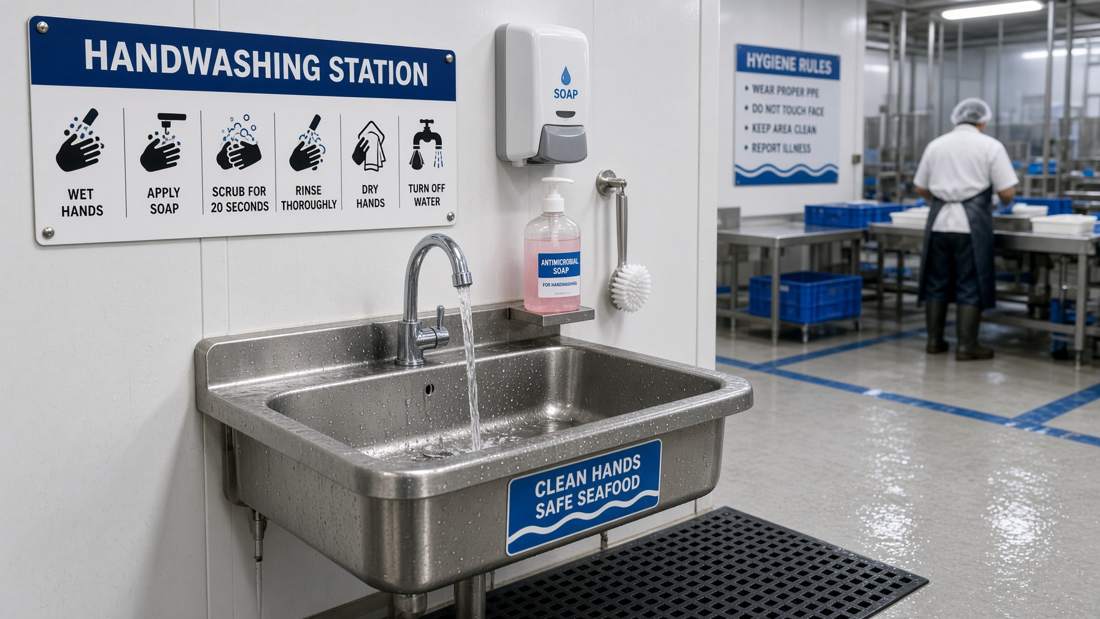
Ice that touches food is food, and it should be made from potable water and handled cleanly. At a retail counter, ice machines and scoops should be clean and stored away from the floor. Good fish sellers follow written safety plans, and the FDA outlines them in its seafood HACCP overview. At home, never reuse ice from a cooler that held raw fish in your drinks.
When you next choose a fish counter, look down at the ice before you look at the fish; ice quality tells you most of what you need to know about how the rest of the case is run.