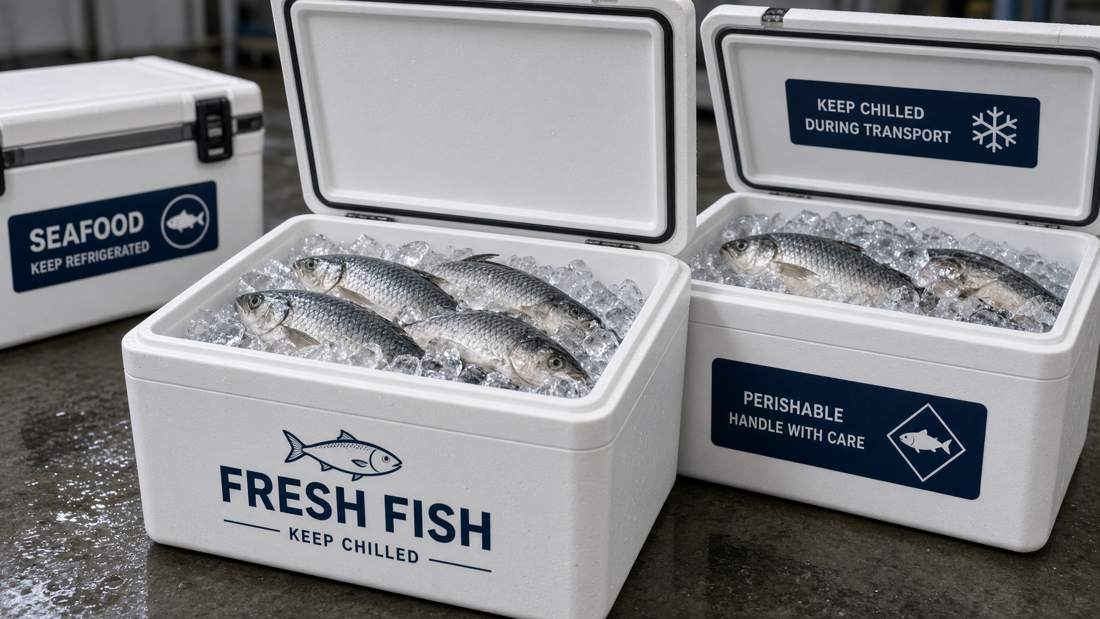
The biggest cross-contamination risks in seafood handling are not usually the fish itself but everything that touches it before it is cooked. A fillet that will be baked to a safe temperature is not the problem; the salad chopped on the same board afterwards is. Cross-contamination simply means bacteria or viruses moving from raw seafood to food that will be eaten without further cooking.
Where contamination actually happens
Most cases come down to a handful of everyday moments:
- A leaking package in the shopping cart or bag, dripping onto produce or bread.
- Raw seafood stored above ready-to-eat food in the refrigerator.
- One cutting board or knife used for raw fish and then for vegetables or cooked food.
- Tongs or a plate that held raw shrimp and is then used for the cooked shrimp.
- Unwashed hands touching the fridge door, tap or phone while preparing dinner.
At the store and on the way home
Ask for raw seafood to be bagged separately, or slip the package into an extra plastic bag yourself. Pick up seafood last, just before checkout, so it spends less time warm. In the car, keep it in a cooler bag away from groceries you will eat raw. Our article on transporting seafood in personal vehicles covers cooler setups and timing.
Fridge storage that prevents drips
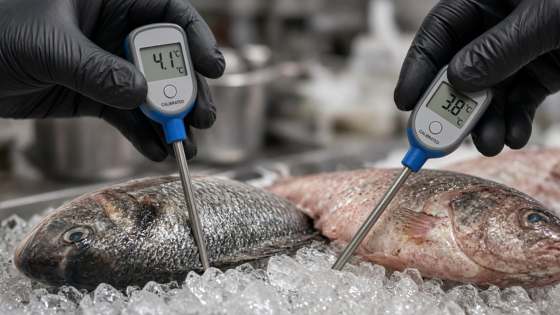
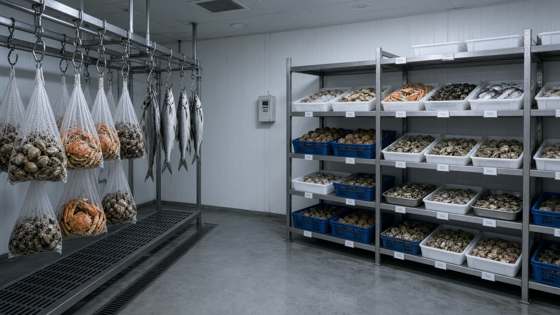
Put raw fish, shrimp and shellfish on the bottom shelf, in a sealed container or on a rimmed tray. Anything that leaks then lands on the tray, not on the lettuce below. Keep the refrigerator at 40 degrees F or colder, as USDA and FDA recommend, and use fresh fish within a day or two of purchase unless the label says otherwise. A fuller layout plan is in refrigerator organization for seafood.
Live shellfish need air, not sealed boxes
Clams, mussels and oysters are alive when you buy them, so they should not be sealed in an airtight tub. Place them in a bowl with a damp cloth over the top, and keep them from touching other foods. Discard any that stay open when tapped.
Prep habits that make the difference
Use a dedicated board
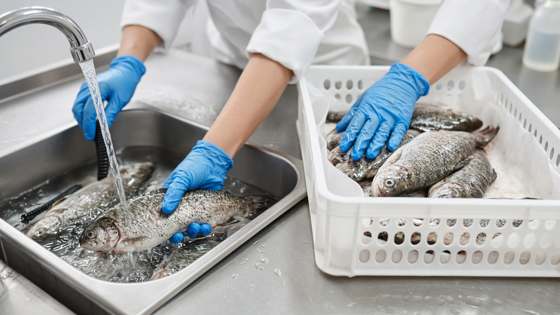
Keep a separate board for raw fish and shellfish, or at least wash the board thoroughly before anything else touches it. A different colour makes the habit easy to remember. Wash boards, knives and bowls in hot soapy water, and sanitize them as described in cleaning and sanitizing seafood prep areas.
Separate the raw and the ready
Use one plate or tray for raw seafood and a fresh one for the cooked result. Marinades that touched raw fish should be thrown away, or boiled before use as a sauce. Wash your hands for 20 seconds with soap after touching raw seafood, before you handle anything else.
Cooking and serving
Cooking is what finally controls most bacteria. The FDA advises cooking fish to an internal temperature of 145 degrees F, until the flesh turns opaque and separates easily with a fork. Shrimp, lobster and scallops should turn opaque and firm, and clams, mussels and oysters should open during cooking, with any unopened ones thrown out. You can read the agency guidance in its consumer advice about eating fish.
Leftovers should go into the refrigerator within two hours of cooking, or one hour if the room is hot. Store cooked seafood in a clean container, not the one the raw product came in.
Raw seafood and sushi
Eating raw seafood skips the cooking step, so the other safeguards matter more. Pregnant women, older adults, young children and people with weakened immune systems are advised by health agencies to avoid raw fish and shellfish. Anyone else should buy from a retailer that clearly labels fish for raw use, and keep it cold until serving. Checking the NOAA FishWatch pages is a useful way to learn about a species before you buy.
A few minutes of care at each step is all it takes to keep cross-contamination risks in seafood handling low, and your kitchen will smell better for it too.