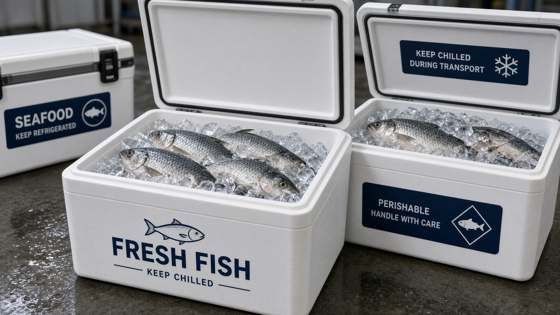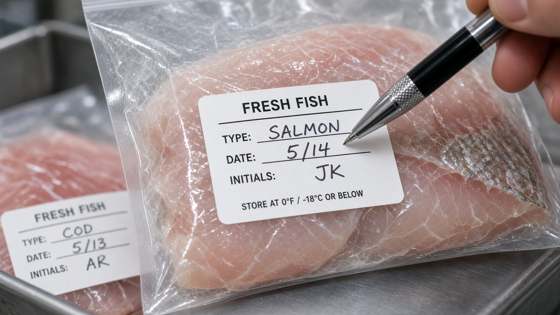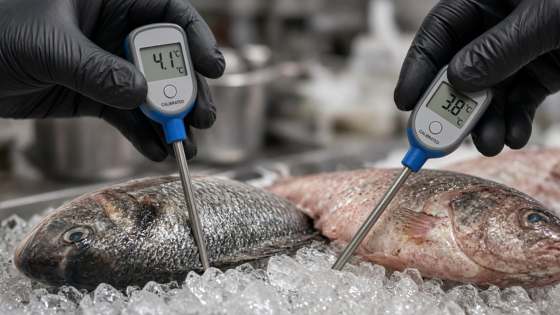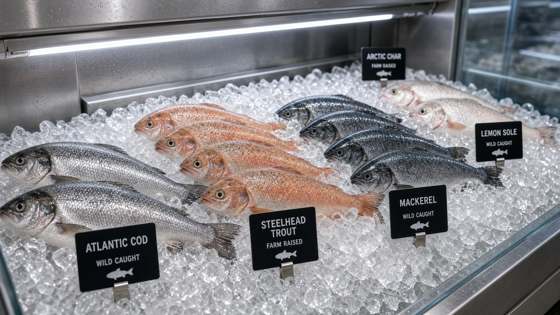
Cleaning and sanitizing seafood prep areas are two separate jobs, and most home kitchens only do the first one. Soap and hot water lift off slime, scales and juices. A sanitizer then reduces whatever bacteria are left on the surface. Raw fish and shellfish leave both behind, so the order matters: clean first, sanitize second, and let the surface air dry.
Why raw seafood needs a proper clean-up
Raw fish juices are thin and travel easily. A single fillet can leave a film on the counter, the faucet handle, the knife handle and the edge of the sink, none of which you will notice until the smell arrives the next day. Seafood is also usually handled with bare hands, so anything you touch afterwards, from a fridge door to a spice jar, can pick up residue.
Food safety agencies such as the FDA advise keeping raw seafood separate from ready-to-eat food and washing hands, utensils and surfaces after contact. Their consumer guidance on eating fish safely is a good starting point if you want the official wording.
The two-step method
Step one: wash with hot, soapy water
Remove all scraps first. Wipe the counter with a paper towel or a dedicated cloth, then scrub with hot water and dish soap. Sanitizer does not work well on a dirty surface, so do not skip this stage. Wash the cutting board, knives, tongs, bowls and any pan you used to carry raw fish, front and back.
Step two: sanitize
The common home option is unscented household bleach. The USDA suggests about one tablespoon of bleach per gallon of water for sanitizing food-contact surfaces. Mix a fresh batch each time, apply it to the surface, let it sit for a minute or so, then let it air dry or rinse with clean water if the product label tells you to. Always follow the label on your own bleach, and never mix bleach with ammonia or other cleaners.
If you prefer to avoid bleach, look for a sanitizer labelled safe for food-contact surfaces and follow the stated contact time. Plain vinegar spray is a deodorizer, not a dependable sanitizer, so use it only as a supplement.
What to clean, in order
- Cutting board and knife, then any utensils that touched raw seafood.
- The counter area where the board sat, plus a generous margin around it.
- The sink basin, drain strainer and faucet handles.
- The refrigerator shelf or drawer that held the packaging.
- Your dish towel and sponge, which need laundering or replacing if they caught fish juices.
Boards, knives and sponges
Plastic boards can go in the dishwasher, which is a convenient way to sanitize them. Wooden boards should be washed by hand, scrubbed well, and not soaked. Deep knife grooves are hard to clean on any board, so retire one that is badly scarred. Many cooks keep one board just for raw fish and shellfish, which makes cross-contact much less likely. Our guide to cross-contamination risks in seafood handling covers that habit in more detail.
Sponges hold moisture and food particles, which is why they are a common source of lingering odor. Run a kitchen sponge through the dishwasher or replace it often, and prefer paper towels for the first wipe after raw fish.
Dealing with the smell
A fishy smell after cooking usually means residue is still on a surface. Wash again, then wipe stainless steel with a little lemon juice or a baking soda paste and rinse. Run the exhaust fan while you cook, and take seafood packaging to the outside bin rather than leaving it in the kitchen trash overnight.
A quick checklist for next time
- Set out a clean board and a trash bowl before you open the package.
- Wash hands for 20 seconds with soap before and after handling raw seafood.
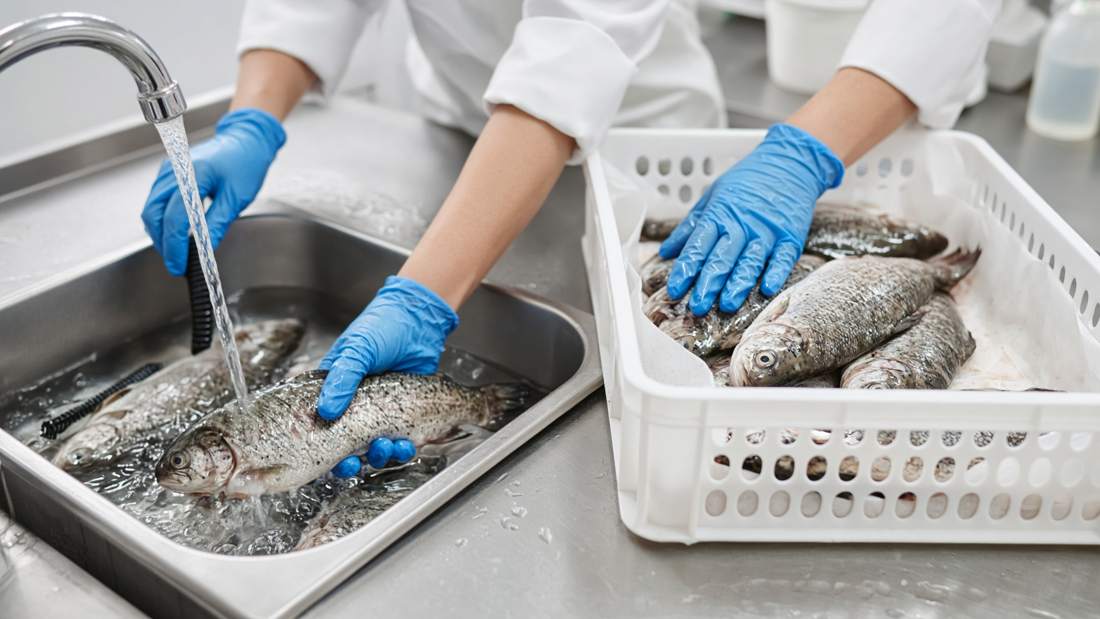
- Rinse fish only if the recipe needs it, then wash the sink afterwards, because splashes spread bacteria.
- Wash, then sanitize, then air dry.
- Keep raw seafood stored on the lowest refrigerator shelf, as described in our piece on refrigerator organization for seafood.
Once your routine is set, cleaning and sanitizing seafood prep areas takes only a few extra minutes, and it protects every meal you make for the rest of the week. For more on safe seafood handling, see the NOAA FishWatch consumer resources.