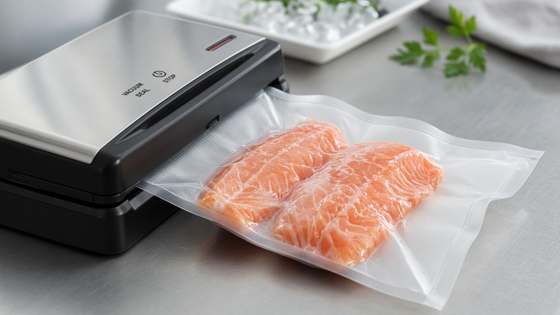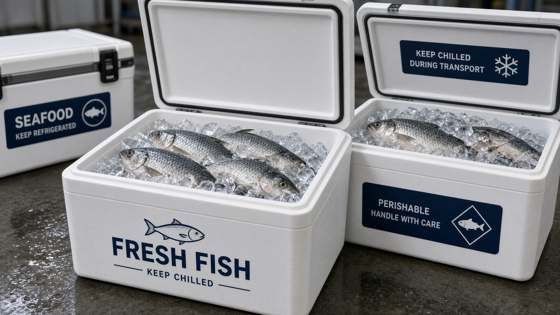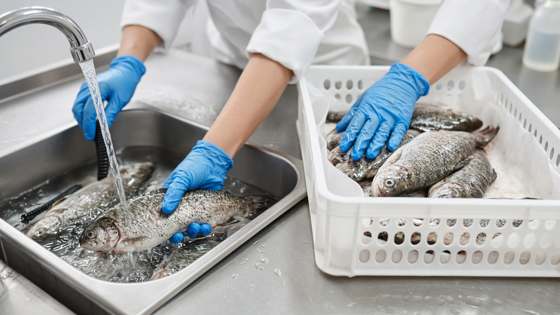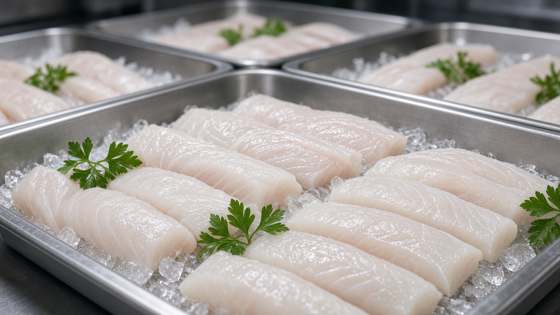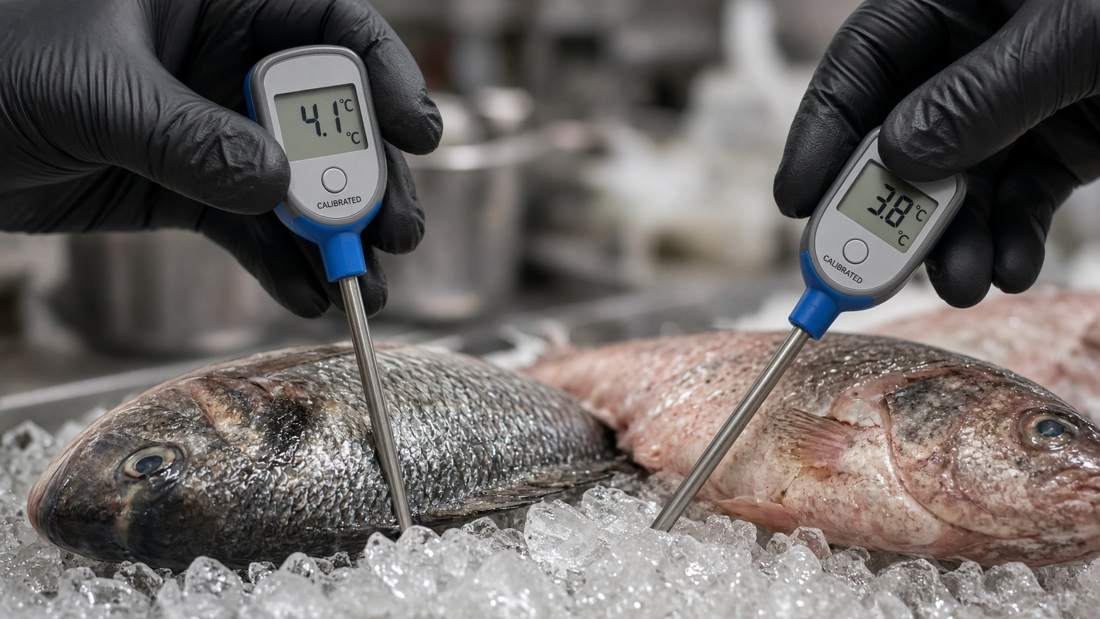
Temperature logging and recordkeeping sound like restaurant chores, but a simple version is one of the cheapest ways to protect seafood you pay good money for. Fish spoils faster than most proteins, and a refrigerator that runs a few degrees too warm can cut days off its life without any visible sign.
What to measure at home
Three readings cover nearly everything a home cook needs:
- The refrigerator. USDA and FDA guidance is 40 degrees F or below.
- The freezer. Aim for 0 degrees F or below, which keeps food safe indefinitely and slows quality loss.
- The cooked food. Fish is fully cooked at 145 degrees F measured in the thickest part.
Buy two inexpensive appliance thermometers, one for the fridge and one for the freezer. The built-in dial on many appliances is only approximate, and a separate thermometer shows what is happening on the shelf where your fish sits.
A log that takes two minutes
Tape a card inside a cupboard or use a notes app. Each time you buy fresh seafood, write down four things: the date, the type, the temperature of the fridge at that moment, and a use-by day. For frozen seafood, write the date you froze or bought it on the package with a marker.
Why the date matters more than you think
Fresh fish is generally best cooked within one to two days of purchase, though the seller and the package label should be your guide. Writing the date removes guesswork and stops you from sniffing a fillet to decide if it is safe, which is not a reliable test.
Where to place the fridge thermometer
Put it on the shelf where seafood lives, usually the lowest shelf toward the back, not in the door, which warms every time you open it. Check it weekly for a month, then monthly. If you see readings above 40 degrees F, adjust the dial a notch and re-check the next day. For a full layout, read refrigerator organization for seafood.
Using a probe thermometer on cooked fish
Insert an instant-read thermometer into the thickest part of the fillet, away from bones, and wait for the reading to settle. The FDA gives 145 degrees F as the safe internal temperature for fish, and its advice about eating fish is a helpful reference. If you prefer a visual cue, the flesh should be opaque and flake with a fork, but a thermometer is more reliable, and it keeps you from overcooking.
What to do when a reading is wrong
- Fridge above 40 degrees F: Check that the door seals, that vents are not blocked and that the unit is not overloaded. Use fish quickly or freeze it if it is still fresh.
- Power cut: Keep doors closed. According to USDA guidance, a closed refrigerator keeps food cold for about four hours, and a full freezer holds for about 48 hours (about 24 if half full). Discard perishable foods held above 40 degrees F for more than two hours.
- Partly thawed fish: If ice crystals remain and the fish still feels cold, it can usually be cooked, but do not refreeze if the package sat warm. Check the label or the FDA guidance when unsure.
If a retailer has handled your fish poorly, a visible temperature gap is the first evidence. The article on emergency protocols for temperature failures walks through what to keep and what to throw away. For a general reference, NOAA FishWatch also has storage and preparation tips for popular species.
Keep the habit small: a thermometer, a date on every package and a weekly glance are all that temperature logging and recordkeeping really requires at home.