Frozen storage rotation, usually called FIFO (first in, first out), simply means you cook the oldest seafood in your freezer before the newest. It sounds obvious, but most home freezers work the opposite way: new bags go on top, old ones sink to the bottom, and a fillet bought last spring turns up as a gray, dry block nobody wants to eat.
Why rotation matters more for seafood
A freezer held at 0 degrees F (-18 C) keeps frozen fish safe indefinitely, but safety and quality are different things. Over months, fish slowly dries out, fats oxidize and the flavor turns flat or "fridge-like." Lean white fish such as cod and haddock hold up reasonably well; oily fish like salmon, mackerel and bluefin tuna develop off flavors sooner because their fats go rancid. Rotation makes sure you eat each purchase while it is still at its best. For deeper background on how ice crystals and air exposure damage texture, see our guide to freezer burn causes and prevention.
Set up a frozen storage rotation in four steps
1. Label everything when it goes in
Write three things on every package with a freezer marker or a strip of masking tape: what it is, the weight or number of portions, and the date you froze it. If you bought it already frozen, write the purchase date. Skip the label and you will be guessing later; fish looks identical once it is frosted over.
2. Divide into meal-sized portions first
Packing a whole 2-pound side of salmon in one bag means thawing all of it for a dinner for two. Wrap fillets individually, then group them in a bag. Press out the air, or use a vacuum sealer if you have one; our article on vacuum sealing for extended shelf life explains when it is worth the effort.
3. Store by zone, newest at the back
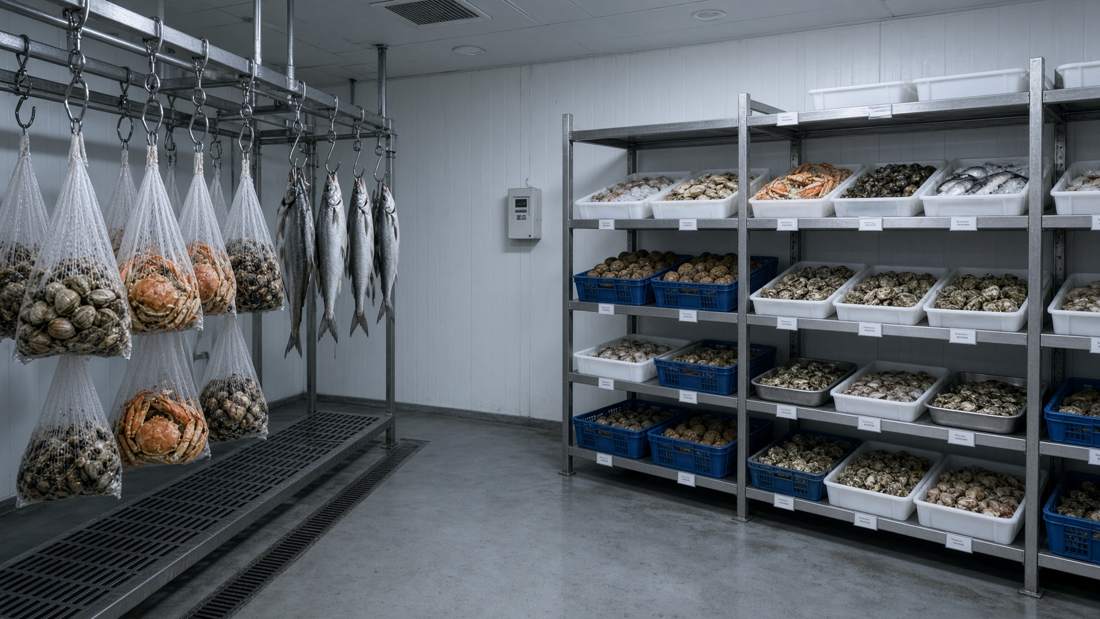
Give seafood its own bin or a dedicated shelf so it does not get buried under frozen vegetables. Within that zone, load new packages at the back or bottom and pull from the front or top. Flat, stackable packages work better than lumpy bags, because you can see every date at a glance. Upright magazine holders or small bins sized for a shelf make good "lanes": one lane for fish, one for shrimp and scallops, one for crab and lobster.
4. Keep a running list for your FIFO system
Tape a sheet to the freezer door or keep a note on your phone. Cross items off as you use them and add new ones. It takes ten seconds and prevents the classic mistake of buying more shrimp when three bags are already hiding behind the ice cream.
A simple monthly check
Once a month, spend five minutes scanning the seafood zone. Move anything older than about three months to the front, and plan the week's dinners around it. Check for signs of trouble: heavy frost inside the bag, white leathery patches, a bulging package, or a bag that has clearly thawed and refrozen (ice has pooled in one corner or the contents are stuck in a flattened shape). Quality cutoffs vary by species and packaging, so check the label or the FDA guidance on selecting and serving fresh and frozen seafood safely for handling advice.
| Seafood type | Rough aim to use it within |
|---|---|
| Lean fish (cod, haddock, pollock) | 3 to 6 months |
| Oily fish (salmon, mackerel) | 2 to 3 months |
| Shrimp, scallops (vacuum packed) | 3 to 6 months |
| Cooked seafood dishes | 1 to 2 months |
These are practical quality targets, not safety deadlines. Well-packaged seafood often stays pleasant longer, and badly packaged seafood can suffer sooner.
Save money by rotating smartly
For help choosing what to buy in bulk, FishWatch from NOAA profiles many species, including how they are typically sold.
FIFO is one of the cheapest ways to cut food waste. When fillets go on sale, buy a few extra, portion them, label them and slot them into the rotation rather than letting them sit untouched. Pair it with a thawing habit: move tomorrow's dinner into the refrigerator the night before, as described in thawing seafood safely, and never refreeze fish that thawed on the counter.
Power cuts and freezer failures
Keep the door shut during an outage. A full freezer generally holds its temperature far longer than a half-empty one, which is another argument for tidy, tightly packed storage. After any outage, look at the contents: fish that still has ice crystals or feels cold like it was refrigerated can usually be used, but anything fully thawed and warm should go. When in doubt, throw it out.
The best frozen storage rotation FIFO routine is the one you will actually keep doing: label, portion, load new at the back, and glance at the list before shopping. Do that, and the seafood in your freezer will taste like something you chose, not something you forgot.