The difference between flash freezing vs slow freezing is speed, and speed decides ice crystal size. Fish frozen fast forms tiny crystals that barely damage muscle, while fish frozen slowly forms large crystals that rupture cells and leave the flesh watery and soft after thawing. It is the main reason a vessel-frozen fillet can beat a poorly frozen one from a home freezer.
How Freezing Changes Fish Flesh
Fish muscle is mostly water. As it freezes, that water turns to ice between and inside cells. When freezing is slow, water migrates out of the cells and builds up into large crystals outside them, which dehydrate and distort the cells. When thawed, the fish cannot reabsorb the water, so it weeps liquid, called drip loss, and the texture turns mushy or dry. Fast freezing keeps the ice crystals small and spread through the tissue, so more of the structure survives.
Flash Freezing vs Slow Freezing: Why Speed Matters
A freezer at 0 F (-18 C) will eventually freeze any fillet, but the time it takes to pass through the zone just below the freezing point is what drives crystal growth. Industrial freezers use much colder air, brine or plates to push fish through that zone quickly. The final storage temperature then affects how well the quality is held, not how the crystals formed.
What Flash Freezing Looks Like in Practice
Commercial flash freezing methods include blast freezers that blow very cold air over the product, plate freezers that press fish between chilled metal plates, and brine freezing used on some vessels. Individually quick frozen, or IQF, products such as shrimp, scallops and fillets are frozen as separate pieces so they do not stick together, and you can pour out just what you need.
- Blast freezing: cold air at high speed, widely used for fillets and shrimp.
- Plate freezing: block or fillet pressed between plates, efficient for uniform shapes.
- Immersion or brine freezing: used for some whole fish on vessels.
- IQF: freezing individual pieces so they stay separate.
Many fisheries freeze at sea, within hours of catch, so the fish is frozen at peak freshness. This is part of why frozen can compete with fresh, a point explored in fresh versus frozen nutrition and taste.
Flash Freezing vs Slow Freezing at Home: Limits and Fixes
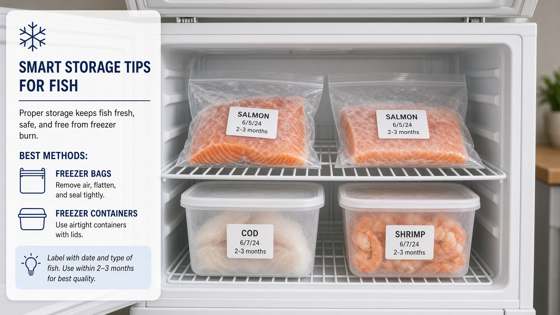
A household freezer is built to hold frozen food, not to freeze large amounts quickly. Loading it with a lot of warm items raises the temperature and slows freezing. You can improve results at home:
- Cut fish into thin, small portions so cold reaches the center quickly.
- Pre-chill portions in the refrigerator.
- Place them in a single layer on a metal tray, which conducts cold well.
- Use the fast-freeze setting if your freezer has one.
- Do not overload the freezer with many unfrozen packages at once.
- Once solid, wrap airtight and stack.
Our guide to freezing fish techniques for quality retention covers wrapping, glazing and storage times in more detail.
Freezing and Parasite Control
Freezing has a separate safety role. The FDA recommends specific freezing conditions to kill parasites in fish intended to be eaten raw or undercooked. Its guidance describes freezing and storing at -4 F (-20 C) or below for 7 days, or freezing solid at -31 F (-35 C) or below and storing at that temperature for 15 hours, or freezing solid at -31 F and storing at -4 F for 24 hours. Most home freezers do not reach these temperatures reliably, so raw fish for sushi should come from a supplier that follows them. Rules vary by species and situation, so check current guidance in the FDA fish and fishery products hazards and controls guidance. Note that "sushi grade" is a market term and not an official federal grade.
How to Spot Good and Poor Freezing at the Store
- Good: firm, tightly packed, glossy or lightly glazed, no frost inside the bag, no liquid pooled in the package.
- Poor: heavy frost or large ice crystals, freezer-burned dry patches, bent or soft pieces that suggest thawing and refreezing.
What This Means When You Shop
- Look for "frozen at sea", "flash frozen" or "individually quick frozen (IQF)" on the bag; these fish were frozen soon after catch.
- Choose bags where pieces are loose and separate, which lets you cook just what you need and cuts waste.
- Squeeze the bag: a solid block of ice around the fish means it may have thawed and refrozen.
- Compare price per pound after glaze: glaze is ice you pay for by weight, so check the net weight on the label.
Thawing Matters Too
Even perfect freezing can be undone by careless thawing. Thaw in the refrigerator for the best texture and safety, as described in thawing seafood safely. The FDA safe food handling page adds general rules for keeping food out of the danger zone.
The Takeaway on Freezing Speed
When comparing flash freezing vs slow freezing, remember that fast wins on texture. Choose frozen seafood that was frozen soon after catch, keep it solid on the trip home, and if you freeze at home, make portions thin and chilled so freezing is as quick as your appliance allows.