The safest way to thaw seafood is overnight in the refrigerator, and the fastest safe way is a sealed bag in cold water; never thaw fish on the counter or in warm water. Seafood thawed at room temperature spends hours in the 40 F to 140 F danger zone, where bacteria multiply quickly. Pick the method that fits your timing, and thawing seafood safely takes little extra effort.
Thawing Seafood Safely in the Refrigerator (Best Quality)
Put the sealed package on a plate or rimmed tray on the lowest shelf and leave it overnight. A pound of fillets usually thaws in 8 to 12 hours; thick steaks and whole fish can need a full day. The refrigerator keeps the fish below 40 F the whole time, so it holds its texture and is the most forgiving if your plans change. Once thawed, cook within a day or two, and if dinner is cancelled you can refreeze fish thawed this way, though texture will be a little softer.
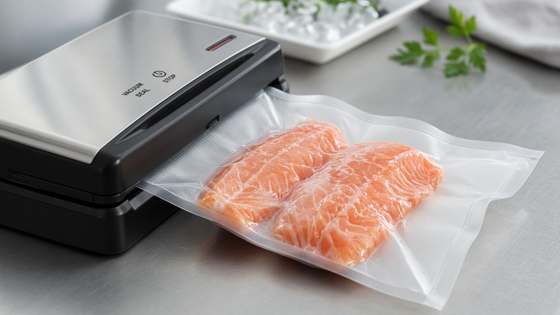
Thawing Seafood Safely When It Is Vacuum-Packed
If the fish is sealed in airtight vacuum or reduced-oxygen packaging, cut it open or remove it from the package before thawing. The FDA advises this for frozen fish packaged this way, because a low-oxygen package that thaws slowly can allow Clostridium botulinum type E to grow. See the agency's fish and fishery products hazards and controls guidance for the background, and our piece on vacuum sealing for what this means when you seal fish yourself.
Method 2: Cold Water (About an Hour)
- Keep the seafood in a leakproof bag, pressing out the air. If it is in a flimsy package, bag it again.
- Submerge it in a bowl of cold tap water, weighing it down so it stays under.
- Change the water every 30 minutes so it stays cold.
- Expect roughly 30 to 60 minutes for a pound of fillets, and 15 to 30 minutes for peeled shrimp.
- Cook right after thawing.
Use cold water only, never warm or hot, because the outside of the fish will warm into the danger zone while the middle is still frozen. Seafood thawed this way should be cooked immediately rather than refrozen raw.
Method 3: Microwave (Fastest)
Use the defrost setting, rotate or flip often, and stop while the fish is still icy in the center. Some edges may start to cook, so go straight to the pan or oven. Microwave defrosting works well for a single portion on a busy night but is the hardest to do evenly.
Methods to Avoid
- Counter thawing: surfaces warm up while the center is still frozen.
- Hot water: partially cooks the outside and warms it into the danger zone.
- Leaving seafood in a hot car or sunny window.
- Thawing in standing sink water that is not changed.
Skip Thawing Entirely
Many frozen items cook well straight from the freezer, which also avoids the risk of forgetting them on the counter. Individually frozen shrimp can go into hot soups, stir-fries and sauces frozen, with a minute or two of extra cooking. Thin fillets can be baked or pan-seared from frozen at slightly lower heat for longer, and expect noticeably longer cooking. Rinse off any ice glaze first and pat dry so the fish browns instead of steaming.
Thawing Guide by Product
| Product | Fridge | Cold water |
|---|---|---|
| Fillets, 1 lb | Overnight | 30 to 60 min |
| Whole fish or thick steaks | 12 to 24 hours | 1 to 2 hours |
| Peeled shrimp, 1 lb | 6 to 8 hours | 15 to 30 min |
| Lobster tails | Overnight | 30 to 60 min |
These times are rough guides and vary with thickness and freezer temperature. The fish is ready when it is flexible and has no hard core of ice.
Planning Tips and Money Savers
Buy frozen fish in portions you will use in one meal, so you never have to thaw a big block and refreeze part of it. Check the package for "previously frozen" on counter fish: if the seafood at the store was thawed, treat it as already thawed and cook it within a day or two. Keep a note on the freezer door of what you froze and when, so older packages get used first and nothing is wasted.
After Thawing: What to Check and Do
- Pat dry thoroughly; thawed fish carries extra surface liquid.
- Smell it. It should smell clean and mild. A sour or ammonia smell means discard it. Our guide to recognizing freshness in fish helps you judge.
- Cook to an internal temperature of 145 F (63 C), the safe minimum for fish listed by food safety authorities.
- Do not refreeze fish thawed in water or the microwave unless you cook it first.
For general guidance on safe handling, see the FDA's safe food handling page.
A Simple Habit for Safe Thawing
Move tomorrow's dinner from the freezer to the refrigerator before bed, and keep a bag and bowl handy for the nights you forget. With those two habits, thawing seafood safely becomes automatic, and your fillets come to the pan firm, cold and ready to cook.