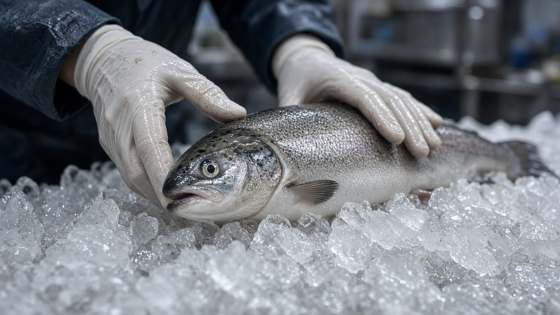
Freezer burn is the pale, dry, leathery patch you sometimes find on a frozen fillet, and it happens when moisture escapes from the surface of the fish and the exposed flesh dehydrates. It is a quality problem, not a food-poisoning problem, but it can turn a good piece of salmon into something chalky and bland.
What freezer burn actually is
Ice slowly turns directly into vapor, even at freezer temperatures. If the fish is touching air, water leaves the surface and collects as frost inside the package or on the freezer walls. The fish underneath is left dried out, and the fats near the surface can oxidize, which adds a stale, off taste. Fish is especially prone to it because it has a lot of moisture and delicate flesh, and oily species such as salmon and mackerel also have fats that oxidize easily.
What it looks like
- Grayish-white or whitish dry patches, often on thin edges and corners
- A spongy or leathery texture when thawed
- Large ice crystals or heavy frost inside the bag
- A dull, stale smell, sometimes described as "freezer taste"
Is freezer-burned fish safe to eat?
Generally yes, if it has been kept frozen the whole time. Freezer burn does not make fish dangerous; it just makes it less enjoyable. Fish that smells sour, ammonia-like or rotten after thawing is a different matter and should be thrown away. If you are unsure how to tell the difference, read our guide to spoilage signs you should never ignore.
How to prevent freezer burn
Remove the air
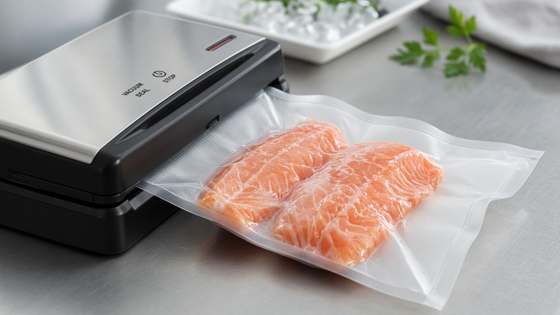
Air contact is the root cause, so the goal is a tight seal. Vacuum sealing is the most effective home method; see vacuum sealing for extended shelf life. If you do not have a sealer, wrap each fillet snugly in plastic wrap, pressing it against every surface, then put it in a freezer bag and squeeze out as much air as possible. A straw can help draw out the last of the air.
Use freezer-grade materials
Thin sandwich bags and ordinary containers let moisture through. Choose bags and wrap labeled for freezer use, or heavy foil over a first layer of plastic wrap. Rigid containers work for soups and cooked fish, but leave a little headspace for expansion.
Freeze quickly and keep the temperature steady
Spread portions in a single layer so they freeze fast, then stack them once solid. Keep the freezer at 0 degrees F (-18 C) or colder and avoid leaving the door open. Temperature swings cause repeated partial thawing and refreezing of surface moisture, which makes frost and burn worse. More on technique is in freezing fish: techniques for quality retention.
Choose what to freeze wisely
Very fresh fish freezes best. Fish that was already several days old in the fridge will not improve in the freezer. Buying fish labeled previously frozen and keeping it frozen is often a better bet than freezing a fillet yourself; see Seafood Watch for species buying advice.
Glaze or brine when appropriate
Some cooks dip lean fillets briefly in cold water and freeze them so a thin ice shell protects the surface. It helps, but it is not a replacement for good wrapping.
Rescuing slightly burned fish
If only the edges are affected, trim off the dry parts after thawing, then cook the rest in a way that adds moisture: chowder, fish cakes, curry, baked fish in sauce or a foil packet. Avoid dry-heat methods such as plain pan-searing, which will exaggerate the dryness. Heavily burned pieces are best used in soups or discarded.
For general guidance on handling frozen fish, check the FDA advice on selecting and serving fresh and frozen seafood safely. Preventing freezer burn on fish comes down to three habits: seal out the air, freeze it fast and eat it while it is still in its best window.