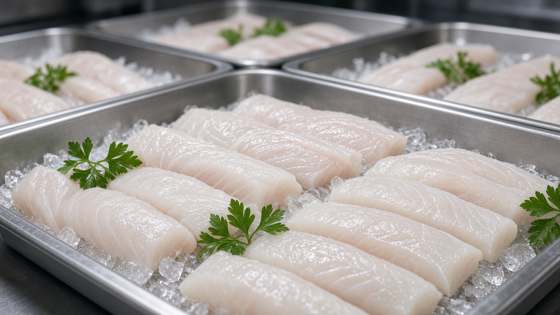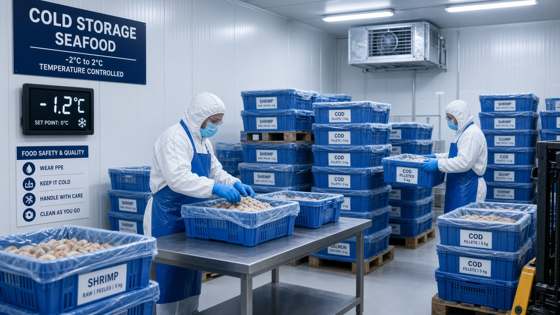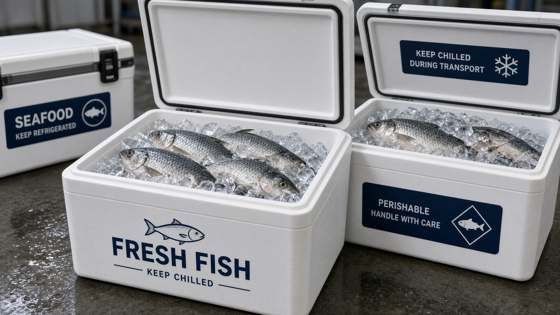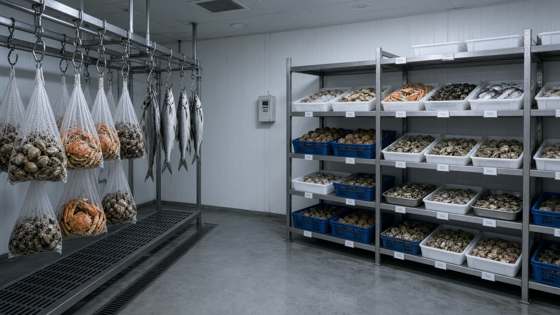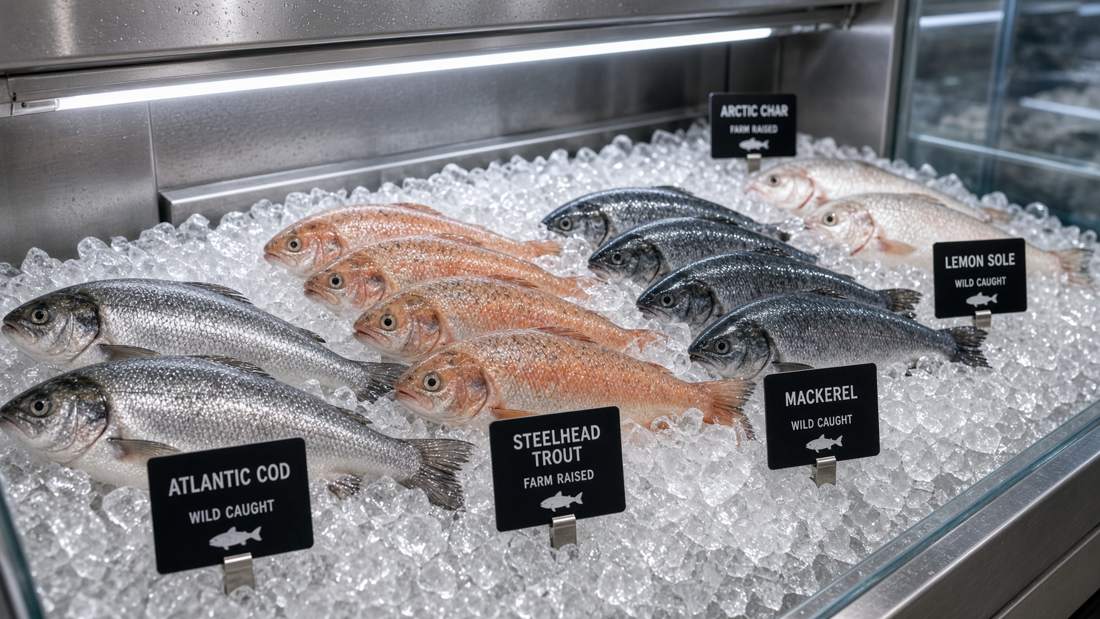
A seafood label packs a lot of information into a few words, and reading seafood labels well helps you judge quality, origin and sustainability before you pay. The key items to look for are the species name, wild or farm-raised, country of origin, any freezing statement, and a third-party certification logo.
The basics every seafood label should give
Reading seafood labels: the species name
The common name should say what the fish actually is. "Atlantic salmon", "Pacific cod" and "yellowfin tuna" are specific. "Rockfish" or "snapper" can be vague, and mix-ups do happen, which is covered in avoiding fraudulent seafood substitution. If the label does not say, ask the fishmonger for the full name.
Wild-caught or farm-raised
In the United States, most fish and shellfish at retail must state whether the product is wild or farm-raised, along with the country of origin. This comes from the country of origin labeling rules, explained in country of origin labeling (COOL) explained. Neither wild nor farmed is automatically better; quality depends on how the fish was caught or raised and handled. For species-by-species ratings, Seafood Watch is a useful reference.
Fresh, previously frozen or frozen
"Previously frozen" means the fish was frozen and then thawed for the display case. That is not a defect, but it changes how you should treat it: use it quickly, and do not refreeze unless you cook it first. See thawing seafood safely.
Certification logos
| Label | What it generally covers |
|---|---|
| Marine Stewardship Council (MSC) | Wild-caught fisheries assessed against a sustainability standard |
| Aquaculture Stewardship Council (ASC) | Farmed seafood assessed for environmental and social criteria |
These logos mean an independent body has audited the fishery or farm. They do not guarantee that every fish is perfect, and a product without a logo is not automatically bad: small boats and local fisheries often cannot afford certification. Look for a code or website printed near the logo, which lets you check where the product came from.
Other terms worth knowing
- Dry-packed scallops: Not soaked in a phosphate solution, so they sear better and weigh what they should.
- Glazed: A thin ice coating on frozen fish. Weight should be shown without the glaze, so check.
- Sustainably sourced, natural, premium: These are marketing words without a fixed meaning unless a certification stands behind them.
- Use by / sell by: Dates on fresh fish are guidance for the store; follow storage instructions on the pack.
Example: decoding a bag of frozen shrimp
Suppose the bag says "Wild-caught shrimp, Product of Argentina, individually quick frozen, 12 oz net weight, no phosphates added." That tells you the source type and country, how it was frozen, the weight you are paying for and that it has no soaking additive. Compare that with a bag reading only "shrimp, 2 lb, contains sodium tripolyphosphate", which gives you less about origin and may include water weight. Neither is automatically bad, but the first lets you make a better decision at the same price.
Another handy habit is comparing price per pound across forms. A "fresh" fillet at the counter was very often frozen at sea or at the plant and thawed in the back room. If so, a frozen bag of the same species is usually cheaper and just as good, as long as you thaw it gently.
Allergen and additive statements
Fish and crustacean shellfish are among the major food allergens that must be declared on packaged foods in the United States. See the FDA food allergen information. If a product contains sulfites or added phosphates, they should appear in the ingredients.
When the label leaves questions, ask the person at the counter: where it came from, whether it was frozen and when it arrived. Good sellers know the answers. Reading seafood labels takes a minute, and that minute is the best defense against paying premium prices for a product that is not what you thought.