Country of origin labeling, known as COOL, is a US rule that requires many fish and shellfish sold at retail to show where they came from and whether they are wild-caught or farm-raised. If you have ever wondered why a shrimp bag says "Product of Ecuador, farm-raised", this is the reason.
What country of origin labeling requires on seafood
Under COOL, covered fish and shellfish, both wild and farmed, must carry a country of origin and a method-of-production statement (wild or farm-raised) in the retail setting. The program is run by the USDA Agricultural Marketing Service, and you can read the official rules at the USDA COOL page. For wild fish, origin generally refers to where it was caught; for farmed fish, where it was raised. Products caught in US waters can be labeled "Product of USA", and imported products show the country.
Where you will see country of origin labeling
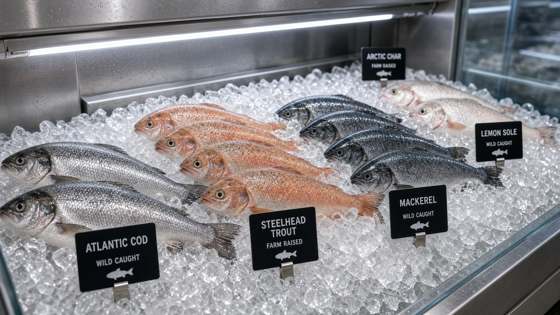
The information can appear on a package label, a sign at the display case, a placard or a sticker. At a full-service fish counter it is often on the case card next to the price. If you cannot find it, ask. Stores are expected to be able to tell you.
What is not covered
- Processed foods: Fish that has been cooked, smoked, canned, breaded or otherwise turned into a different product, for example canned tuna, fish sticks or smoked salmon, are generally exempt from COOL.
- Restaurants and food service: Menus do not have to say where the fish came from, although some do voluntarily.
Exemptions can change, so treat this as a guide and check the current rules if it matters for a purchase.
How to use origin information when shopping
Origin helps you judge freshness and price, but it is only one clue. A fish from far away that was frozen quickly can beat a "local" fish that sat for days. Use origin together with the freezing information described in reading seafood labels and certifications. For sustainability and species details, FishWatch has US fishery profiles.
Questions to ask the fishmonger
- Where was this caught or raised?
- Was it previously frozen?
- When did it arrive in the store?
What the wording can look like
Labels vary, but the pieces are consistent: a method (wild-caught or farm-raised) plus a country. Examples include "Farm-raised, Product of Norway" or "Wild, Product of USA". If a product is a blend from several places, the label may list more than one country. Frozen products in a bag show it near the ingredients or on the front panel.
Why origin affects what you pay
Origin influences cost through shipping, fishing seasons and farming costs. US wild-caught products may cost more than imported farmed equivalents, but the price gap does not always reflect a gap in quality. Compare two options: check freshness cues first, then origin, then price. If a seller will not or cannot say where a product came from, treat that as a reason to shop elsewhere.
Limits of COOL
COOL does not by itself prove the product is correctly named or traced back to a specific boat or farm. For that, see traceability systems in seafood supply chains, and the fraud risks covered in avoiding fraudulent seafood substitution.
Knowing how country of origin labeling works makes you a sharper shopper: read the sign, ask one question, and compare origins when two similar fillets are priced differently.