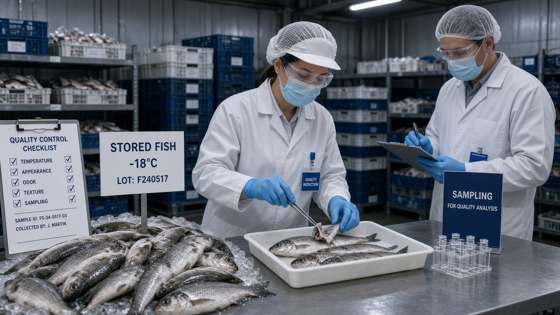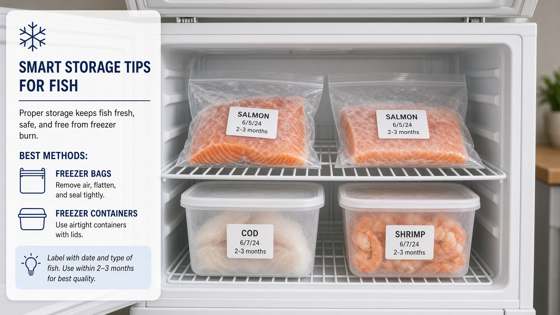
Blockchain for seafood provenance is a way of recording each step in a fish's journey in a shared digital ledger that is hard to alter afterward. For you as a shopper, it usually shows up as a QR code or web link on the pack that leads to the story of that product.
How blockchain for seafood provenance works in plain terms
Imagine a notebook that every company in the supply chain writes in: the vessel or farm, the processor, the shipper, the retailer. Each new entry is linked to earlier ones and copied across several computers, so a single company cannot quietly change the past. In seafood, an entry might say what species was caught, where, on what date, and when it was packed. The packing label carries a code that points back to those entries.
What seafood provenance looks like on a package
- A QR code to scan with your phone
- A lot number to type into the brand's website
- A page showing catch area, date, vessel or farm, and processing location
What it can and cannot prove
Strengths
A shared record can make it harder to hide where fish came from, speed up recalls and make it easier to compare sources. When it works, it supports the aims of the broader traceability systems in seafood supply chains.
Weak points
A blockchain only records what people put into it. If the first entry is wrong, for instance a boat logs the wrong species or location, the ledger faithfully keeps the wrong information. It also cannot tell you whether the fish was handled properly afterward, and it does not replace inspection or testing. The old computing idea of "garbage in, garbage out" applies. Species swaps are a separate problem covered in avoiding fraudulent seafood substitution.
Should it change what you buy?
A QR code is not a quality mark. Think of it as one more source of information, like a label or a certification. Ask three questions:
- Does the page show real, specific details (species, area, date), or only marketing language?
- Is an independent party involved, such as an auditor or certification body?
- Does the information match the label and what the fishmonger tells you?
Price is also a factor. If a tracked product costs a lot more, check whether you are paying for better fish or just the technology. Often, a trusted local seller who tells you exactly where the fish came from is just as informative.
Government and certification links
Official programs are still the backbone of seafood tracing. In the United States, NOAA's Seafood Import Monitoring Program sets record requirements for importers, and certification bodies such as the Marine Stewardship Council run chain-of-custody checks. Digital tools can sit on top of these systems, not replace them. For label basics, see reading seafood labels and certifications.
Blockchain for seafood provenance is a promising tool, but it works best when the data going in is honest and verified. Scan the code if you are curious, then confirm what it says with the cues you can check yourself: the label, the smell and appearance of the fish, and the answers from the person selling it.