Sellers often put sustainability at the front of their advertising because many shoppers care about it, which makes sustainable seafood claims worth checking before you pay extra for them. Some are backed by independent certification or rating; others are only marketing phrases with no definition behind them.
What sustainable seafood claims can mean
A claim can point to different things: a wild fishery assessed against a standard, a farm certified for environmental and social practices, a species rated by a conservation group, or just a general statement such as "responsibly sourced." Only some of these involve outside checking.
Sustainable seafood claims: certification labels
The Marine Stewardship Council certifies wild-capture fisheries, and the Aquaculture Stewardship Council certifies farmed seafood. A label from either means the product comes from a fishery or farm that met the scheme's standard and passed an audit, as explained by the programs themselves. For a side-by-side look, read MSC and ASC certification compared.
Ratings
Seafood Watch rates species and fishing or farming methods as green, yellow or red recommendations, so you can look up the exact fish you are buying. Ratings depend on where and how it was caught, so the same species can get different ratings.
Red flags in sustainability marketing
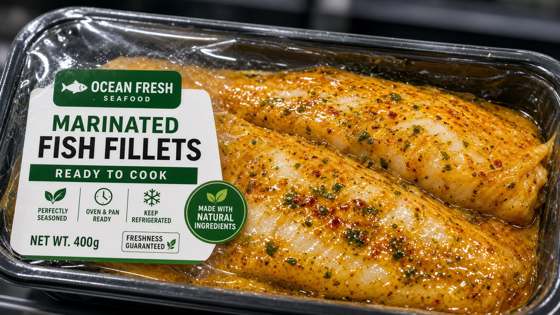
- Vague words like "eco-friendly," "natural" or "ocean-friendly" with no standard named.
- A logo you cannot match to a real program.
- A claim about the seller's whole business that says nothing about the specific fish.
- No species, origin or method information on the package.
Our article on greenwashing in seafood marketing goes deeper on this.
How to verify a sustainable seafood claim fast
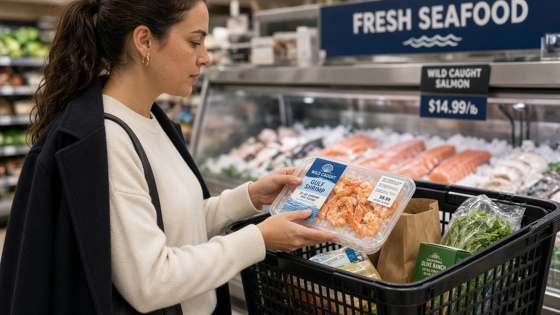
- Find the species, origin and catch or farming method on the label.
- Check for a named certification and, if there is one, look it up on the program's website.
- Look up the species and origin on Seafood Watch.
- Ask the counter staff how they know. A good seller can tell you.
What a good claim looks like on a package
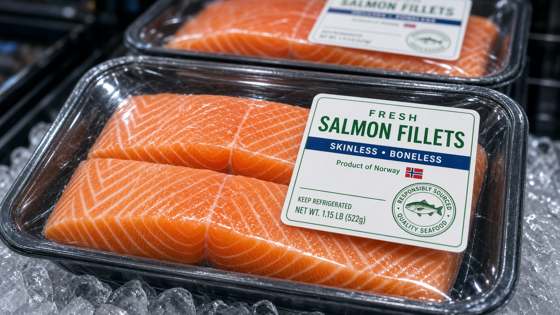
A solid claim names the species, the place it was caught or farmed, the method, and the program that checked it. For example, a tin might show the common name of the fish, the ocean region, a pole-and-line or net method, and a certification logo. Each piece lets you verify the claim on your own, and a seller that provides all four is making it easy for you to check.
Should you pay more for sustainability?
Sometimes the sustainable choice costs more, and sometimes it is the cheaper one, as with abundant species. See certified sustainable seafood and price premiums for how to judge. If sustainability matters to you, set a simple rule: buy certified or well-rated fish when the price gap is small, and choose lower-ranked options only when the alternatives are out of reach.
Treat sustainable seafood claims as a prompt for a quick check: find the species and origin, confirm the label or rating, and buy the product that can show its proof.