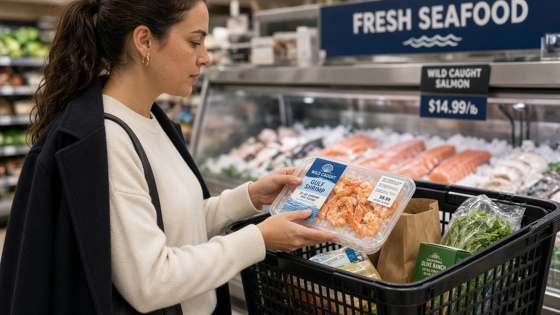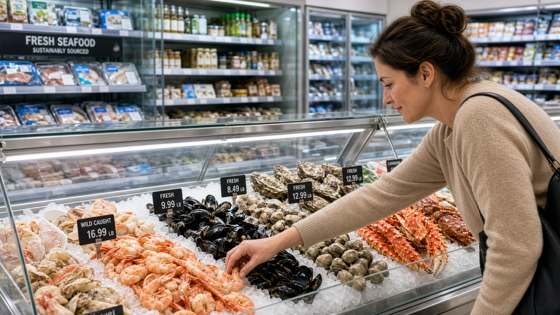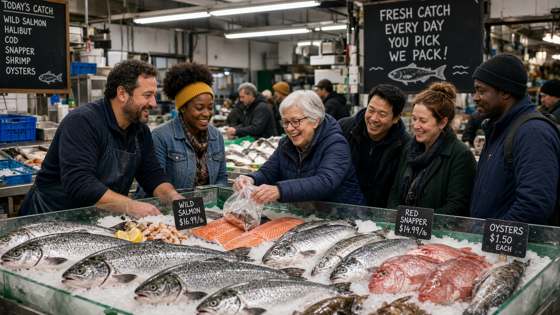
Seafood packaging does more than look good on a shelf: it protects the fish, slows spoilage and gives you clues about how it was handled. Learning to read a few simple signs helps you pick better fish and avoid paying for a nice box around a poor product.
Common types of seafood packaging
Seafood packaging: vacuum-sealed pouches
Air is removed to slow spoilage, which is why many frozen portions and smoked fish come this way. The film should be tight against the fish, with no big air pockets or leaking liquid. Loose, puffy or torn film suggests the seal has failed. Our article on vacuum sealing for extended shelf life explains why this works.
Trays with film or modified atmosphere
Many supermarket fillets sit on a tray under film. Some use a gas mix inside to hold quality longer, covered in modified atmosphere packaging for seafood. Check the date, make sure the tray is not swimming in liquid, and look at the flesh through the film.
Cans, pouches and jars
Tinned fish is shelf-stable. Avoid cans that are bulging, deeply dented along seams or leaking. Read the label for species, packing liquid and ingredients.
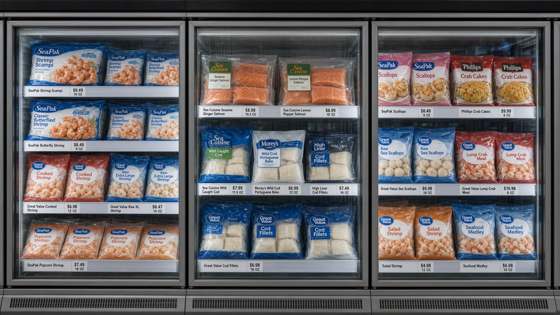
Frozen bags and boxes
Frozen fish should be solid, with a flat, clean pack. Heavy ice crystals, frost inside the bag or a block that looks thawed and refrozen are red flags.
What to check on any seafood packaging
- Species name, origin and whether it is wild or farmed.
- Pack or use-by date, and storage directions such as keep refrigerated or keep frozen.
- Net weight, and whether the weight includes ice glaze or liquid.
- Certification marks, which you can verify on the program's own site, such as the MSC.
- Any allergen statement. Fish and shellfish are major allergens in the United States and must be declared on packaged foods.
Seafood packaging at home
Keep fresh fish at 40 F or colder and use it within a day or two, or freeze it. If a vacuum-packed fish needs thawing, read the package directions and the guidance on thawing seafood safely; do not guess. The FDA guide to selecting and serving seafood covers shopping and storage.
Packaging for shipped seafood
When fish is delivered, the outer box should be insulated and cold when it arrives, with ice packs still partly frozen. Frozen items should be hard. If the box is warm or leaking, take photos and contact the seller straight away. Keep the packaging slip, which often shows the batch and packing date.
Does fancy packaging mean better fish?
No. A plain bag of frozen fillets can be better than a pretty gift box. Premium packaging may add cost, and plastic-heavy packaging can be wasteful. What matters is a clean seal, correct temperature, honest labeling and a recent date. If you want less plastic, see reducing plastic in seafood packaging.
When you read seafood packaging as a source of evidence about seal, temperature and date, the label becomes a quick checklist for whether the fish deserves a place in your basket.