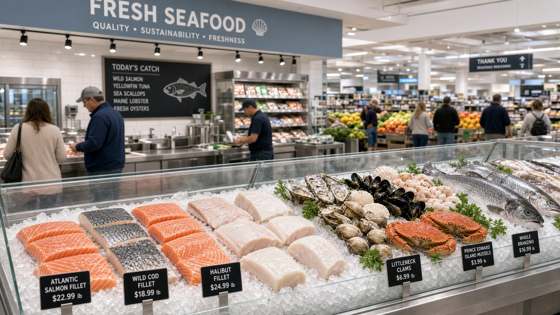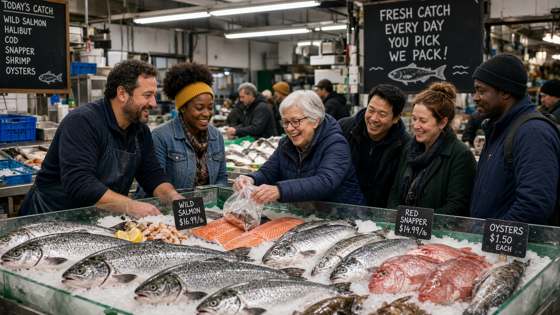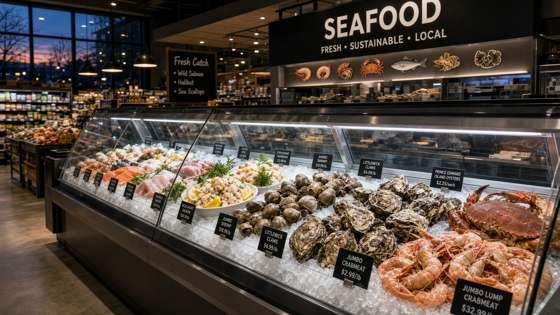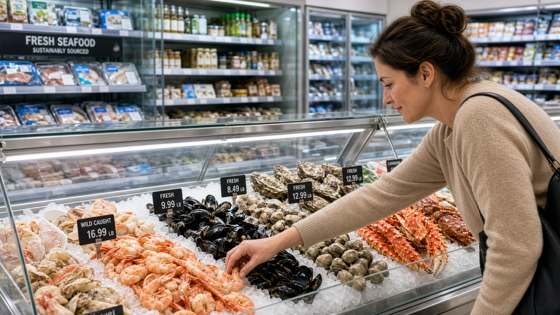
A pop-up seafood stand, whether a roadside truck, a tent at a market or a seasonal dock stall, can give you fresh fish straight from the source, but you should check a few signs before buying. The question is not whether the seller is temporary, but whether the fish is kept cold, labeled and sold legally.
Quick checks at a pop-up seafood stand
Pop-up seafood stand: temperature and ice
Fish and shellfish should sit on plenty of clean ice or in refrigerated cases, with ice that is not melted to water. Fish should not be sitting out in sun. Refrigerated or iced storage at 40 F or below is the standard for fresh seafood, according to FDA guidance.
Permit and labeling
Many places require a vendor to display a permit or license. Rules vary, so look for a visible one, or ask. For shellfish, ask for the harvest tag information, which shows where and when the shellfish were harvested; see shellfish harvest area classifications.
The fish itself
Use the usual signs: clear bulging eyes on whole fish, red or pink gills, firm flesh and a clean ocean smell. Our guide to recognizing freshness in fish has the details. Live shellfish should be closed or close when tapped.
Questions to ask the seller
- When was this caught or harvested, and where?
- Has it been frozen before?
- Do you clean or fillet it? What is the price per pound after cleaning?
- Where do you sell regularly? A seller who returns to a known spot is easier to follow up with.
Prices and payment
Pop-up prices can be lower than shop prices when the seller has no overhead, or higher when supply is short. Know the usual price per pound. Many small sellers take cash only or use a mobile reader; carry small bills. Get a receipt if possible, so you have a record if there is a problem. For more on prices, see how wholesale seafood pricing works.
Take it home right
Bring a cooler and ice packs, keep it out of a hot car, and refrigerate or freeze promptly. The FishWatch buying page has more shopper tips. If anything smells off at home, do not eat it.
When to walk away
Skip a stand if the fish sits in the sun, the ice is gone, there is no way to learn where the fish came from or the seller will not answer simple questions. A one-off bargain is not worth a bout of illness. Compare with trusted options in farmers market seafood rules and tips.
What to buy and what to be careful with
Good bets at a pop-up seafood stand
Whole fish on ice, fish that the seller can name and place, and shellfish with harvest information are the easiest to judge. Whole fish let you check eyes, gills and skin yourself. Fillets are harder to assess, so rely more on the seller's answers and on a clean smell. Fish that the seller cleans in front of you also shows how they handle it.
Higher-risk items
- Raw shellfish eaten on the spot, unless the vendor clearly keeps it iced and can name the harvest area. People who are pregnant, older, or have weakened immunity should be especially careful; see the FDA advice linked earlier.
- Ready-to-eat items such as cooked crab, smoked fish or ceviche that are not kept cold or hot.
- Pre-packed fish with no label, date or origin.
- Anything that smells sharp, sour or like ammonia.
A five-minute inspection routine
- Look at the ice first. It should be abundant and clean, with product nestled in it, not resting on a puddle.
- Check that raw and cooked foods are kept apart, and that staff use clean utensils or gloves.
- Look at the fish: bright skin, moist flesh, no browning or dried edges.
- Smell it. It should smell mild and of the sea.
- Ask your three questions about catch date, origin and freezing history.
- Pay, get a receipt and go straight to your cooler.
Cooking and storing what you bring home
Treat pop-up fish as highly perishable. Refrigerate it right away, cook it within a day or two, or freeze it if you will not. Cook fish to 145 F (63 C) or until it turns opaque and flakes easily. Wash your hands, board and knife after handling raw seafood, and keep it away from ready-to-eat foods. For more on handling, see the FDA guidance linked above.
Cost comparison tip
Compare the per-pound price with your supermarket for the same species and form, and factor in cleaning and waste. A whole fish at a low price can lose a good share of its weight to head, bones and guts, so the price per pound of edible meat is higher than the sticker suggests. Still, whole fish often wins on value if you use the frame for stock.
A pop-up seafood stand can be a good source when you check the ice, the permit and the fish, ask three simple questions and get the catch home cold.