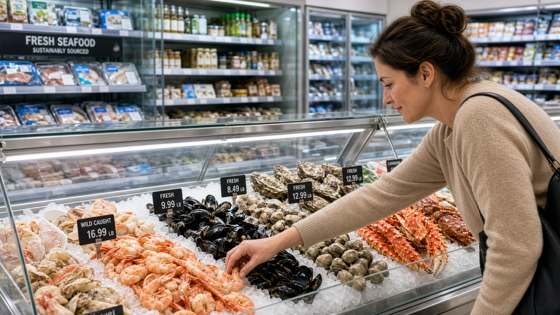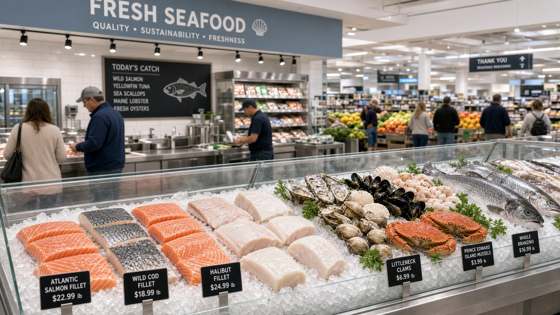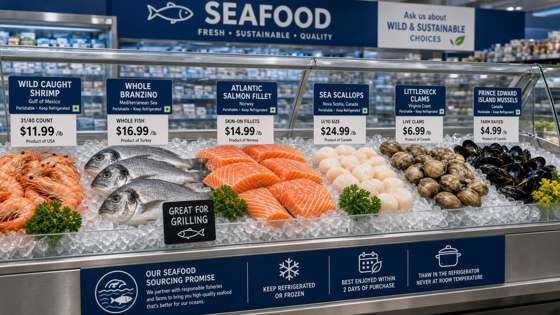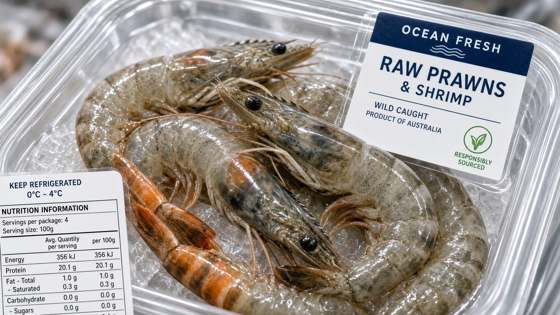
The biggest seafood shopping trends in 2025 are not exotic: more shoppers are comfortable with frozen fish, tinned fish has become a respectable dinner ingredient, labels are asking for more detail, and ordering from a seller by mail is routine. Each of these changes gives you more choice, and each has a few traps worth knowing about.
Seafood shopping trends worth using
Seafood shopping trends: frozen and flash-frozen fish are mainstream
Fish that is frozen soon after harvest can match or beat "fresh" fish that has spent days in transit, and the freezer case is often cheaper per pound. Look for fish that is solid, with no ice crystals inside the bag or freezer burn. Our comparison of fresh versus frozen nutrition and taste explains why this works.
Tinned and jarred seafood has moved up the shelf
Sardines, mackerel, mussels and tuna are sold in a wider range of styles, from plain to spiced. Tins are shelf-stable, inexpensive per serving and a handy way to eat fish when you have no time. Read the label for the fish species, the packing liquid, and sodium content.
Convenience formats keep growing
Pre-seasoned portions, skin-on fillets in single-serve packs and meal kits save prep time. Compare the price per pound with plain fillets, since the added cost is real. See seafood meal kits for a closer look.
Labels and sourcing questions
Shoppers increasingly ask where their fish came from and how it was caught or raised. Retail labels in the United States can include country of origin and whether the product was wild-caught or farm-raised; the USDA's country of origin labeling page explains which products are covered. Sustainability marks from groups such as the Marine Stewardship Council are another clue, though a mark is one piece of information and not a guarantee of how the fish tastes.
Ordering online and from the source
Direct sales from fishermen, farms and small processors are easier to find online than they were. This can mean fresher fish and clearer sourcing, but shipping fees add up. Compare the total, check delivery timing, and use our checklist on buying seafood online.
Budget pressure and smarter substitutions
When prices climb for popular fish, flexible shoppers swap species: pollock or cod instead of an expensive fillet, canned salmon instead of fresh, or mussels instead of shrimp. A fishmonger can suggest a similar fish that suits the recipe. For more on cost, see sustainable seafood on a budget.
A practical way to use the trends
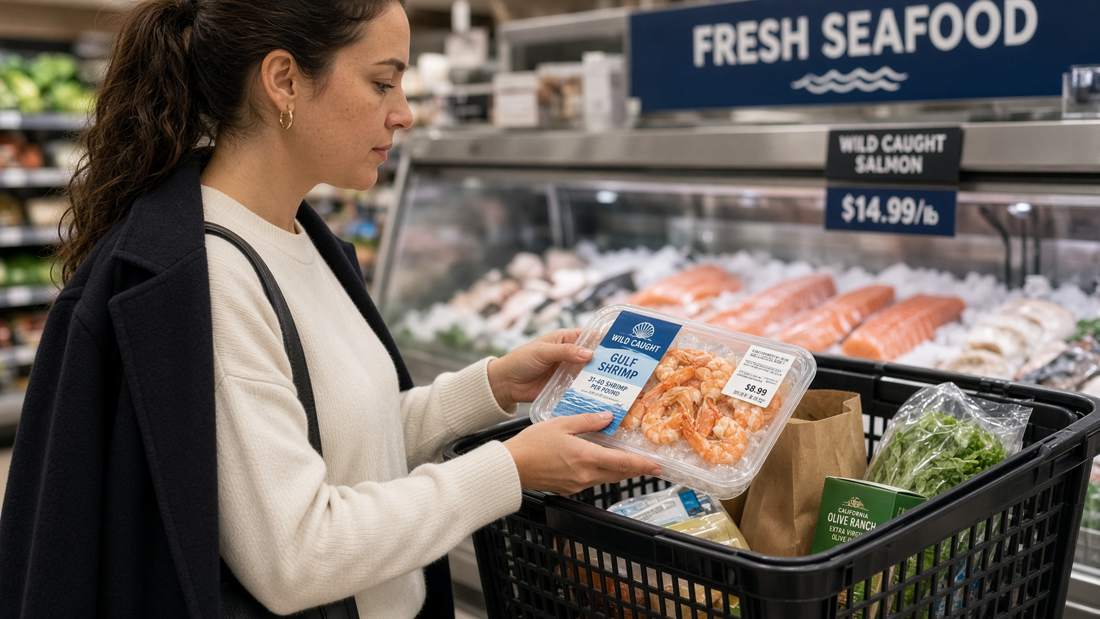
None of this requires a new kitchen or a bigger budget. It does ask you to look at the package, not just the picture on the front. Check the species name, the form it is sold in, the weight, and the unit price, and notice whether the product is raw, cooked, breaded or seasoned, since each affects both cost and how you will cook it.
- Keep two or three tins and a few frozen portions on hand for fast dinners.
- Buy fresh fish on the day you plan to cook it, and ask what arrived most recently.
- Read origin and sustainability labels, then ask if something looks vague.
- Compare per-pound price, not package price.
The seafood shopping trends in 2025 mostly reward people who read labels and plan a little: stock the freezer and pantry well, buy fresh when it is clearly good, and let price per pound make the final call.