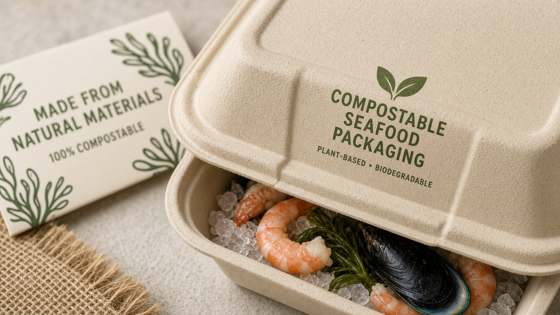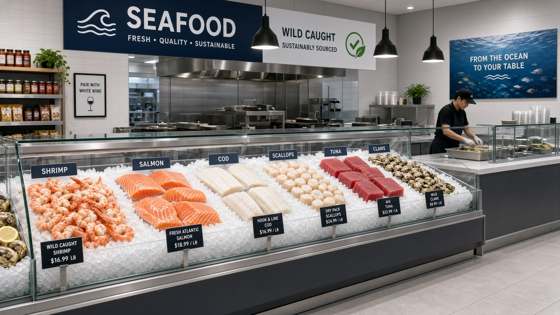
Greenwashing in seafood marketing happens when packaging, menus or ads suggest that a product is better for the ocean than the evidence supports. Because seafood supply chains are long and complicated, vague claims can slip through easily, so a few habits go a long way toward protecting you.
Common forms of greenwashing in seafood marketing
Vague words with no standard
Terms such as "eco-friendly", "ocean-safe", "natural" or "responsibly sourced" mean little unless they are tied to a named standard that you can look up. A real claim says who verified it and what it covers.
Lookalike logos and self-made badges
Some packs use green wave or fish symbols that look like certification marks but are only the company's own design. The genuine MSC and ASC labels are tied to third-party certification and a traceable supply chain. If a mark is unfamiliar, search for the organization behind it.
True but narrow claims
A claim can be accurate and still misleading. "Dolphin safe" on tuna, for instance, speaks to dolphin protection under a defined standard, not to whether the tuna stock is healthy or whether other animals were caught as bycatch. In the United States the dolphin-safe label is regulated, so look for details from NOAA's bycatch information and compare with other criteria.
Selective or outdated evidence
A brand may highlight one good practice while staying silent on others, or cite an assessment that is out of date. Ratings change as fisheries change.
A quick checklist
- Is there a named certification or rating? Look it up.
- Does the pack give species, origin and method?
- Does the claim cover the whole product or only part of it?
- Can the company or retailer show evidence if you ask?
- Does the price and the story make sense together?
What does real evidence look like against greenwashing in seafood marketing?
It usually includes a certificate number, a species name, a catch or farm area and a link to a report. The Seafood Watch site lets you check the rating for a species and region independently of the brand. See also sustainable fishing certifications compared and transparency in seafood supply chains.
Does certification mean greenwashing never happens?
Certification reduces the risk but does not remove it. Standards differ in strictness and scope, critics of any scheme can point to individual fisheries or farms that they think should not qualify, and supporters argue that certification drives improvement. Fraud can also occur outside the standard, such as mislabelled species. This is why combining several signals works best: a species name, an origin, a certification mark, a rating check and a seller who answers questions.
Online shopping adds complexity because you cannot talk to anyone. Look for the same details on the product page, such as species, origin, method and certification number, and be cautious of sites that present only slogans. Our guide to buying seafood online covers other things to verify.
A final tip: price is a clue. If a premium sustainability claim comes with a bargain price and no detail, ask more questions before you buy.
What to do if you suspect a problem
Ask the store or brand for evidence. In the United States, you can report misleading advertising to the Federal Trade Commission; check its current website for how. Rules on environmental claims differ between countries, so avoid assuming a claim is legally checked just because it is on the pack.
Awareness is the best defense. Keep the checklist in mind, and greenwashing in seafood marketing will lose much of its power over your shopping.