Sustainable fishing certifications are third-party labels that tell you a fishery or farm has been assessed against a published standard. The most familiar are the MSC label for wild-caught seafood and the ASC label for farmed seafood, and they are useful, but they are not identical and not the final word.
The main labels at a glance
MSC (Marine Stewardship Council)
The blue MSC label applies to wild-caught seafood. Fisheries are assessed by independent bodies against a standard covering the health of the fish stock, the fishery's impact on the ecosystem, and the effectiveness of management. Read about the approach at msc.org. A chain of custody requirement is meant to track certified fish from boat to store.
ASC (Aquaculture Stewardship Council)
The ASC label applies to farmed seafood and covers environmental and social criteria for farms, such as water quality, feed, disease management and worker conditions. Details are on the ASC site. Our guide to mangroves and shrimp farming shows one place where farm siting criteria matter.
Other schemes you may see
You may also see labels such as Best Aquaculture Practices, Fair Trade, or regional and retailer-run schemes. They differ in what they measure, how often farms are audited and whether they cover social issues. Check what a label covers before assuming it covers everything.
How sustainable fishing certifications differ from ratings
A certification is a pass-or-fail seal on a specific fishery or farm. A rating, such as those from Seafood Watch, is an independent recommendation by species, location and gear that is not a seal. Ratings can be useful when no label is on the product, and they are sometimes stricter or looser than certifications. It is normal for the two to disagree on a given product.
Strengths and limits
- They give you a quick, independently audited signal that saves research time.
- Standards are updated over time, and certified fisheries can be suspended.
- Critics argue some certified fisheries still have notable impacts, and that standards could be stricter. Supporters argue the labels drive real improvements. Both views have supporters, so judge for yourself.
- Most labels do not guarantee full coverage of labor conditions, which is covered separately in forced labor in seafood supply chains.
Using sustainable fishing certifications sensibly
- Treat a label as a good starting point, not an end point.
- Check that the label is on the product and the claim is specific, not merely a logo-like graphic.
- Cross-check with a ratings guide when you can.
- Be alert to vague, uncertified wording, discussed in greenwashing in seafood marketing.
Reading the label on the pack
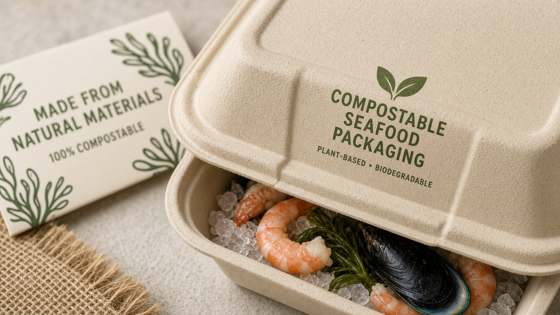
A genuine certified product normally shows the label together with a license or chain-of-custody code that can be checked on the certifier's website. If a pack shows only a leaf, wave or fish graphic with no named scheme, you cannot verify it. Also note that a certification covers a particular fishery or farm, so a species can be certified in one place and not in another. Always match the claim to the fish in your hand.
Sustainable fishing certifications are one of the easiest tools a shopper has, and combined with a question or two at the counter they make a reliable way to steer your purchases.