The seafood carbon footprint of a meal depends less on which fish you pick than on how it was caught or raised and how it got to you. Studies generally find that many seafood options have lower greenhouse gas emissions per serving than beef or lamb, but the range within seafood is wide, from very low to surprisingly high.
What drives the seafood carbon footprint of wild-caught fish
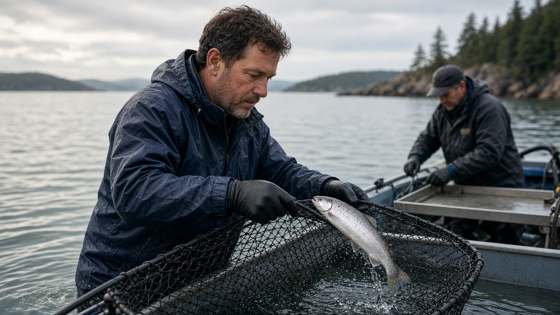
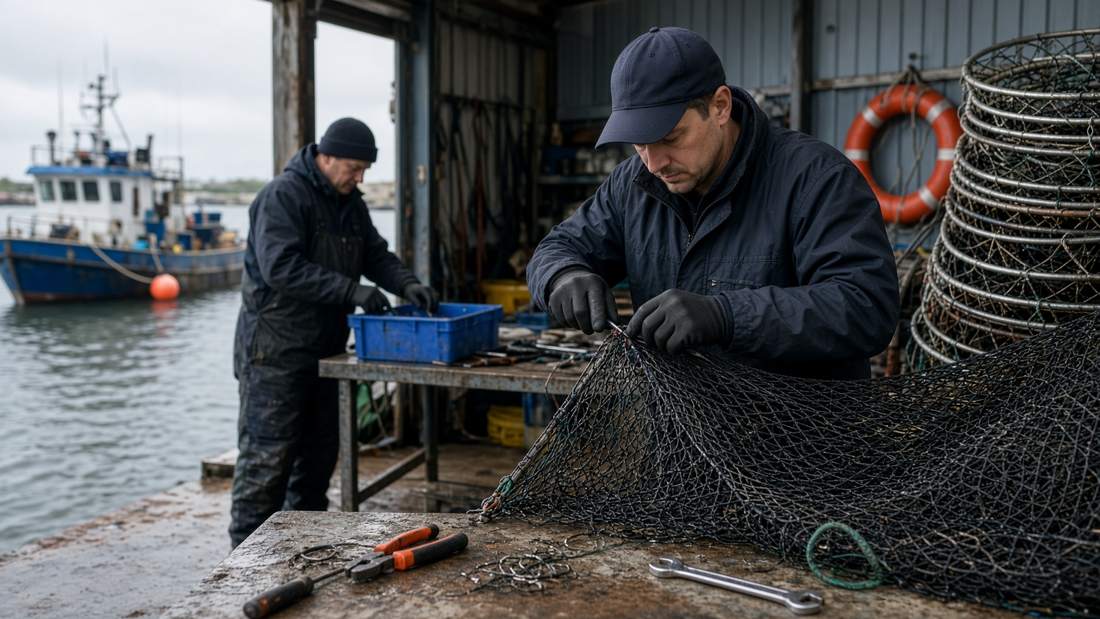
For most wild fisheries, the biggest factor is the fuel burned by boats. Fisheries that need little fuel per pound of catch, such as many fisheries for small schooling fish, tend to have lower emissions. Fisheries that burn more fuel per pound, such as some bottom trawl fisheries for flatfish and shrimp or long-distance fleets, usually have higher ones. Our article on bottom trawling covers the gear side.
What drives emissions for farmed seafood
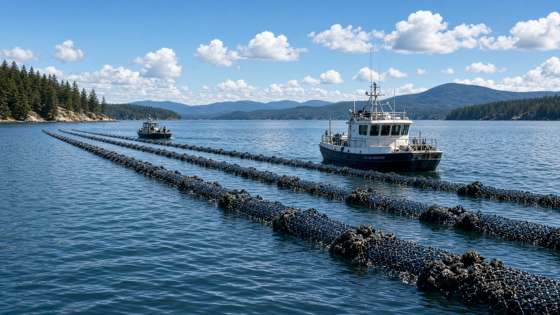
For farmed fish, most of the footprint usually comes from the feed, along with energy use on the farm. Farmed shellfish such as mussels and oysters are not fed, which is why they often appear at the low-emission end of comparisons. Fed species such as salmon or shrimp have higher footprints, which depend on feed ingredients and how efficiently the fish convert feed to growth. See feed dependency in aquaculture for more.
Transport and the air-freight problem
How seafood travels can matter a great deal. Moving fish by air produces far more emissions per pound than shipping by sea or road, so a fresh fillet flown across an ocean can carry a much heavier footprint than a similar frozen or canned product that traveled by ship. See food miles in seafood for the nuance, since distance alone is not the whole story.
A simple way to compare your options
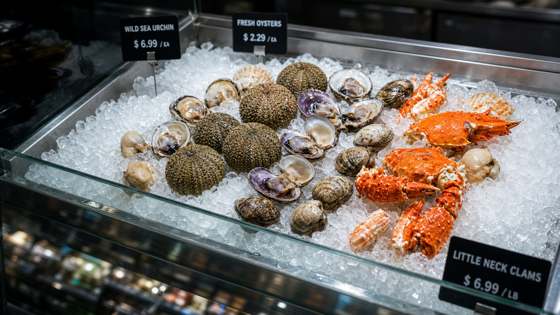
- Farmed mussels, oysters and clams are generally among the lowest-impact choices.
- Small, abundant wild fish and many canned or frozen products tend to be on the lighter side.
- Fresh, air-freighted fish and fuel-hungry fisheries often sit at the higher end.
- Seafood in general is often lighter than red meat, but not all seafood is equal.
These are broad patterns and not rules, because results vary by study, region and method. Treat any exact figure with caution and look at where it came from. The FAO publishes research on the sector at its State of World Fisheries and Aquaculture page.
Practical ways to shrink your seafood carbon footprint
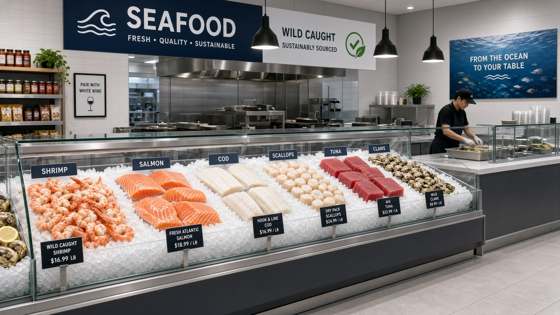
- Choose frozen or canned from reputable sources when fresh would have to be flown in.
- Eat more bivalves and abundant regional species.
- Waste less. Using the whole fillet and storing it properly avoids emissions you have already paid for.
- Combine this with sustainability ratings from Seafood Watch, since the lowest-carbon option is not always the best for fish stocks.
Keeping your seafood carbon footprint modest does not require giving up fish. It takes a little attention to how the fish was caught or grown and how it traveled, and that attention often saves money too.