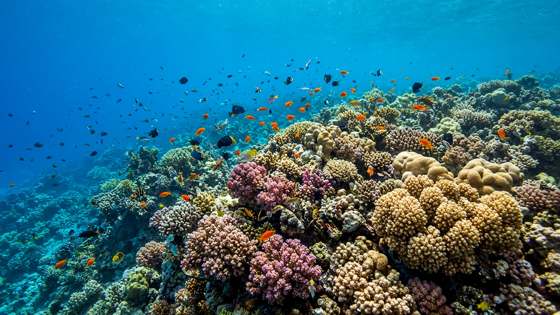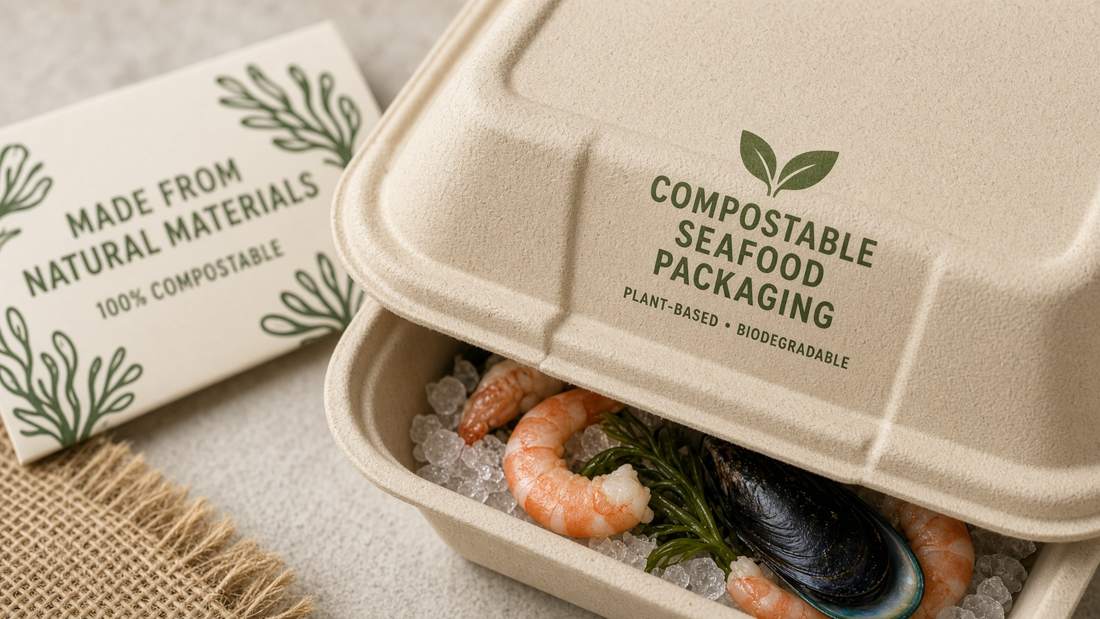
Sustainable seafood is fish and shellfish that is caught or farmed in a way that keeps the species healthy, protects the surrounding ocean or waterway, and does not depend on exploiting the people who do the work. There is no single legal definition that covers every package, which is why the phrase can mean quite different things depending on who prints it.
The three parts of a sustainable seafood claim
When researchers and certifiers judge a fishery or farm, they generally look at the same three things. You can use them as a mental checklist.
Is the species being kept healthy?
For wild fish, this means the population is large enough to keep reproducing and the amount taken each year is not pushing it downward. Government scientists track this for US fisheries, and NOAA publishes stock information on FishWatch. For farmed fish, the question shifts to disease, escapes and the wild fish used in feed.
Is the environment protected?
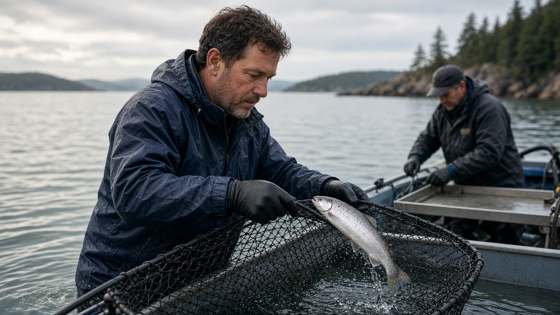
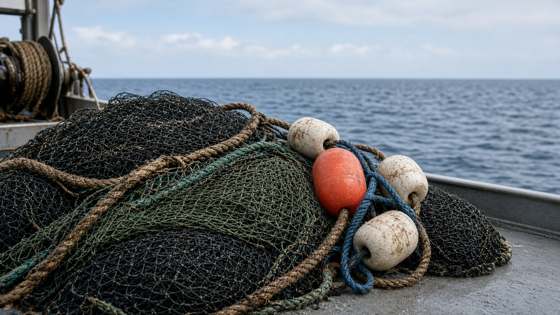
Fishing gear can damage the seafloor or catch animals nobody wanted, a problem covered in our guide to bycatch. Farms can affect water quality and nearby habitat. A responsible operation limits those effects and manages them over time.
Is the management effective?
A healthy fishery usually has rules that are actually enforced: catch limits, seasons, gear restrictions and monitoring. Weak oversight is a common reason a fishery slides from healthy to depleted.
What the term does not guarantee
Sustainability is a spectrum, not a pass or fail. A fishery can be well managed for its target species yet still have a bycatch problem. A species can be healthy in one region and struggling in another. This is why the same fish may get a green rating from one guide and a yellow one from another: they weigh the factors differently and look at different places and gear.
Social issues are often treated separately. Many shoppers assume sustainable also means fair to workers, but that is not automatic. Our article on forced labor in seafood supply chains explains why it deserves its own question.
How to shop for it without becoming an expert
- Check a consumer guide such as Seafood Watch, which rates species by where and how they were caught or farmed.
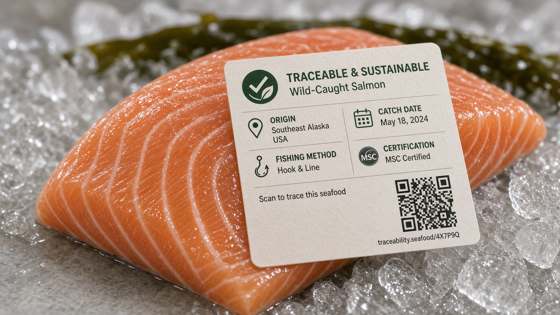
- Look for a third-party label such as the blue MSC label for wild fish or the ASC label for farmed fish, and read how the main certifications compare.
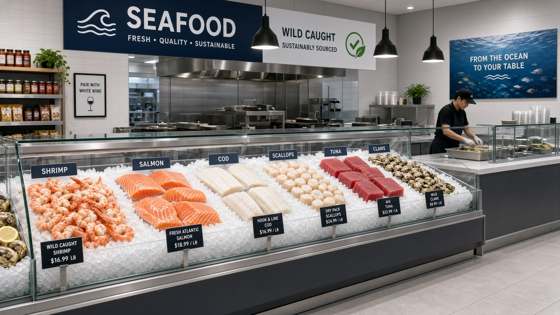
- Ask the person at the counter where the fish came from and how it was caught. A good fishmonger can answer in a sentence.
- Vary what you buy. Rotating through several species spreads demand instead of piling it onto the same few favorites.
Be wary of vague wording
Terms such as "ocean friendly," "responsibly sourced" or "eco-conscious" are not backed by a shared standard. They are worth a follow-up question rather than automatic trust. If a seller cannot name the species, the origin and the catch or farming method, the claim is just marketing.
Wild, farmed and everything between
Sustainable seafood can come from either source
Neither wild nor farmed is automatically the better choice. A well-managed wild fishery can be an excellent option, and so can a farm that controls its feed, waste and disease. Equally, a poorly run version of either can cause real damage. Judge the specific fishery or farm, not the category. Farmed shellfish such as mussels and oysters are widely regarded by seafood guides as relatively low-impact because they are not fed, but check the rating for the exact source.
It also does not have to cost more. Frozen and canned products from certified or well-rated sources are often cheaper than fresh, and our guide to sustainable seafood on a budget shows how to stretch your money.
Choosing sustainable seafood does not require perfection. It means asking a few specific questions, leaning on trustworthy guides, and treating any single label as a starting point rather than the final word.