Transparency in seafood supply chains means being able to see where a product came from, how it was caught or farmed and who handled it on the way to you. Seafood is among the most globally traded foods and often passes through several countries before it is packed, which makes this harder than it sounds.
What information you are entitled to
In the United States, retail country-of-origin labeling rules require most fresh and frozen fish and shellfish to carry the country of origin and whether the product is wild-caught or farmed. Restaurants and many processed foods are generally exempt, and details can change, so see the USDA country-of-origin labeling page and our explainer on country-of-origin labeling. Labels must also give an accurate species name; the FDA publishes guidance on acceptable market names.
Why transparency in seafood supply chains is difficult
Long, mixed journeys
Fish may be caught in one country, processed in another and sold in a third. Mixing of lots can obscure origin, and species substitution and mislabeling have been documented in studies of retail and restaurant seafood.
Illegal fishing and labor concerns
Poor traceability helps illegal catch and abuse go unseen. NOAA runs an import monitoring program for certain priority species, described on its page on illegal, unreported and unregulated fishing; our article on the Seafood Import Monitoring Program explains how it works. For human rights risks, see forced labor in seafood supply chains.
How to ask for more
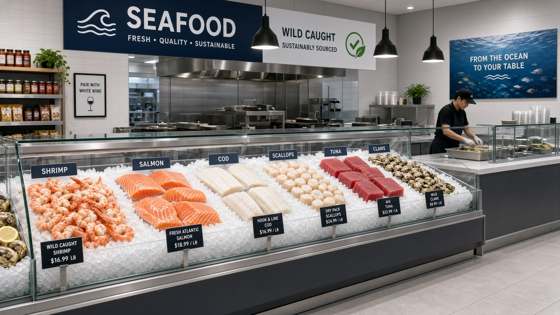
- At the counter: species, country of origin, wild or farmed, catch or farm method and when it arrived.
- On packs: certification marks, lot codes or QR codes that link to information about the catch.
- Online: look for named fisheries or farms and trace information on the product page.
Technology that supports transparency in seafood supply chains
Some companies use digital records, barcodes and DNA testing to follow products. These tools can help, but they are only as good as the data entered and checked, so independent audits matter.
What does good transparency in seafood supply chains look like on a pack?
A strong label gives the common name and, ideally, the scientific name, the country or region of origin, whether the fish is wild or farmed, the method of catch or farm system, and a lot or batch code. Some products add a QR code that links to the fishery or farm and sometimes to the vessel or processing plant. If a code leads to a generic website with no product details, it is more of a marketing tool than a traceability tool.
For frozen products, check whether the fish was processed in a different country from where it was caught. "Product of" labels refer to specific legal rules, so a fish caught in one place and packed in another can carry labeling that looks confusing. Asking staff how the origin is determined is reasonable.
Sellers also owe you honesty about handling. The labels on thawed fish, for example, should make clear that it was previously frozen; our article on labeling fresh vs frozen-thawed explains the rules.
Finally, price and story should match. Very cheap premium species, or a product that cannot be traced beyond a distributor, deserve extra questions. Remember that consumers cannot audit supply chains themselves; governments, certifiers and retailers carry most of that work, and your questions keep it on their agenda.
What certifications add
Certifications such as the MSC include chain-of-custody checks that aim to keep certified and uncertified products separate. This improves traceability within certified supply chains but does not cover everything on the shelf.
When you buy, ask, compare and reward sellers who answer well. Better transparency in seafood supply chains comes from shoppers and regulators asking the same questions again and again.