Technology for ocean monitoring covers the satellites, radio beacons, cameras, sensors and genetic tests used to watch fishing activity and ocean conditions. It matters to shoppers because better monitoring makes it harder for illegal catch to enter the market and easier to check claims about where seafood came from.
The main tools
Vessel tracking
Many ships carry transponders, such as the Automatic Identification System, that broadcast position. Some governments also require fishing boats to carry vessel monitoring systems that report to authorities. Public platforms such as Global Fishing Watch use tracking data and analysis to map apparent fishing activity. Vessels can switch devices off or spoof data, so tracking is a strong clue rather than a final proof.
Satellites and radar
Satellite images and radar can spot vessels that are not broadcasting and track ocean temperature, color and currents that influence where fish gather. This supports enforcement against unreported fishing, covered in illegal, unreported and unregulated fishing.
Cameras and onboard sensors
Electronic monitoring uses cameras and sensors to record what is caught and discarded, supplementing or sometimes replacing human observers. It can help verify catch and bycatch records; see bycatch: scale of the problem. Privacy and cost questions remain a topic of debate among crews and regulators.
DNA and chemical testing
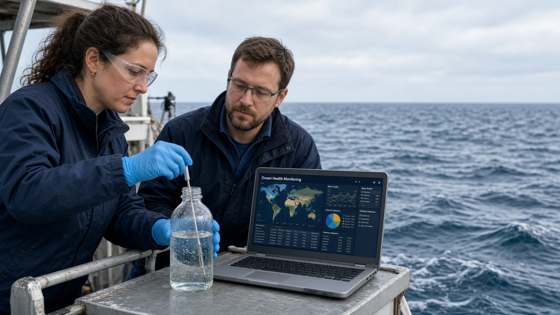
Genetic testing can check whether a fillet is the species on the label, and environmental DNA sampling can detect species in water samples without catching them. See DNA testing in seafood authentication.
What technology for ocean monitoring means for shoppers
- Stronger enforcement can reduce illegal fish in supply chains, which supports legitimate fishers.
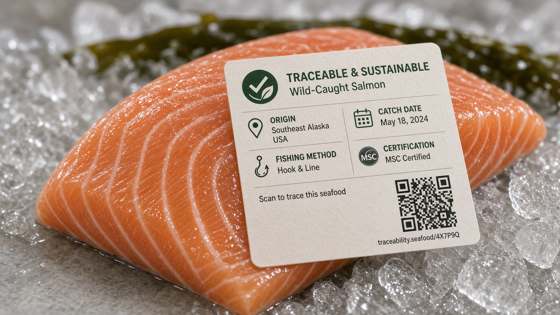
- Digital records can underpin labels and QR codes that tell the story of a catch.
- Better data supports more accurate stock assessments and ratings.
Can technology for ocean monitoring guarantee your seafood is legal?
No. Monitoring covers only part of the global fleet and the supply chain, and enforcement depends on governments acting on what they see. The NOAA page on illegal, unreported and unregulated fishing explains how the United States uses information to act on imports. Combine technology with sensible shopping: check species, origin and certification, and see FAO resources for global background.
What are the limits and risks of technology for ocean monitoring?
Data is not the same as action. A map showing suspicious fishing is only useful if a government has the authority and will to investigate, and many fleets operate in waters with limited enforcement. Small boats often carry no transmitters at all, so tracking systems tend to cover larger vessels better than local fleets. Cameras raise privacy and labor questions for crews, and rules on who can see footage and how it is used differ between programs.
There are also cost and access issues. Equipment and data analysis are cheaper than they were, but small-scale fishers in poorer regions may find them hard to afford, which can leave gaps. Some projects aim to supply low-cost devices to small boats, so that legal fishers can show their activity and benefit from traceability.
For shoppers, the practical message is to treat claims of "satellite tracked" or "digitally traceable" as a starting point and ask what the data covers. Does it follow the product from boat to store, or only the vessel at sea? Is it checked by an independent party? Those questions turn a technology slogan into useful information. Our article on transparency in seafood supply chains lists more things to ask.
Looking ahead
Costs of sensors and data are falling, so technology for ocean monitoring will probably reach more small boats and ports. For shoppers, that should mean more reliable labels over time, though honest records and active regulators will remain just as important as the gadgets.