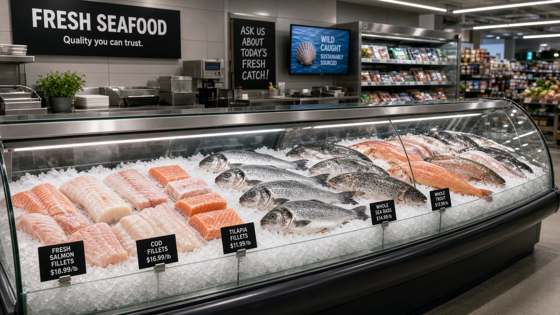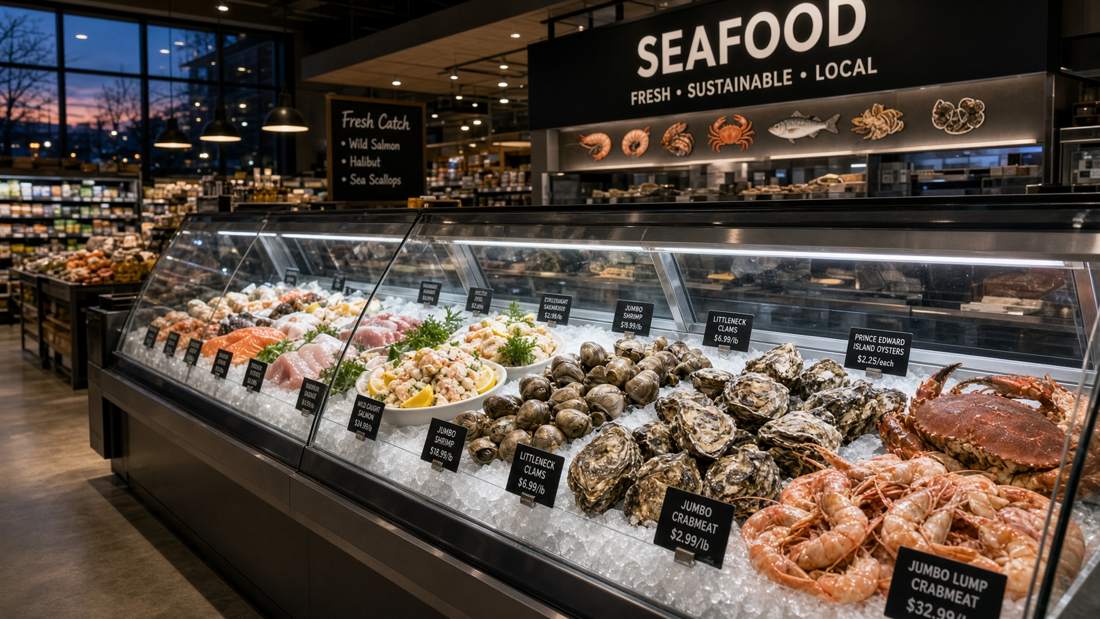
Seafood sourcing stories, such as a named boat, a family farm or a story about a fishing town, can tell you something real about your fish, or they can be a nice picture with nothing behind it. The way to tell is to look for details you can check.
What a real seafood sourcing story includes
- A specific species and the place it was caught or farmed, not just "ocean fresh."
- The method: line, trap, net, pond, net pen or tank farm.
- The time frame: harvest date or season.
- Names you can look up: a boat, a cooperative, a farm or a processor.
- A way to follow up, such as a QR code or lot number that leads to real information. See seafood traceability.
Warning signs in seafood sourcing stories
Seafood sourcing stories: vague words and borrowed imagery
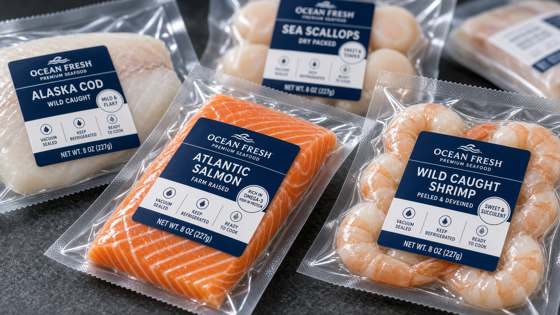
"Hand-picked," "artisanal," "ocean to table" and "premium" are not defined terms. A photo of a rustic boat can be a stock image. If the story gives no species, place or method, treat it as decoration. Our article on greenwashing in seafood marketing covers similar tricks.
Claims that clash with the label
A story about local, wild fish does not match a label that says farm-raised and imported. Trust the regulated label information, such as country of origin and wild or farmed. The USDA country of origin labeling page explains what retail fish labels must show.
How to check a seafood sourcing story
- Match the story to the label: species, origin and method should agree.
- Search for the boat, farm or cooperative name and see whether it exists and what it does.
- Look for a certification you can verify, such as the MSC or ASC, by checking the program's website.
- Ask the seller a direct question. Specific, easy answers are a good sign.
Why good sourcing stories are worth having
When a story is real, it helps you. A short supply chain can mean fresher fish, a boat with careful handling can mean better quality, and a small producer's story can tell you where your money goes. Read the economics of local seafood for how this works. A story does not replace freshness checks, so still look at the fish and smell it.
Stories and price
A premium price may be fair when a story reflects higher costs such as small-boat fishing or careful handling. But the story alone is not a reason to pay more. Compare with similar fish from other sellers, and see Seafood Watch for the species rating.
What counts as proof
A story is strongest when it comes with evidence that a third party can check. Good proof includes a lot or batch number that matches a record, a certification code that appears in the program's directory, a harvest date on the pack and a named business you can contact. Photos and quotes are pleasant, but they are not proof on their own. Sellers who have done the work are usually glad to show it.
Questions that reveal the real story
- When was this caught or harvested, and how long ago did it reach you?
- Which boat, farm or port is it from?
- Was it frozen at any point, and where?
- Who processed it?
- Can I see a code or label that confirms this?
Words that sound meaningful but often are not
Terms such as "premium," "gourmet," "boutique," "sustainably caught" and "responsibly sourced" can mean anything unless they are linked to a standard or a specific fact. "Fresh" and "wild" have specific meanings in some contexts, so ask what the seller means. Where a claim is attached to a certification, check the certifier's own website. Read how seafood fraud is policed to see where outright false claims cross a legal line.
When a small story is the better one
Not every good seafood seller has a glossy website. A fisherman at a dock who tells you plainly what he caught this morning, with ice in the cooler and a handwritten sign, may offer a more honest story than a slick brand. Look for consistency: do the seller's answers fit what you see?
Frequently asked questions
Does a named boat guarantee quality?
No. It means the product can be traced to a vessel, which is a good start, but you still need to judge freshness and handling.
Is "wild-caught" always better?
Not automatically. Wild and farmed fish can each be well or poorly managed, and the right choice depends on species, origin and method. Use a rating guide.
What if the story and label disagree?
Go with the label and ask the seller to explain. If the explanation is not satisfying, shop elsewhere.
The best seafood sourcing stories are specific, checkable and consistent with the label, so judge them by those three tests before you pay extra for the narrative.