Net mesh size is the width of the openings in a fishing net, and it is one of the simplest tools managers use to decide which fish are kept and which swim away. A net with large openings lets small fish slip through, while a net with tight openings holds almost everything it meets. That single measurement affects the size of fillet you buy, how healthy the wild population stays, and sometimes even how the fish tastes and cooks.
Quick answer for shoppers: you will not see mesh size on a label, but it explains why some fillets are thicker and why sustainable fisheries set size limits. Ask for mature, mid-sized fish and choose rated sources.
What Net Mesh Size Actually Means
Mesh is measured across the opening of a single diamond or square of netting, usually when the net is wet and stretched. Regulations are normally written in millimeters or inches. Because nets stretch, twist and shrink with use, fisheries often specify how and where the measurement is taken, and inspectors use a standard gauge to check it.
Two things matter beyond the raw number. The first is the shape of the opening: diamond mesh closes up when the net is pulled under load, while square mesh stays open and lets more small fish escape. The second is the material and thickness of the twine, since thicker twine narrows the effective opening. Managers weigh all of these when they write gear rules.
How Mesh Size Controls Which Fish Are Caught
Fish of different species and ages have different body shapes and girths. A net is selective when its openings are matched to the size of the fish the fleet is allowed to harvest. Fish that are smaller than the opening pass through. Fish that are larger swim into the mesh and become caught, often by the gills or just behind the head.
Escape of juveniles
The main purpose of a minimum mesh rule is to let young fish escape before they have had a chance to spawn. A population that is allowed to reproduce at least once is far more likely to stay productive than one where juveniles are removed in large numbers. This is why mesh rules sit alongside minimum landing sizes in many fisheries.
Why net mesh size is never perfectly selective
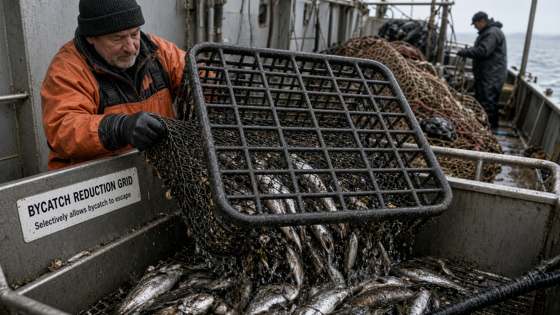
Mesh size is a blunt instrument. A net sized for one species can still catch other species of similar girth, and fish can be hurt while escaping. In trawls, mesh near the end of the net, called the codend, is the part that holds the catch, so rules usually focus there. Many fisheries now add escape panels, grids and other devices on top of mesh rules. Our guide to bycatch reduction devices covers those additions.
Mesh Size and the Fish You See at the Counter
For shoppers, the effects show up in a few practical ways.
- Fish size and portions. Fisheries with larger minimum mesh tend to land larger, more mature fish, which means thicker fillets and steaks and less waste when you trim.
- Consistency. A well-matched net produces a catch that is more uniform in size, which helps with sorting and grading. See our explanation of what size labels mean.
- Condition. Gillnets hold fish by the gills or body, so mesh that fits the species well can reduce damage compared with mesh that is too large or too small for the catch.
- Price. Larger fish usually command a higher price per pound, but selective fishing can also mean a slightly lower volume per trip. The effect on price is real but varies by species and season.
Gillnets, Trawls and Seines Use Mesh Differently
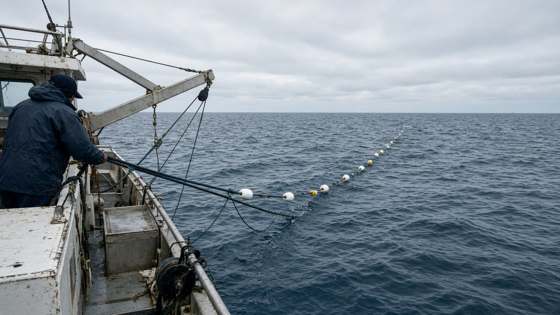
The role of mesh depends on the type of gear. In a gillnet, the mesh is the capture mechanism itself: fish of a narrow size range are caught, and both smaller and larger fish tend to avoid it. That is why gillnet fisheries are tuned so closely to one target size. Read more in Gillnetting 101.
In a trawl, the net is a funnel that herds fish into a bag at the back. Mesh matters most in the codend, where water must be able to flow out and small fish need a path to escape. Square-mesh panels and larger codend mesh are common management tools. In a purse seine, mesh is usually small because the net acts as a wall around a school, so selectivity comes mainly from choosing which school to set on rather than from the mesh itself.
Limits and Trade-Offs
Bigger mesh is not automatically better. If the openings are too large for the target species, fishing efficiency falls and fishermen may need more trips, burning more fuel. If too small, the net holds undersized fish that must be discarded, and many of those do not survive. Good mesh rules find a balance backed by scientific assessment of the stock, which is why they differ from region to region and are revised over time.
Rules also vary by country, by state and by species, so check current rules before assuming any particular mesh size applies to a fishery. In the United States, federal management is explained in NOAA Fisheries' overview of how U.S. fisheries are managed, and the agency's FishWatch profiles describe how individual species are harvested and managed.
What to Ask When You Buy Fish
You will rarely see a mesh size printed on a label, but you can still use the idea. Ask your fishmonger how the fish was caught and whether the fishery uses size limits or selective gear. Look for third-party programs that assess gear impacts, such as the Marine Stewardship Council, and check recommendations from Monterey Bay Aquarium Seafood Watch, which rate fisheries partly on gear type and bycatch. Our decoder of sustainable gear certifications explains how to read those marks.
A few practical habits help:
- Choose mid-sized fish over the smallest ones available when a species is sold in several sizes; very small fish are more likely to be juveniles.
- Ask whether the fish is from a fishery with minimum landing sizes.
- Favor species and sources rated well by recognized sustainability programs.
- Be willing to switch species when your first choice is scarce or restricted that week.
The Takeaway on Net Mesh Size
The next time you compare two fillets or wonder why one fish is dearer than another, remember that the story started with a few millimeters of knotted twine. Net mesh size shapes the age and size of the fish that reach you, the health of the stock you are buying from, and the consistency of what lands in the case. Knowing it exists makes you a sharper, more confident buyer.