Sustainable gear certifications are labels and ratings that tell you something about how seafood was caught, but each one measures a different thing. Some assess the whole fishery and its stock health, some look at bycatch and habitat impact, and others focus on farming practices or labor. Knowing what each label does and does not cover helps you decide whether a logo is worth a higher price.
What Sustainable Gear Certifications Actually Measure
Fishing gear is only one part of sustainability. A fishery can use selective gear and still take too many fish, while a fishery with less ideal gear may be well managed and tightly monitored. Credible programs therefore look at several things together:
- Stock health: is the population large enough to keep reproducing?
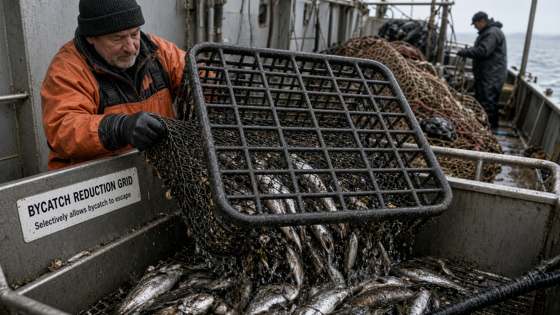
- Bycatch and gear impact: how many non-target animals are caught, and does the gear harm seafloor habitat?
- Management: are there enforceable rules, monitoring and science behind decisions?
- Traceability: can the product be followed from boat to shelf?
The sections below describe the labels you are most likely to meet. Program standards are revised over time, so check each program's own site for current requirements.
The Blue MSC Label
The Marine Stewardship Council runs a certification and ecolabel program for wild-caught seafood. Fisheries are assessed by independent auditors against a published standard, and companies that handle the fish must hold chain-of-custody certification so that labeled products can be traced back. The label is one of the most widely seen on frozen fish, canned tuna and fillets.
The Green ASC Label
The Aquaculture Stewardship Council covers farmed seafood rather than wild catch, so it speaks to farm management, not fishing gear. If you are buying farmed salmon, shrimp or tilapia, this is the label to look for in that category.
Ratings and Guides That Are Not Labels
Not all useful guidance appears on packaging. The Monterey Bay Aquarium Seafood Watch program publishes recommendations that sort seafood into categories such as best choices, good alternatives and avoid, based on species, location and method. Because the same species can be rated differently depending on how and where it was caught, these guides directly address gear. Use them on your phone while you shop.
Government sources are equally valuable. NOAA's FishWatch provides profiles on US fisheries, including how species are harvested and managed, and the FAO's fisheries and aquaculture pages give a global view.
Gear-Specific Claims You May See
- Dolphin safe: mostly seen on canned tuna. It refers to tuna fishing practices that avoid harming dolphins. The standards behind it vary by program and country, so look for details if it matters to you.
- Line caught, pole caught or troll caught: describes the method. These methods are generally more selective than some nets, but the claim is only as reliable as the seller backing it up.
- Day boat: suggests short trips and fresh landings, but is not a sustainability certification.
- Wild caught: simply means not farmed.
Words That Mean Less Than They Sound
Terms like natural, ocean friendly and responsibly caught are marketing language unless tied to a named, audited program. A real certification should give you a name, a logo and a way to verify it, often through a public database or a code on the pack.
How to Check a Claim in Under a Minute
- Identify the program name. If there is none, treat the claim as unverified.
- Search the program's website for the species or brand.
- Cross-check with a rating guide for that species and fishing method.
- Ask your fishmonger about the boat or fishery. Good shops can name them.
Our overview of how your fish was caught explains the methods behind the labels, and small-boat versus large-vessel seafood looks at whether vessel size changes the picture.
Quick Shopping Checklist for Labels
- Pick one or two programs you trust and look for them first, instead of trying to memorize every logo.
- Frozen certified fillets and canned certified fish are usually the cheapest way to buy labeled seafood.
- If the price of a labeled product is far higher, compare it with an unlabeled fish rated well by Seafood Watch.
- Take a screenshot of your favorite rating list so you can check the species and method on the spot.
- Buy a variety of species. Rotating among several well-rated fish keeps costs down and takes pressure off any single stock.
At the counter, three questions cover most of it: what is the species, how was it caught, and where. If staff can answer all three, you are usually in good hands.
Limits Worth Remembering
Certification can cost money and paperwork, which can be harder for small operations. A small fishery without a logo is not automatically less sustainable than a certified one, and a certified fishery is not perfect. Labels are one tool among several, alongside government assessments, independent ratings and local knowledge.
For many shoppers the best approach is simple: prefer products with a recognized label or a good rating, vary the species you buy, and pay attention to freshness and handling too, as described in from hook to ice. With a little practice, sustainable gear certifications become a quick filter rather than a puzzle, and you can spend your money on seafood that fits your values and tastes great.