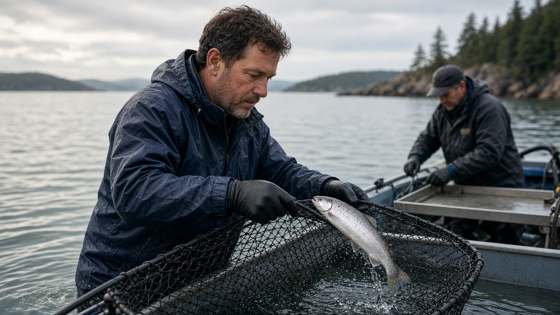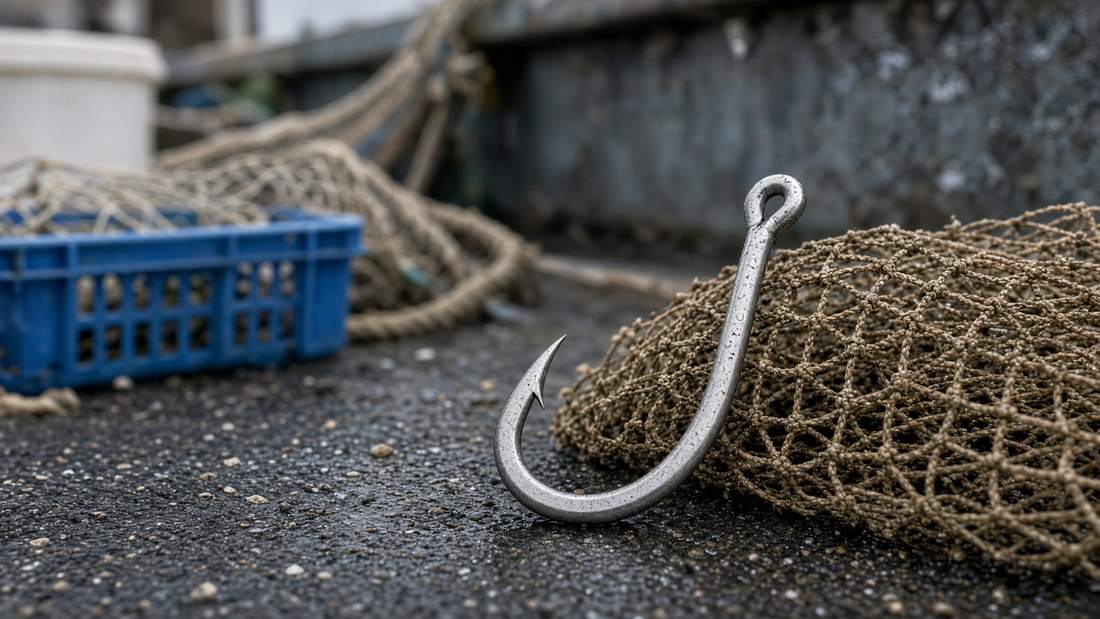
Longlining catches swordfish, tuna and halibut on baited hooks, and the fish are usually landed one at a time, so quality can be excellent; the catch is bycatch, which varies by fishery. If you buy these fish, ask where they were caught and look for an independent rating. A main line, sometimes dozens of miles long, carries hundreds or thousands of baited hooks on shorter lines called gangions. Here is what that means for your purchase.
How longlining works
There are two basic types. Pelagic longlines are set near the surface or in midwater, held up by floats, to target tuna and swordfish. Demersal (bottom) longlines are anchored on the seabed for halibut, cod, sablefish and grouper. Crews bait the hooks, set the line over hours, let it soak and then haul it back. The fish are landed individually, often bled and iced by hand.
This individual handling is a quality advantage. A longline-caught tuna or halibut can be in superb shape if the crew works quickly and keeps the fish cold. Soak time and the length of the trip still matter, so freshness is not guaranteed by the method alone.
What is bycatch, and why longlines attract scrutiny
Bycatch is anything caught that the fishery did not intend to land. On pelagic longlines it can include sea turtles, sharks, billfish and seabirds that dive for bait. On bottom lines it can include undersized fish and seabirds taking bait during setting. Because a hooked animal can drown or be injured before the line is hauled, even released bycatch may not survive.
The scale of the problem varies enormously by fishery and region. Well-managed fleets use mitigation measures, while poorly regulated ones may not. That difference is why a blanket yes or no on longline seafood is unhelpful.
Measures that reduce longline bycatch
- Circle hooks are rounded so they tend to hook the jaw rather than be swallowed, improving turtle survival after release.
- Bird-scaring lines (tori lines) flutter above the water as the line is set to keep seabirds away from bait.
- Weighted lines and night setting sink bait quickly or avoid peak seabird activity.
- Fish bait instead of squid in some fisheries, because it can be less attractive to turtles.
- Observers and electronic monitoring verify what is caught and released.
Our article on hook selection goes deeper into how hook shape changes outcomes.
Longlining fisheries and the seafood counter
You will typically meet longline-caught fish as swordfish steaks, yellowfin or bigeye tuna loins, halibut fillets and black cod. Some of these species are managed through international agreements and national quotas, and regulations differ, so check current rules and ratings for the specific stock you want. The U.S. government's FishWatch profiles many domestic longline species, including how they are caught and managed.
For tuna in particular, mercury varies by species and size. The FDA's advice about eating fish lists best choices and those to limit, which is worth reading if you buy swordfish or bigeye regularly.
How to buy longline-caught seafood responsibly
- Ask where it was caught and which fleet or country landed it.
- Look for third-party ratings. Seafood Watch rates longline fisheries separately from other gear types for the same species.
- Prefer fisheries with observer coverage and documented bycatch mitigation.
- Compare against pole-and-line or troll-caught options where available, as in our guide to troll-caught salmon.
A closer look at pelagic and bottom longlines
Pelagic longline fisheries
Pelagic longlines target fish that cruise the open ocean. A vessel may set a line that stretches for tens of miles, with floats and radio beacons marking its position, and leave it for hours. Target species include swordfish, yellowfin and bigeye tuna and, in some regions, albacore. Fishermen choose depth and bait to favor the target: for example, setting lines shallower at night is a common practice for swordfish, while deeper daytime sets are typical for bigeye tuna. Because these lines can encounter turtles and sharks, regulations in many regions govern hook type, bait type, line depth and the handling of any protected species brought aboard.
Bottom longline fisheries
Bottom longlines sit on the seafloor and target halibut, cod, sablefish, haddock, snapper and grouper. They generally touch the bottom lightly compared with trawl gear, because the footprint is mostly anchors and the line itself. Fish caught on a bottom line are often in excellent condition, which is why Pacific halibut and black cod enjoy a strong reputation among chefs. Rules on seasons and quotas matter here: halibut, for instance, is managed under catch limits, and fresh supply tends to peak during open fishing periods, so check local availability.
How longline seafood differs on the plate
Longline-caught fish are typically landed one at a time, which gives crews a chance to stun, bleed and chill them rapidly. This is a notable quality advantage over fish that spent hours crowded in a net. Properly handled tuna shows deep, translucent color and firm flesh, swordfish has a dense, meaty steak with a clean flavor, and halibut yields thick, snow-white fillets that hold together on the grill.
Price reflects both the fish and the effort. Longline trips can last many days and use substantial fuel, bait and labor, so premium cuts cost more per pound. Our piece on fuel costs and your seafood bill explains how running costs reach the price tag.
- Fresh tuna should smell clean and marine, not sour or ammonia-like.
- Swordfish steaks should be moist and cohesive, with no dry edges or browning.
- Halibut should be glossy and translucent when raw, turning opaque white when cooked.
Cooking longline-caught fish simply
Thick steaks from longline fisheries reward simple treatment. For a four-serving meal, pat four 6-ounce tuna or swordfish steaks dry, brush with oil, season with salt and pepper and sear in a very hot pan for about two to three minutes per side for tuna served rare to medium-rare, or four to five minutes per side for swordfish cooked through. Halibut fillets can be roasted at a high oven temperature for roughly ten to twelve minutes depending on thickness, until the center just turns opaque. Let all of them rest briefly before serving, and use a thermometer if you want to confirm doneness against current USDA and FDA guidance, which recommends cooking fish to an internal temperature of 145 degrees Fahrenheit.
Longlining is neither inherently bad nor inherently safe. Your best tool for judging bycatch in a given piece of fish is the combination of fishery, region, mitigation measures and independent rating, and asking about these at the counter signals that you care.