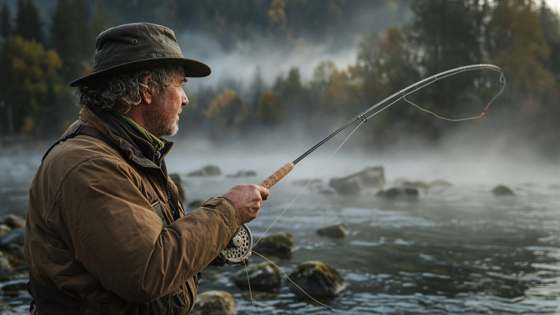
Hook selection matters to shoppers because the shape and size of a fishing hook help decide which fish get caught, how badly they are injured and how many unwanted animals are hooked along the way. If you see "line-caught" or "hook-and-line" on a label, the hook is part of why those fish can be higher quality and often lower in bycatch. Here is what to know and what to do with it at the counter.
The Short Answer for Shoppers
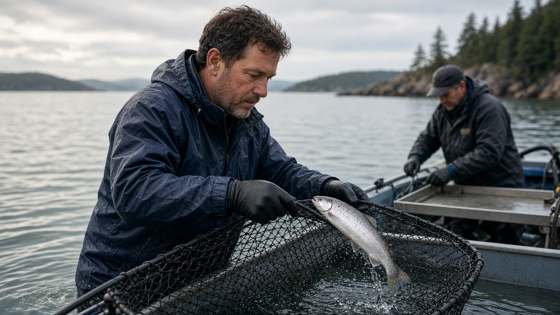
- Line-caught fish are usually landed one at a time, so they tend to have fewer bruises than fish crushed in a big net.
- Hook-and-line is often rated better than some other methods for bycatch, but not always. Check the species and region.
- The label rarely names the hook. Look for the method, a named fishery and a rating instead.
- Line-caught fish often cost more per pound. Pay that premium only when the fish looks and smells fresh.
How Hook Selection Changes the Catch
A hook is a simple tool, but small design differences have large effects.
- Size: a larger hook tends to catch larger fish, and a smaller one lets in smaller fish, so size is one way fishers aim at certain sizes and species.
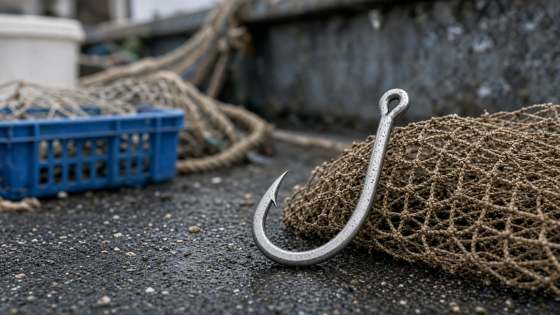
- Circle hooks versus J-hooks: a circle hook is curved back toward the shank and usually catches in the corner of the mouth. A traditional J-hook is more likely to be swallowed. Mouth-hooked fish are easier to remove and release, and in some fisheries circle hooks have been shown to reduce deaths of released animals. Results depend on the species and fishery.
- Barbed or barbless: barbless hooks come out faster, which helps if a fish must be released.
- Material and finish: some regions require hooks that corrode away if left in a fish, though rules vary, so check current rules for any specific fishery.
Hook selection and bycatch in longlines
Longlines carry hundreds or thousands of baited hooks on a single line, which makes hook choice important. In some longline fisheries, circle hooks and certain baits have been used to cut accidental catch of sea turtles. Read more in our guide to longlining and bycatch. Bait changes outcomes too; see how bait choices affect seafood.
Hook-and-Line Terms on Labels
Labels use several terms, and they do not all mean the same thing:
- Line-caught or hook-and-line: caught on a hook attached to a line. This can mean a rod, a handline or a longline, so ask which.
- Troll-caught: baited or lured lines pulled behind a moving boat. See troll-caught salmon explained.
- Handlined or jigged: one line worked by hand, usually the most selective. Learn more in our piece on handlined and jigged seafood.
- Longline: many hooks on a long main line. Impact varies a lot by region and design.
None of these terms guarantees a sustainable fishery. For that, check an independent source such as Seafood Watch, which rates species by region and method, or an MSC-certified listing at msc.org. NOAA's FishWatch also profiles many U.S. species and how they are harvested.
Quality Signs in Line-Caught Fish
A hook-caught fish that was iced quickly can be excellent, but handling after capture matters as much as the gear. Check these at the counter:
- Clear, full eyes on whole fish; bright red gills.
- Firm flesh that springs back and does not leave a fingerprint.
- A mild, clean smell, never sour or ammonia-like.
- A small hook mark near the mouth is normal. Large tears or bruising around the body point to rough handling.
- Fillets that look moist and are not gaping.
Ways to save money on line-caught fish
Buy whole fish and ask the counter to fillet it. Whole fish is often cheaper per pound, and you can use the bones for stock. Choose locally popular species that are in season, buy frozen portions that were frozen soon after landing, and shop at the end of the day when fresh fish is sometimes marked down, provided it is still within a day of landing. Cook or freeze fresh fish within one to two days of purchase.
Hook selection will rarely be printed on your fish, so read the clues that are: the method, the fishery, a recognized rating and how the fish itself looks and smells. Together they tell you far more than the hook ever could on its own.