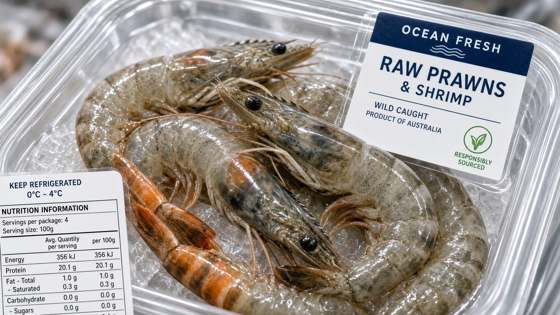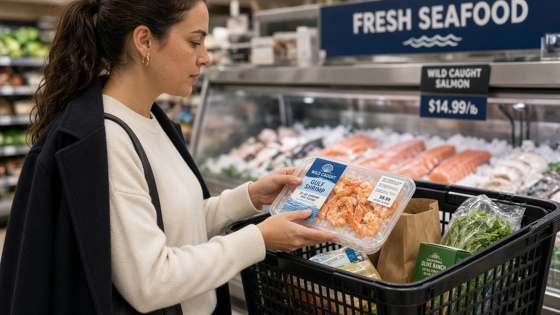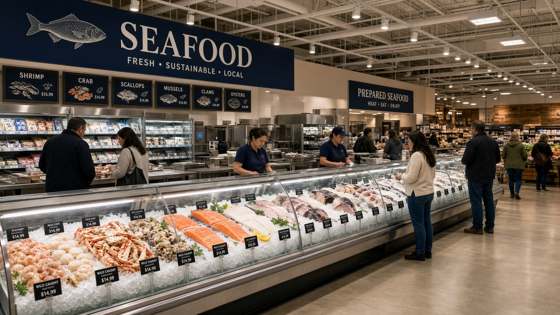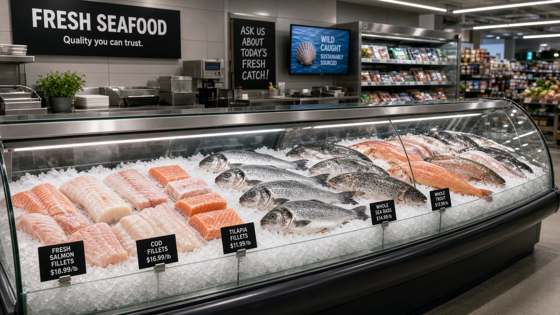
Buying seafood in bulk can cut the price per pound, but only if you can store it properly and will actually eat it. Sellers set minimum orders and case sizes to make packing and shipping worthwhile, and that is why a good price sometimes comes with a large quantity.
Why sellers set minimum orders
Fresh and frozen fish is packed in cases, and shipping it cold is expensive. A minimum order, such as a set weight or dollar amount, helps cover that cost. Online sellers often set a minimum or a free-shipping threshold. Wholesale-style sellers may sell by the case. Our article on how wholesale seafood pricing works explains the background.
Is buying seafood in bulk a good deal?
Buying seafood in bulk: work out the cost per portion
Divide the total cost, including shipping, by the number of portions you will actually cook. Compare that figure with the price at your usual shop. A case of frozen fillets might cost less per portion, but if half of it ends up freezer-burned, it does not.
Check the storage you have
You need freezer space, ideally at 0 F. Vacuum-sealed individual portions keep best, and our guides on freezing fish for quality and freezer burn help. Fresh fish is not suited to bulk buying unless you will cook it within a day or two.
Ways to get the bulk price without the bulk
- Split a case with friends, neighbors or family.
- Ask the seller to portion it into smaller bags.
- Join a group order, a buying club or a CSF share; see community-supported fisheries explained.
- Choose club-store frozen packs of items you eat often, such as salmon portions or shrimp.
What to check before you buy in bulk
- Species, origin and wild or farmed, on the label.
- Pack date or best-by date, and whether the product was previously frozen and thawed.
- Weight, and whether it includes ice glaze.
- Delivery details: the fish must arrive frozen hard, or cold if fresh.
- Refund policy if it arrives thawed.
The FDA guidance on fresh and frozen seafood covers what to look for, and NOAA FishWatch adds buying tips.
When bulk is a bad idea
Skip bulk buying if your freezer is small, you rarely cook fish or the product has a short shelf life. Delicate items like scallops and shucked oysters do not keep well for long. If you are unsure, buy a smaller pack first.
Typical case sizes and what they mean
Case sizes vary by product, packer and seller, so check the exact weight on the listing rather than assuming. Frozen fillets and shrimp are often packed in boxes or bags that hold several smaller inner bags, which helps because you can open one at a time. Whole fish and shellfish may come in larger, less flexible lots. Whatever the size, work out how many meals it represents and whether your household will eat that many before the quality fades.
Reading minimum order terms
A minimum order may be a dollar amount, a weight or a number of cases. Look for these details:
- Whether shipping is included or added at checkout, and whether it is charged by weight.
- Whether the minimum applies per delivery or per month.
- Whether you can mix species to reach the minimum.
- What happens if a product is out of stock: substitution, delay or refund.
Working out whether the minimum is worth meeting
Suppose a seller offers a lower price per pound but requires a larger order than you need. Add the extra fish you do not want to the real cost: if you would have to buy 20 pounds but will only use 12, you are paying for 8 pounds that may be wasted. Compare that with the higher per-pound price on a smaller order elsewhere. Often the smaller order wins.
Common mistakes
- Ordering to hit a free-shipping threshold and buying items you will not use.
- Forgetting that delivery can arrive on a day nobody is home.
- Ignoring freezer capacity until the box is on the doorstep.
- Not asking about inner packaging and weights before ordering.
Frequently asked questions
Can I negotiate a smaller minimum?
Sometimes. Small sellers and local shops are often flexible, particularly for repeat customers. It never hurts to ask politely.
Is bulk safer if the fish is frozen?
Freezing helps fish keep, but it must stay frozen, and thawed-and-refrozen product loses quality. Check the pack on arrival and follow the label and FDA guidance on thawing.
Buying seafood in bulk pays when you do the per-portion maths, have the freezer room and split or portion the order, and it costs you when the extra fish never reaches the pan.