To compare seafood prices fairly, you need the same product, the same unit and the full cost. A fillet priced low per package can be more expensive per pound than a larger one elsewhere, and a cheap online price can turn costly once shipping is added.
Compare seafood prices on the same basis
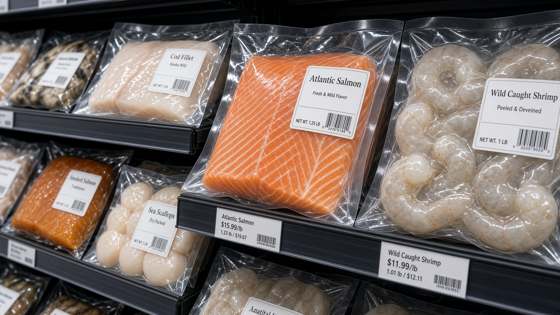
Compare seafood prices: use price per pound or per ounce
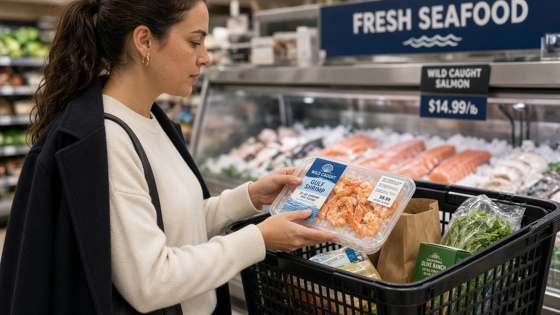
Unit price is on most shelf tags. For online orders, divide the total by the weight. Watch whether the weight includes ice glaze on frozen fish or liquid in a tin, since a glaze adds weight you pay for but do not eat.
Match the form
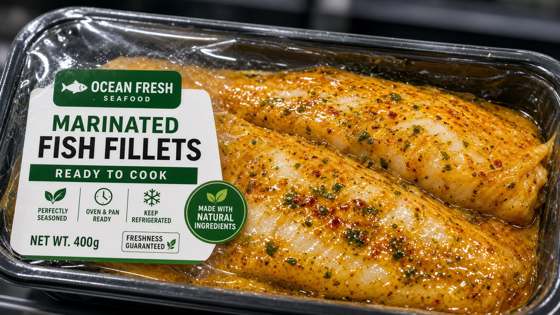
Whole fish, fillets, skinless portions, peeled shrimp and shell-on shrimp all have different yields. Whole fish costs less per pound but you lose weight to bones and heads. Our guide to whole fish versus fillets helps you estimate. Shell-on shrimp can cost less than peeled but yields less meat.
Compare more than price
- Freshness: when did it arrive, and was it frozen?
- Source: species, origin, wild or farmed.
- Services: free filleting, shucking, cleaning, special orders.
- Knowledge: can the staff advise you?
- Return or refund policy for online orders.
Supermarket, fish shop or online?
Supermarkets are convenient and often competitive on frozen and staple fish. Independent fish shops can have wider choice and more advice, as described in why your local fishmonger probably knows more than the supermarket counter. Online sellers can reach unusual products but add shipping; read buying seafood online before you order.
A worked example
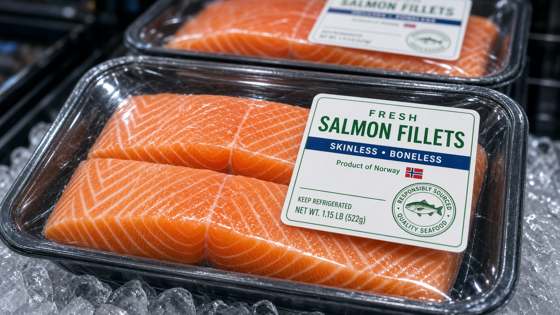
Say shop A sells salmon fillets at a lower per-pound price than shop B, but shop A's fillets are skin-on with pin bones in, and shop B's are trimmed and portioned. If you throw away a fifth of shop A's weight in skin and trim, the real cost of what you eat rises by about a quarter. The trimmed fillet may be the better value. Do this quick sum whenever the forms differ.
Build a simple price notebook
Pick four items you buy often, such as salmon fillets, shrimp, cod and canned tuna. Note the unit price at each seller over a few weeks. You will quickly see who is cheapest for what, and which sale is genuine. Use your phone notes or a spreadsheet.
Be careful with very low prices
A price far below the others deserves a closer look. Check the label for species, as cheaper fish are sometimes sold under similar names; see avoiding fraudulent seafood substitution. FishWatch lists common species and their market names. The FDA's shopping guidance lists what to look for on fresh and frozen products.
The simplest way to compare seafood prices is to line up unit price, form and extras for the same fish at two or three sellers, then buy where the whole package comes out best.