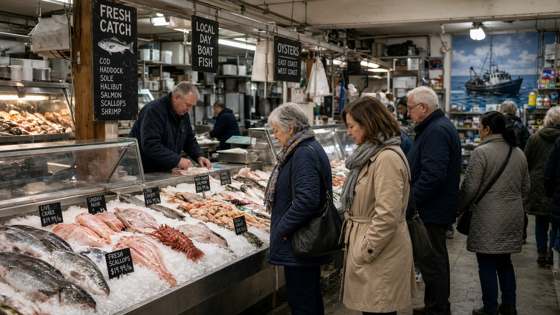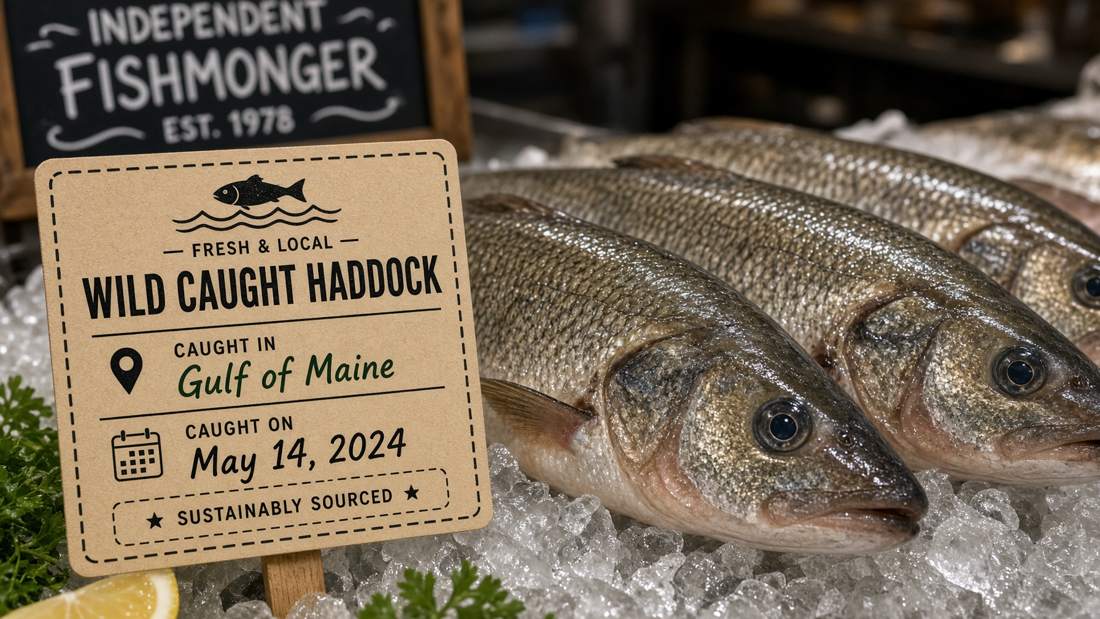
A good local fishmonger spends the day cutting, smelling, weighing and selling the same products you are trying to choose between, and that daily handling is worth more than any sticker on a package. Ask which fillet is best for dinner tonight and you get an answer based on what came in this morning, not a generic recommendation.
What a local fishmonger can tell you that a label cannot
Packaged seafood gives you a species name, a weight and a date. A person behind the counter can add the things that actually affect your meal.
- Which items arrived today and which have been sitting for a couple of days.
- Whether a fillet is firm enough to grill or delicate enough that you should pan-sear it gently.
- How thick the portion is, so you can judge cooking time before you leave the shop.
- Which cheaper cut or species will do the same job as the one you came in for.
None of this is magic. It is simply the result of handling hundreds of fish and noticing how they behave. The FDA's consumer guidance on selecting fresh and frozen seafood lists the signs to look for yourself, such as a fresh and mild smell, firm flesh that springs back and clear, shiny eyes on whole fish. A fishmonger checks all of those every day, and you can learn from watching which ones they point out.
How to get real advice instead of a sales pitch
Specific questions get specific answers. "What is good today?" is a fine opener, but follow it with the details of your plan.
Tell them how you will cook it
Saying "I am baking for four people on a weeknight" or "I want something for the grill on Saturday" lets the person behind the counter match the fish to the method. A thick swordfish steak and a thin sole fillet need very different handling, and most shops will happily steer you.
Say what you want to spend
Giving a rough budget is not rude. A fishmonger who knows you want to keep dinner under a certain amount can often suggest a lesser-known species, a smaller portion of something premium or a frozen option that eats well. For more on what to ask, see the questions that reveal quality and sourcing.
Ask your local fishmonger what they would take home
This is the fastest way to find the best value in the case. If the answer is the same item every week, that is useful information too.
Where the advantage is real and where it is not
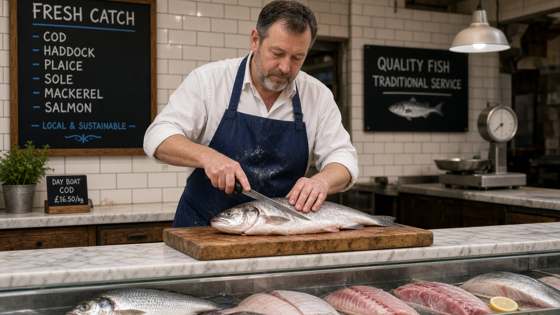
Knowledge helps most with fresh fish that is cut to order, with whole fish that need to be scaled and filleted, and with live or in-shell products. It helps less when you are buying a sealed frozen bag, since the handling happened elsewhere. Be fair to chain counters as well: many employ trained, careful staff, and any counter can be good or poor. The point is that a small shop where the same few people work every day gives you a chance to find someone who knows the product and remembers what you like. In-house filleting is one of the clearest examples, because the person who cuts your fish can show you the whole fish it came from.
A short checklist for your first visit
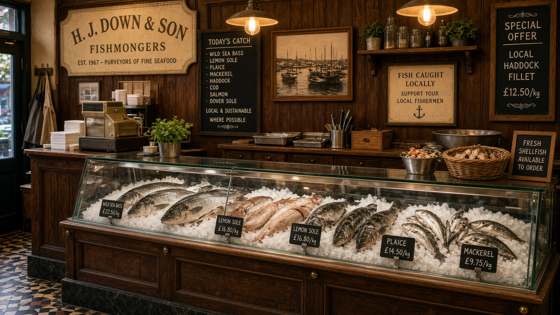
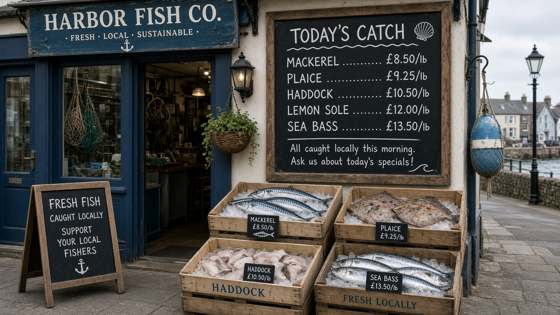
- Look at the case. Fish should sit on a thick bed of fresh ice or in a refrigerated case, and the shop should smell clean and briny rather than sour.
- Ask what arrived most recently and how it was delivered.
- Ask for a sample portion size if you are unsure how much to buy.
- Ask how long it will keep and how to store it. The FDA advises refrigerating fresh seafood at 40 F or below and using it within 2 days, or freezing it.
- Take notes on what you buy and how it turned out, so next time you can say what worked.
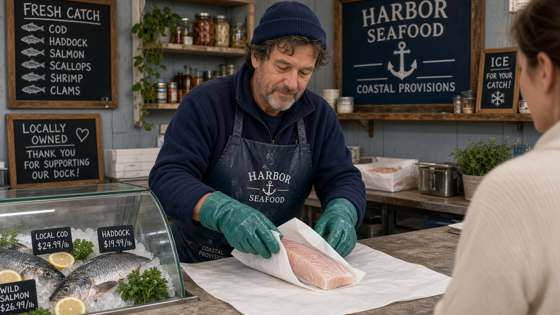
Over a few visits this becomes a conversation instead of a transaction, which is the heart of building a relationship with your fishmonger. Along the way you will also learn the rhythm of what the shop gets in each week, and why variety changes week to week makes more sense once you have seen it yourself.
If you want one practical reason to find a local fishmonger, it is this: the right advice at the counter prevents the most expensive mistakes, which are buying the wrong fish for your recipe and letting good fish spoil before you cook it. Independent shops differ widely, so judge each one on the freshness you see, the answers you get and how willing the staff are to explain. For general guidance on choosing and eating fish, the NOAA FishWatch species profiles are a helpful companion to whatever you hear at the counter.