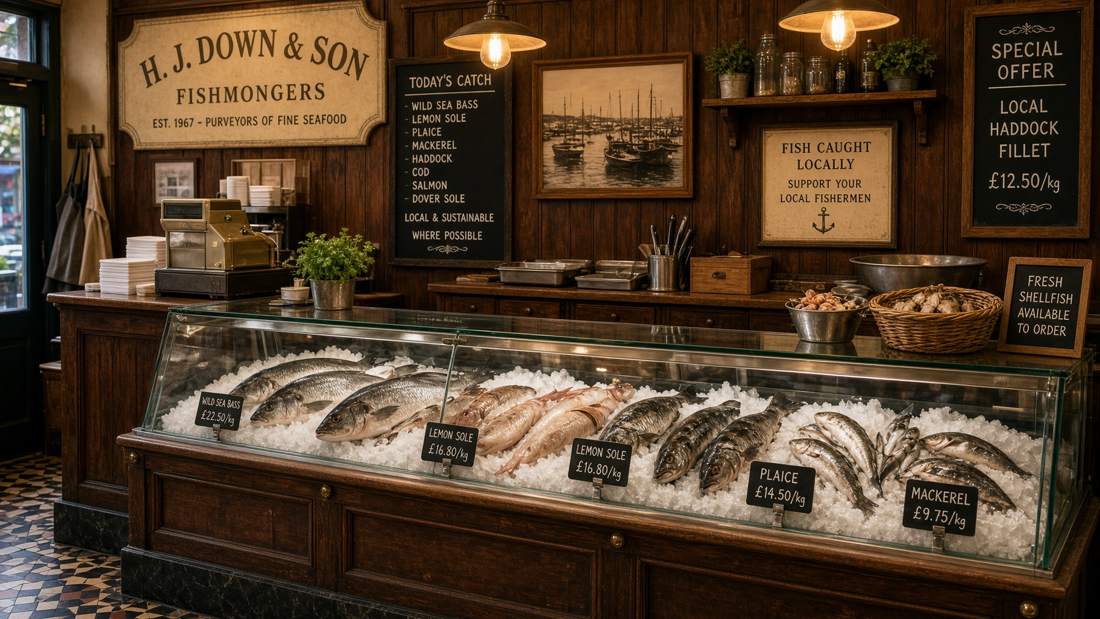
Building a relationship with your fishmonger starts with something simple: go in more than once, ask honest questions and tell them how the fish turned out. Over time, the shop learns what you like and what you want to spend, and you learn when the best fish arrives. You do not need to know much about seafood to begin.
How to start a relationship with your fishmonger
Start a relationship with your fishmonger at a quiet time
Weekday mornings and mid-afternoons are usually calmer than Saturday lunchtime or the day before a holiday. You will get more attention when the counter is not crowded.
Say that you are new
"I am trying to eat more fish and do not know much" is a perfectly good opener. Most fishmongers enjoy teaching and will recommend something forgiving to start with.
Give details
Tell them how many you are cooking for, the method and your budget. That lets them choose well. See the questions to ask your fishmonger for ideas.
What to do on your next few visits
- Report back. Say what you cooked and how it went. It builds a conversation and helps them advise you.
- Try their suggestions. If they recommend something unfamiliar, try a small portion; how shops handle unusual catch offers cooking ideas.
- Order ahead for occasions. Calling a few days before a dinner or holiday helps the shop get what you need.
- Be flexible. If the fish you wanted is out, ask what would work instead.
- Be on time for pickups. Fish is perishable.
What a good relationship with your fishmonger gives you
- Honest advice about what is best this week, including what to skip.
- First notice when something special arrives.
- Cuts and portions made to your needs.
- Tips for storage and cooking.
- Sometimes smaller touches, such as trim for stock or a preferred portion.
These perks are not guaranteed, and a shop owes you nothing beyond good service. They tend to develop naturally when you are a reliable, friendly customer.
If a first visit does not go well
Not every shop is a match. If the staff seem rushed, dismiss your questions or cannot tell you the basics about what they sell, try another time of day before you give up, and then try another shop. A good fishmonger does not have to be chatty, but should be willing to answer plain questions. Likewise, be a considerate customer: do not take up the counter during a rush with a long list of questions, and say thank you. Small courtesies are remembered, and they make the next conversation easier for both of you.
Keep your own standards
Familiarity does not replace checking. Use the signs in the FDA's guide to buying seafood: fresh and mild smell, firm flesh and clear eyes on whole fish. If something is not right, say so politely. A good shop wants to hear it. The same applies to food-safety basics at home, such as refrigerating at 40 F or below and cooking to an internal temperature of 145 F. For a wider view of the benefits, read what a local fishmonger knows. NOAA's FishWatch is useful to bring in when you want to learn more about a species before your next visit.
The best way to build a relationship with your fishmonger is to be curious and consistent. A few friendly conversations are all it takes to turn a shop into a reliable source of good fish and good advice.