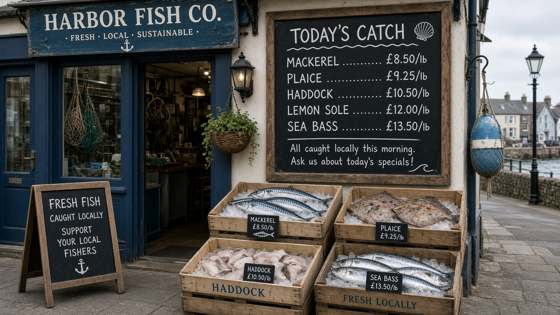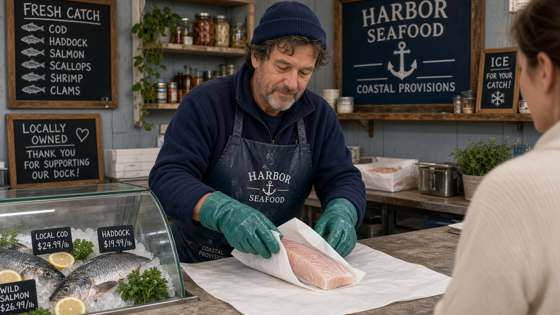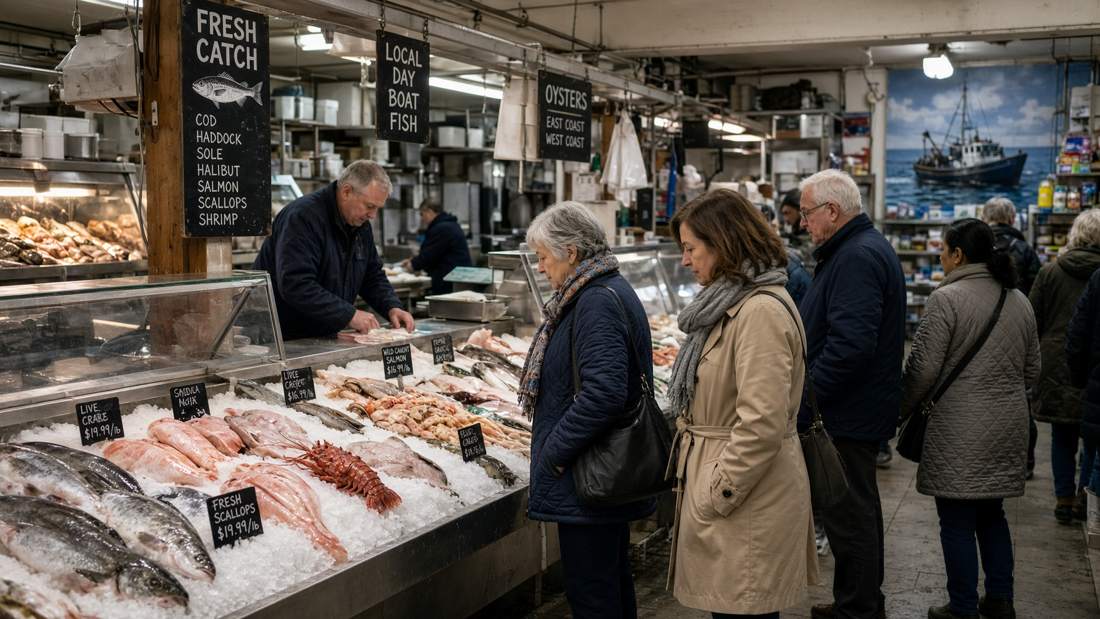
Unusual catch is anything that does not fit the short list of fish most shoppers recognize, from whole mackerel and bluefish to odd-looking flatfish or regional shellfish. Independent shops often get these directly from nearby boats, and the good ones handle them with the same care as the premium fish: iced quickly, kept cold and sold fast.
How a shop handles unusual catch
Cold chain first
Small, oily fish spoil quickly, so reputable shops keep them on ice or refrigerated and sell them within a short window. If you see them sitting out or in a case without ice, move on.
Sold whole or cut to order
Many shops offer to scale, gut and fillet. That is a good time to ask for tips, since the person doing the cutting knows where the bones are. See the fishmonger advantage of in-house filleting.
Honest naming
Fish names vary by region and some species are sold under multiple names. Ask for the species and where it was caught. The FishWatch species profiles list common names and descriptions for many U.S. fish.
Judging quality when you do not know the fish
Use the universal checks from the FDA's seafood selection guidance: a fresh and mild smell, clear shiny eyes and red gills on whole fish, firm flesh that springs back and no browning or drying at the edges. Color alone is not a reliable sign of freshness.
How to cook unusual catch by type
Cooking unusual catch: oily fish such as mackerel or bluefish
Cook them soon after buying. Grill or broil whole or in fillets over high heat, and add lemon, mustard, vinegar or pickled vegetables to balance the richness. Rich fish can taste strong when it is old, so freshness matters more here than with milder species.
Lean, mild fish
Pan-sear, bake in parchment or poach gently. Lean fish dries out easily, so watch the time and remove it as soon as the flesh turns opaque and flakes with a fork.
Firm, meaty fish
Steaks and thick cuts suit the grill or a cast-iron pan. Marinades work well.
Unfamiliar shellfish
Steam or simmer in a flavorful broth. Discard any clams, mussels or oysters whose shells are cracked or that do not close when tapped before cooking, and any that fail to open during cooking.
The safe target for most seafood is an internal temperature of 145 F, according to the FDA. Without a thermometer, fish is done when it is opaque and flakes easily.
Ask the shop for a recipe
A good shop knows how its fish cooks best and will often hand over a simple method. This is also a way to start building a relationship with your fishmonger. If you want to know why these fish appear when they do, see why small shops carry unfamiliar species.
Trying unusual catch can make dinner more interesting and often costs less than the usual favorites. Buy a small amount, cook it soon and tell the shop how it went, so next time they can point you to the next fish worth trying.