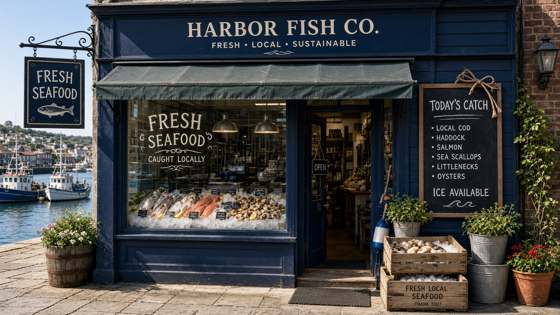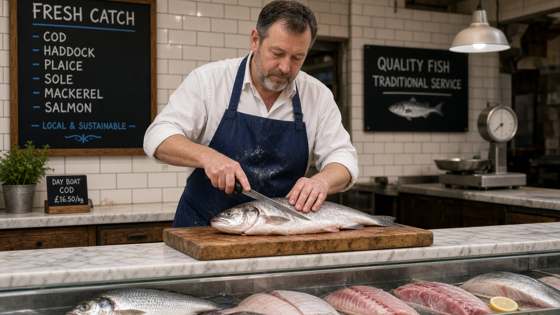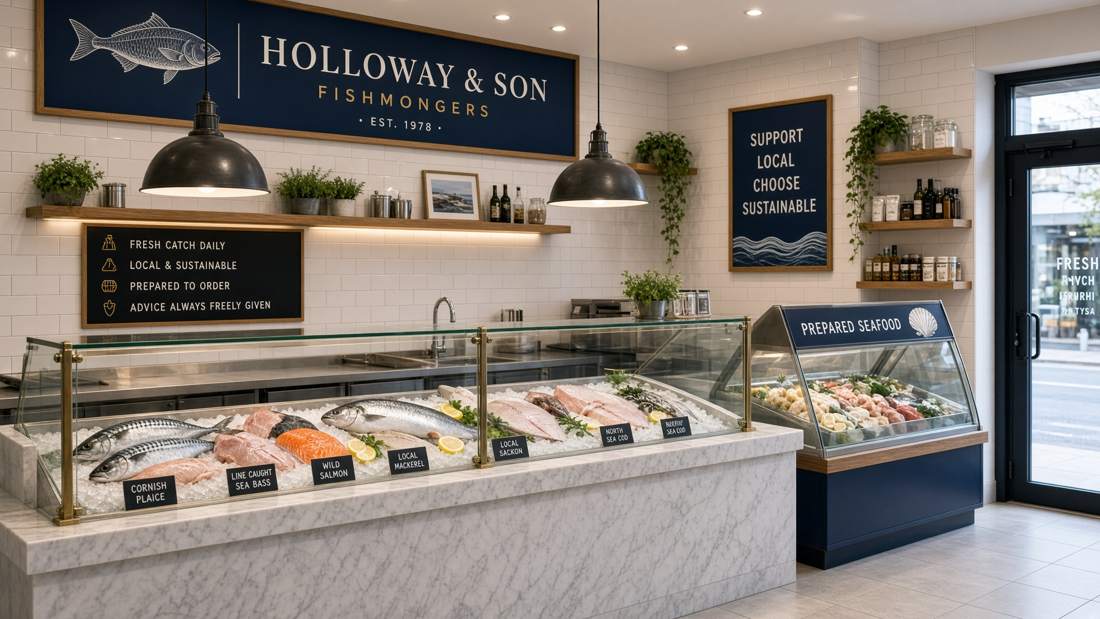
A shorter seafood supply chain means fewer stops between the boat and your kitchen, and for many independent fish shops that is a real advantage, though it is not a guarantee of freshness. What matters is how many days the fish spent getting to you and how well it was kept cold along the way, and both are things you can ask about.
What a typical seafood supply chain looks like
Seafood travels through many different routes, so there is no single "normal" path. A fish might be landed at a dock, sold to a dealer, trucked to a processor, shipped to a distributor and delivered to a store. Another might go from a small boat to a nearby shop in a day. Imported seafood and products that are frozen at sea follow longer routes by design, and freezing quickly can preserve quality well. The NOAA FishWatch pages explain how U.S. fisheries are monitored and managed, which is useful background for understanding where domestic seafood comes from.
Why a shorter seafood supply chain can help
Every handoff is a chance for fish to warm up, wait on a dock or sit in a warehouse. A shorter seafood supply chain reduces those chances. Independent shops often buy from a handful of local boats, a nearby dealer or a regional wholesaler, and some can tell you the day the fish came off the boat.
Where a shorter seafood supply chain saves time
The savings usually come from skipping long-haul distribution. If a shop buys from a dock a short drive away and picks up in the morning, the fish can reach the case the same day it was landed. If it buys through a distributor that serves a whole region, the trip may take longer even though the shop is independent. Being small does not by itself shorten the route.
Where it does not help
A short route does not fix poor handling. Fish left in warm water on the boat or stored without enough ice loses quality fast. And some of the best fish you can buy is frozen soon after catch and shipped far away, so "local" and "fresh" are not the same question.
Questions that reveal the real route
- When did this arrive, and how did it get here?
- Do you buy from boats, a dealer or a distributor?
- Was this previously frozen? (Fresh fish sold as previously frozen is normal and should still smell fresh and mild.)
- Where was it caught or farmed, and what is the fishing method?
A shop that answers quickly and specifically is usually one that pays attention to its sourcing. A vague answer is not proof of a problem, but it is a reason to rely more on your own checks, such as the signs in the FDA's guide to selecting seafood: a fresh and mild smell, firm flesh and fish displayed on a thick bed of ice.
How to use this when you shop
Treat the supply chain as one input among several. Use the answers to decide what to buy today. If the best-looking item arrived this morning, plan to cook it tonight. If the shop tells you something came in two days ago, ask whether it is better frozen at home or cooked right away. The logistics behind small-volume shops are covered in the logistics behind local seafood, and the question of how to compare counters directly is in the freshness test. For a view of how this plays out with boat-direct sales, see buying direct from the boat.
In short, a shorter seafood supply chain is worth looking for because it can put fish on your plate sooner and let you ask someone who knows the answers. Check the arrival day, trust your nose and eyes and remember that good frozen seafood is a sensible choice when fresh is not available.