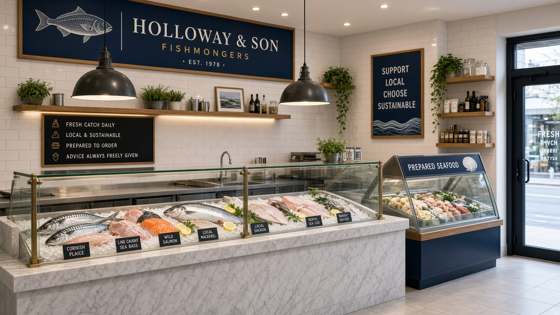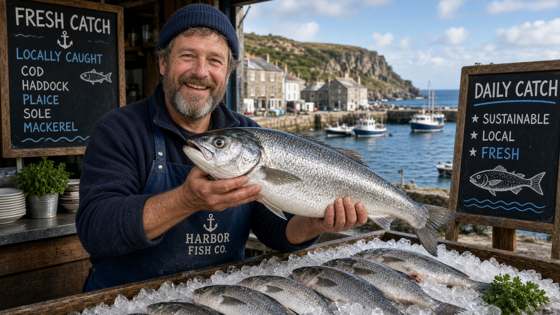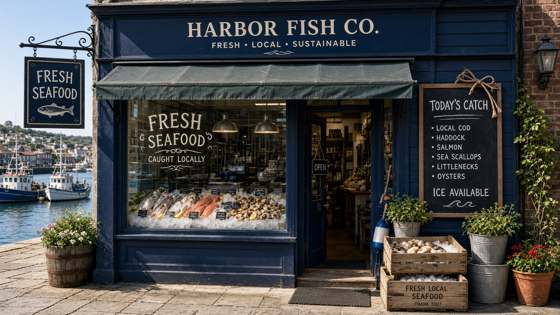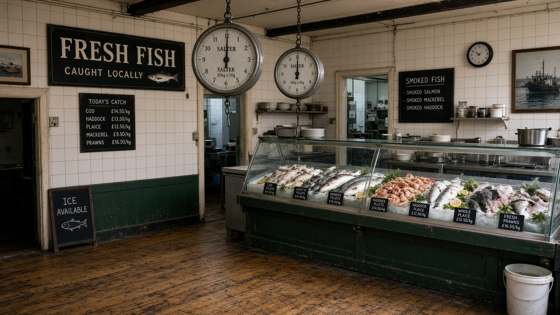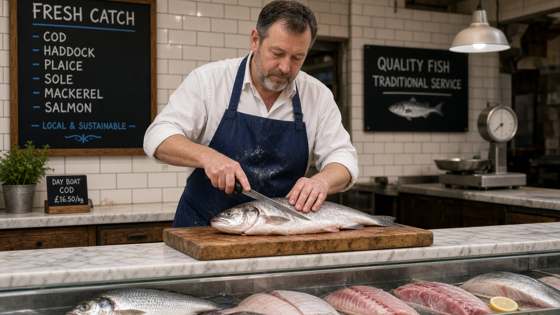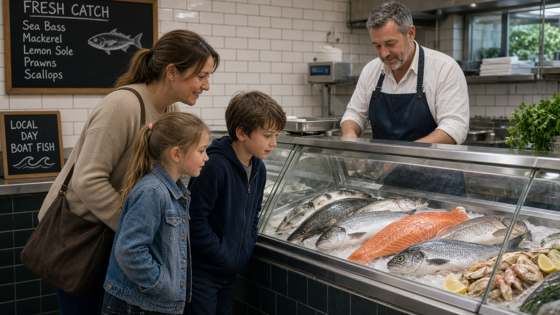
A good seafood label tells you more than the species and the price: it names where the fish was caught or raised, how it was caught and sometimes the boat or farm behind it. Some local shops go further and write the story on a chalkboard or counter card, which makes it easier to ask good questions and to remember what you liked.
What a seafood label should include
- Species name, ideally the specific type and not just "snapper" or "white fish."
- Wild or farmed.
- Origin, such as the state, region or country.
- Method, such as hook and line, trawl or trap.
- Fresh or previously frozen.
USDA oversees country-of-origin labeling for fish and shellfish at covered retailers, and its COOL overview explains what is required. Rules vary by type of seller, so check current rules if you need specifics.
Seafood label details that go beyond the basics
The boat or the harvester on a seafood label
Some shops and programs name the vessel or the fisherman. A published account of a community supported fishery in Port Orford, Oregon describes labels that introduce customers to the captain and boat; see Planet Forward for background on the program. That level of detail is not standard, but it shows what is possible.
The date
A landing or catch date is more useful than a vague "fresh today." Ask for it if the label does not say.
Handling notes
Some shops mark fish as "dayboat," "frozen at sea" or "previously frozen." These terms are not all standardized, so ask what the shop means by them.
Questions a label should prompt
Treat each line on a card as an invitation to ask something. If it says "wild," ask where. If it says "local," ask what the shop counts as local, since the word has no single legal meaning for seafood. If it names a boat, ask how often the shop buys from it. If it says "fresh," ask the landing date. These follow-ups take a few seconds and usually draw out more detail than the label alone. Shops that already write the details down tend to enjoy the conversation, because the information is something they are proud of.
How to read a seafood label critically
A story on a card is a good start, not proof. Compare it against what you can check: smell, appearance and texture, as described in the FDA's seafood buying guide. Ask follow-up questions. If the answers match the label and stay the same from week to week, that builds confidence. Remember that terms like "natural," "premium" or "ocean fresh" do not tell you anything specific.
What to do with the information
- Write down or photograph the label for fish you enjoy.
- Look up the species on FishWatch to learn more.
- Ask for the same boat or area next time, if available.
- Share what you learned with friends. Shops often attract customers by word of mouth.
For more on what sellers can tell you, see seafood traceability and the questions to ask your fishmonger.
The story behind the seafood label is useful because it turns an anonymous fillet into a product you can ask about. Look for labels that name the species, place and method, and favor shops that are happy to say more.