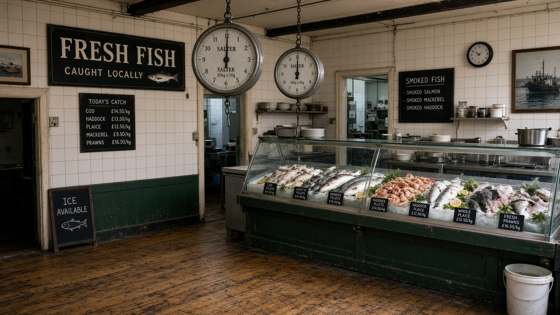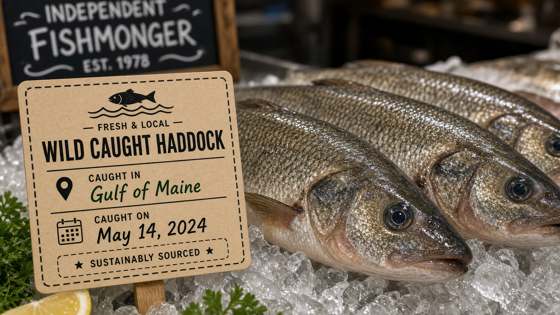
The freshness test works the same at any fish counter, whether it belongs to an independent shop or a large chain: look, smell, touch if allowed and ask. Some counters will pass and some will not, and you cannot tell which from the sign out front. This guide gives a checklist you can use anywhere, based on U.S. government advice.
The freshness test for the counter itself
Freshness test step one: how is it displayed?
The FDA says to buy fish that is refrigerated or displayed on a thick bed of fresh ice, preferably in a case or under a cover. Melted ice and fish sitting in water are warning signs.
What does the area smell like?
Fresh fish should smell fresh and mild, not fishy, sour or ammonia-like, according to the FDA's guide to selecting seafood. A strong smell in the whole shop is worth noticing.
Are raw and cooked foods kept apart?
The FDA advises that unpackaged cooked seafood be in its own case or separated from raw seafood by dividers.
The freshness test for the fish
- Whole fish: clear, shiny eyes, red gills with no odor and firm flesh.
- Fillets: firm flesh, red blood lines (or red flesh on tuna), and flesh that springs back when pressed. No discoloration, darkening or drying around the edges.
- Shrimp, scallops and lobster: clear, pearl-like flesh with little or no odor.
- Live clams, oysters and mussels: they should close when tapped, and cracked or broken shells should be rejected.
- Live crabs and lobsters: some leg movement.
Color alone is not a reliable sign, because diet, packaging and treatments can affect it. Fish sold as previously frozen may not look as bright, but should still smell fresh and mild.
The freshness test by asking
- When did this arrive?
- Was it ever frozen?
- Can I smell it or see it whole?
The tone matters. A shop that welcomes the questions is more likely to be one that handles fish carefully; see the questions to ask your fishmonger. Independent shops are not automatically better than chains, and some chain counters are excellent. The only fair comparison is what is in front of you today, which is the point of the freshness test. For how small shops source fish, see the shorter supply chain.
After you buy
Put seafood on ice or in the refrigerator soon after buying. The FDA says to use fresh seafood within 2 days if stored at 40 F or below, and otherwise freeze it. Cook it to 145 F, or until it is opaque and flakes with a fork. NOAA's FishWatch offers species details when you are unsure what to do with a new fish.
Score the counter
Give each point for display, smell, appearance and answers. Four out of four is a counter worth returning to. Two or fewer means shop elsewhere or buy frozen.
Run the freshness test at every counter you try, and you will quickly learn which ones earn your business. It takes a minute and protects both your money and your dinner.