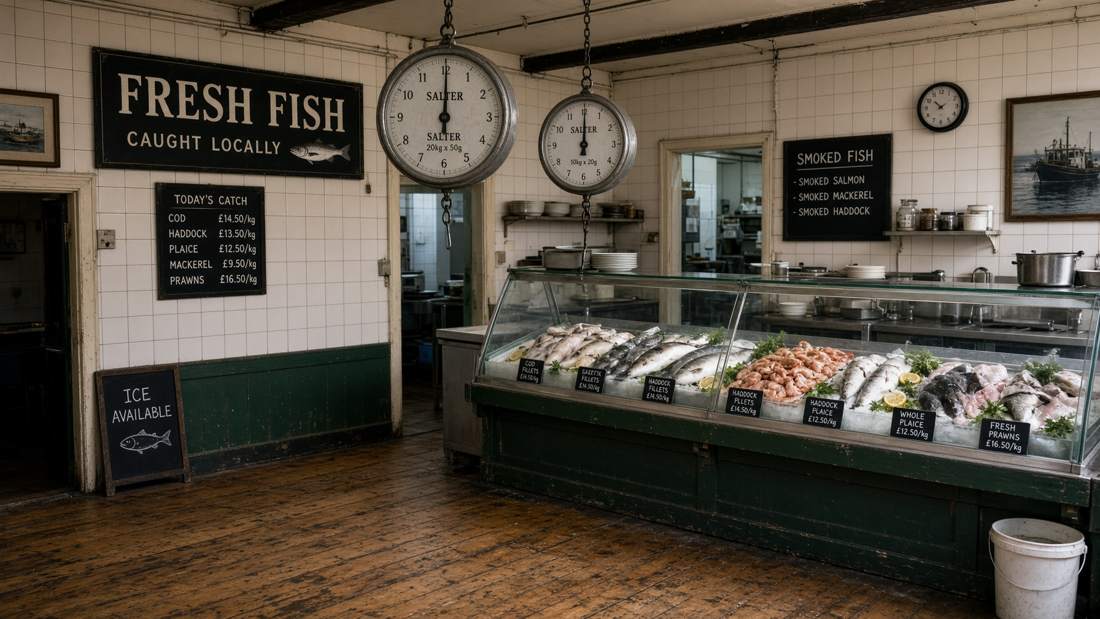
Seafood traceability is the ability to follow a product back from your plate to the boat or farm it came from, and it matters because many species look alike in the case and the names on menus and labels can be confusing. Small local sellers can sometimes answer these questions in more detail, because they know their suppliers. That advantage depends on the seller, not on size, so ask and see.
What seafood traceability can tell you
At minimum, you can expect to learn the species, whether it is wild-caught or farm-raised and the country of origin. U.S. country-of-origin labeling for fish and shellfish is overseen by USDA, and the agency explains who is covered in its country of origin labeling overview. Check current rules, because requirements can vary by type of retailer and product.
Beyond the legal basics, some sellers can tell you the boat, the port, the fishing method or the day of landing. Programs such as community supported fisheries often highlight those details, as in the Port Orford story, where a published account describes labels that introduce customers to the fishermen.
Questions that test seafood traceability
Seafood traceability starts with: where and how was this caught?
"Gulf" or "North Atlantic" is a start. A named port or a gear type is better. If the seller does not know, ask whether they can find out.
Wild or farmed?
A seller should be able to answer this in a sentence. Wild and farmed fish are both widely available, and the answer helps you check ratings from sources such as Seafood Watch.
Was it frozen or imported?
Previously frozen and imported seafood can be good products. Honest answers are what matter.
Why a short chain makes seafood traceability easier
When fish moves from a boat to a nearby shop, fewer parties handle it and fewer records are involved. The more steps in a chain, the more chances for information to get lost. That is the theory behind the shorter supply chain, though a shop that buys through a large distributor may not know more than a big store does.
A simple routine for any counter
Pick three questions you care about, for example species, wild or farmed and where it was landed, and ask them every time. Write the answers in your phone if you like. Over a few visits you will see which sellers give the same clear answers each week and which change their story. Consistency is the most practical test an ordinary shopper has, because you cannot audit a supply chain yourself. It also helps to take a photo of any label or card the shop displays, so you can compare it with what the seller says later.
Limits and cautions
- No shopper can personally verify a seller's claims. Look for consistency across visits.
- Species mislabeling is a known problem in the industry. Buying whole fish, asking specific questions and choosing sellers you trust all help.
- Labels on shellfish matter. Tags on sacks of live shellfish and labels on shucked product carry certification information, as the FDA's shopping guide explains.
Shops that give detailed answers usually say so on a chalkboard or card, which is the kind of transparency covered in the story behind the label.
Seafood traceability is not a certificate you can see, but a conversation you can have. Ask the same few questions at every shop, compare the answers and give your business to the sellers who can tell you who caught your fish and how it reached the counter.