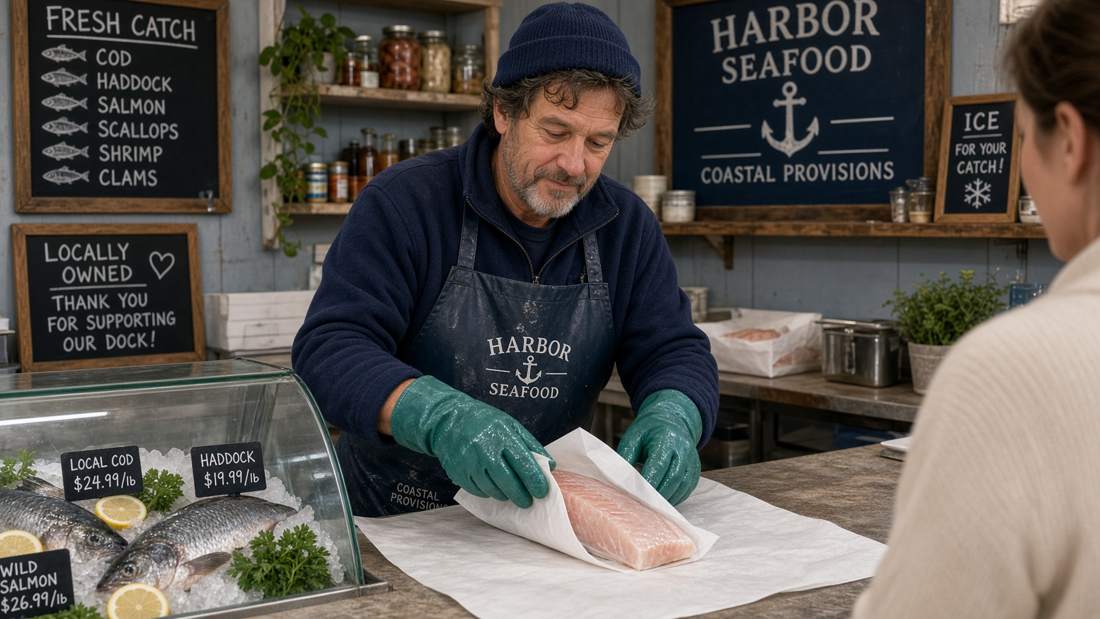
Local fishmongers run a hard business: they buy a perishable product in unpredictable amounts, sell it in small volumes and compete with large retailers that can spread their costs across thousands of stores. Understanding those pressures will make you a better customer and help you decide whether a particular shop deserves your loyalty.
The main pressures on local fishmongers
Perishable stock is a key challenge for local fishmongers
Fresh fish has a short shelf life. A fishmonger has to guess how much will sell, and what does not sell may be lost. That risk is built into the price.
Unpredictable supply
Weather, seasons and fishing rules decide what is available, as covered in small shops and seasonal catch. A shop cannot control what lands at the dock.
Operating costs
Refrigeration, ice, rent, labor and licenses are fixed costs that do not shrink when sales are slow. A smaller shop has fewer sales to spread them over.
Skilled labor
Cutting and handling fish well takes training, and good staff are hard to find and keep.
Competition and convenience
Many people buy seafood during a supermarket trip. A separate stop at a fish shop takes more effort.
Why local fishmongers still matter
For consumers, local fishmongers offer access to knowledgeable advice, fish cut to order and, in many cases, direct relationships with boats. For coastal communities, shops help keep docks and processing infrastructure in use. The role is discussed in the local seafood shop's role in coastal economies. NOAA's sustainable seafood overview notes that U.S. fisheries support jobs and resilient working waterfronts.
What this means for the price you pay
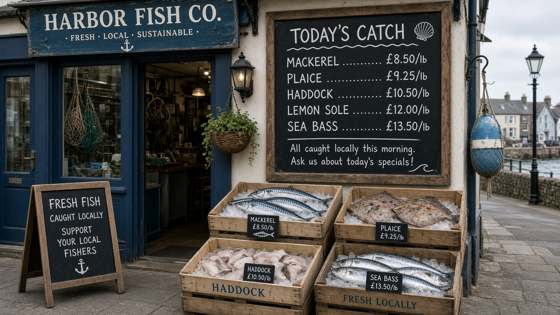
Perishability, small volume and skilled labor all add cost, which is part of why independent shops can charge more than a large chain. It also explains why a shop might run a special on fish that is about to peak in freshness: selling it at a modest discount beats losing it. Ask whether there is a day-old or end-of-day option for fish you plan to cook that evening, and whether the shop will cut a smaller portion so you pay only for what you need. Understanding the logic behind prices makes it easier to tell a fair price from an inflated one, and to see where flexibility exists.
How shoppers can help local fishmongers
- Buy regularly, even small amounts. Consistent customers help a shop plan.
- Order ahead for events and holidays, so the shop can buy the right amount.
- Try the specials. Fish that is abundant often costs less, and buying it reduces waste.
- Ask questions politely and tell the shop when something is good.
- Do not use the shop only for advice. If you rely on a fishmonger's knowledge, buy something from them.
What to expect in return
Supporting a shop does not mean accepting poor quality. Check each purchase against the FDA's guidance for buying seafood and speak up if something is off. A good shop will want to know. The give and take is part of building a relationship with your fishmonger.
Local fishmongers face real challenges, and many do not last. If you have one nearby that sells good fish and treats you well, using it regularly is the most practical thing you can do to keep it open.