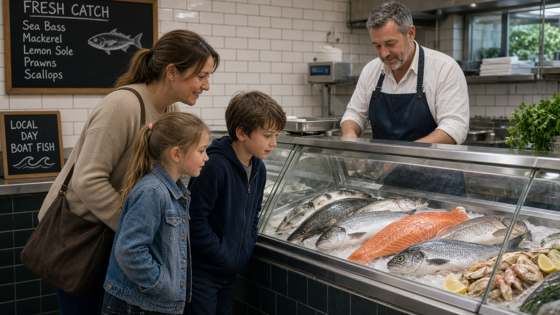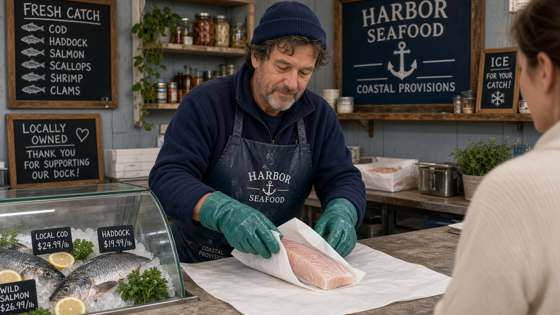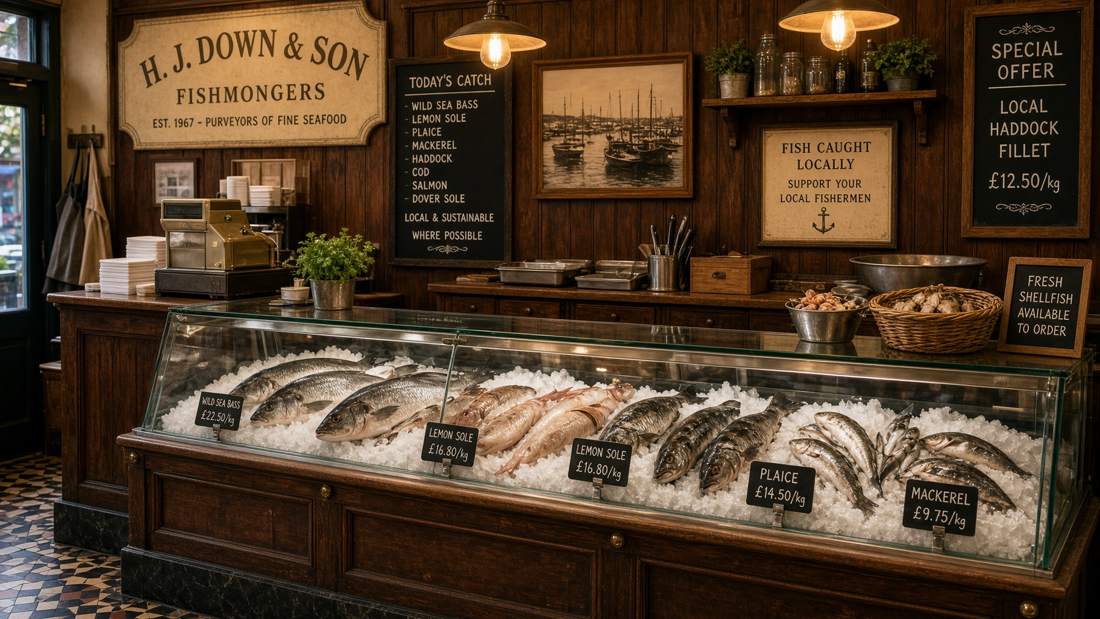
The local seafood shop sits at the end of a chain of coastal businesses, and its role in coastal economies is to turn a boat's catch into a product people can buy nearby. By buying from local boats, supplying restaurants and employing staff, a shop supports other businesses around it, from ice suppliers and fuel docks to mechanics.
How fisheries shape coastal economies
NOAA's sustainable seafood overview reports that in 2024 U.S. commercial fishermen landed 7.7 billion pounds of edible and industrial fishery products valued at $4.9 billion, and that commercial and recreational fisheries generated $321 billion in sales and supported 1.7 million jobs. Those are national figures that include recreational fishing and the downstream businesses, so they do not describe any one town, but they show that seafood is a significant part of many coastal economies.
The shop's role in coastal economies, step by step
Buying from boats and dealers in coastal economies
A shop that buys locally gives boats a nearby market. That can matter to small vessels that do not have access to large buyers.
Preparing and selling
Cutting, smoking, shucking and packaging create jobs, and shops often sell to nearby restaurants too.
Anchoring the working waterfront
Docks, ice plants and processing space need steady use to stay in business. Local demand helps. A 2026 report from OPB describes how the Port of Port Orford, Oregon is planning waterfront improvements, including a seawater system for live seafood, to make the port more useful to fishermen and buyers. It is one example of how infrastructure and sales connect.
What a shop does not do
A shop is one link, not the whole system. It cannot fix a poor fishing season, set fishing rules or guarantee that every dollar stays in town. Some shops buy mostly from distant suppliers, in which case their local role is more about jobs and service than about supporting nearby boats. That is why it is worth asking where a shop's seafood comes from, rather than assuming that any independent shop supports local fishermen. The answer tells you what your money is actually supporting.
What this means for you as a shopper
- Your choice of where to buy affects whether local sellers stay in business.
- Access to local seafood depends on docks and shops remaining open.
- Knowledge about local species and seasons is held by people who work in the trade.
Ways to support coastal economies through your seafood purchases
- Ask where it was landed, and favor nearby sources when quality and price are comparable.
- Buy in season; see small shops and seasonal catch.
- Join a CSF if one is available; how community supported fisheries work explains the model.
- Try species you have not tried; the shop can sell more of what is abundant.
The money side is covered in the community multiplier, and the pressures on small shops in the challenges facing local fishmongers.
Keep quality in focus
Supporting a local business does not require lowering your standards. Use the checks in the FDA's seafood buying guide, and give your business to shops that deliver.
The local seafood shop's role in coastal economies is practical: it connects boats, docks and kitchens. Knowing that makes every purchase a small decision about which parts of that chain keep working.