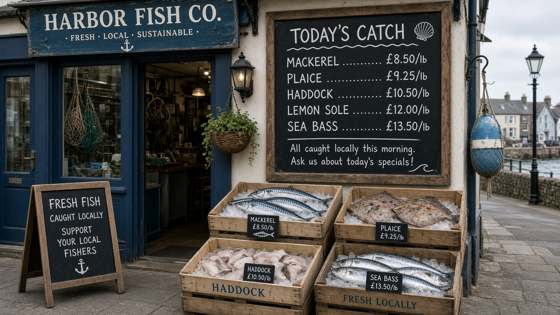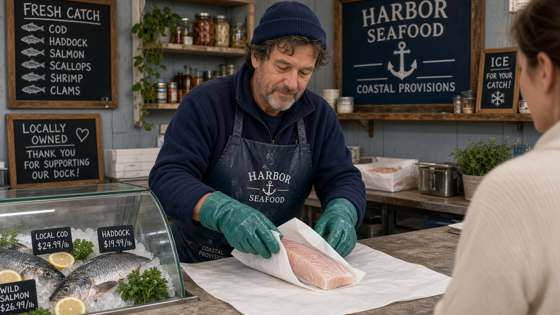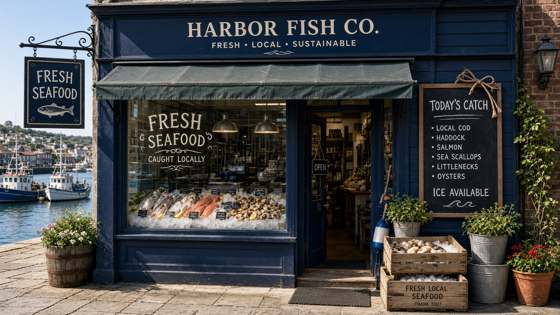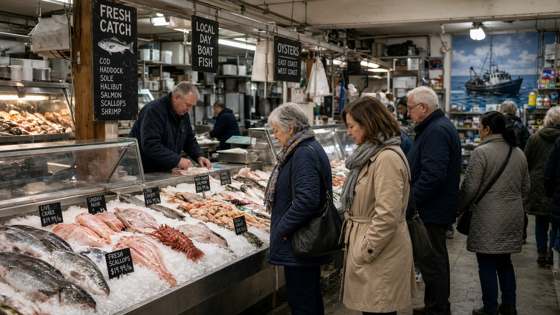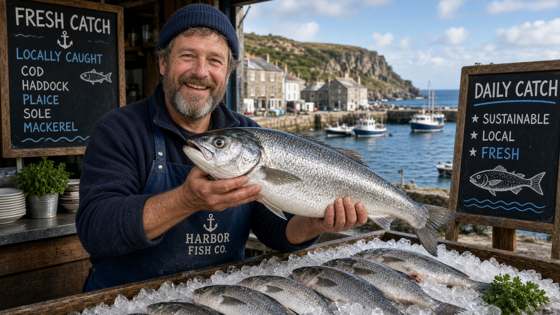
The seasonal catch is the reason a small fish shop's case looks different from one week to the next. Fish move, spawn and feed on a calendar, boats cannot go out in bad weather, and many fisheries run only for set seasons or until a quota is reached. A shop buying from nearby boats passes that unpredictability on to you.
What drives the seasonal catch
Biology and migration shape the seasonal catch
Many species travel or gather at particular times of year, and boats follow them. NOAA's FishWatch species profiles describe where and when many U.S. species are harvested.
Weather and sea conditions
A week of storms can empty a dock. Small boats stay in port when conditions are poor, so a shop that sold fresh halibut on Tuesday may have none on Friday.
Rules and quotas
Fisheries are managed with seasons, size limits and catch limits to keep populations healthy, as NOAA explains in its overview of U.S. fisheries management. Those rules can open or close a fishery quickly.
How to shop the seasonal catch
- Ask what is best this week. Let the shop lead. They know what just arrived.
- Have a flexible plan. Pick the method first, such as roast, pan-sear or chowder, and choose the fish at the counter.
- Learn substitutes. If the fish you wanted is out, ask for a similar texture and flavor.
- Freeze extras. When something good is plentiful, buy more and freeze it promptly. The FDA recommends wrapping seafood tightly in plastic, foil or moisture-proof paper before freezing.
- Call ahead. For a special meal, ask the shop whether it can order the item you want.
What the seasonal catch means for price
In general, plentiful fish costs less and scarce fish costs more, although many other factors affect the price. A seasonal catch that is at its peak is often a good value, and out-of-season fish may be frozen or imported. Both can be fine. Just ask which it is.
Example: a flexible week of dinners
Say you plan three fish dinners. Go in with methods instead of species: one roasted whole or thick-cut fish, one quick pan-seared fillet and one pot of chowder or stew. At the counter, ask which fish suits each. Roast what is thickest and freshest first, pan-sear the delicate fillet that day, and use the leftover trim or firmer fish in the chowder. You end up with variety, less waste and a menu that follows the water instead of fighting it. If the shop has nothing in a category, take the best available and adapt.
Seasonal shopping tools
For a general sense of when species are typically available in your area, look for state fisheries or sea grant resources and check Seafood Watch for recommendations. Your local shop is the best live source, so ask what is running now and what is about to start or end. A fuller walk through the year is in the month-by-month guide, and the same variability explains why a CSF box is different every time. If you are curious about the weekly surprises themselves, how shops handle unusual catch is a good next read.
The seasonal catch is a feature, not a flaw: it means the fish in front of you is what the water is actually producing right now. Approach the counter with an open mind, and you will eat more variety and often at better prices.