In-house filleting means the shop cuts fish on the premises, often while you wait, rather than buying fillets already trimmed and packed somewhere else. For you, the main benefits are that you can see the whole fish before it is cut, you choose the portion size and you often get the bones and trim for stock. It does not automatically make fish fresher, but it gives you more information to judge freshness.
What in-house filleting tells you about freshness
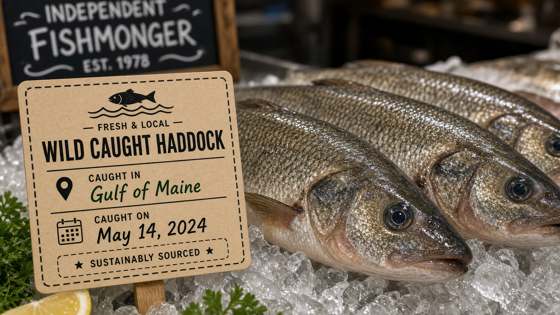
A whole fish shows its condition in ways a fillet cannot. The FDA's guidance on selecting fresh seafood says whole fish should have clear, shiny eyes, red gills with no odor and firm flesh, and that fresh fillets should have firm flesh with no discoloration, darkening or drying at the edges. When a shop starts with whole fish, you can check the eyes and gills first and then watch the fillet come off.
Where to look before in-house filleting begins
- Eyes: clear and shiny, not sunken or cloudy.
- Gills: red, not brown or slimy.
- Smell: fresh and mild.
- Flesh: firm and springs back when pressed.
Why cut-to-order helps
Cut surfaces dry out and pick up odors, so a fillet cut a few minutes ago is usually in better condition than one that has sat in a case all day. That said, plenty of good fish arrives as fillets from reputable processors, so use your own checks either way.
Getting more from in-house filleting
Ask for exactly what you need
A shop that cuts to order can portion fillets to your recipe, remove the skin or leave it on for crisp searing, and pull pin bones. Tell the person at the counter how many you are serving and how you will cook the fish.
Take the frames and heads
Bones, heads and trimmings make fish stock, and many shops hand them over at no charge or for very little. Ask for them when you buy, and keep them cold. They are best used within a day or frozen.
Compare the price honestly
A whole fish costs less per pound than fillets, but you do not eat the head, bones and guts. Ask for the fillet weight to compare fairly, and see why small fish markets often cost more for how costs differ.
What to do when you get home
Keep fish cold and use it quickly. The FDA advises refrigerating fresh seafood at 40 F or below and using it within 2 days, or freezing it. Cook to an internal temperature of 145 F, or until the flesh turns opaque and flakes easily. Wash your hands and any boards and knives after handling raw fish. For help with doneness by species, NOAA's FishWatch profiles describe the flavor and texture of many fish.
When filleting is not available
Not every shop has skilled staff or time to fillet on request, and a very busy counter may offer only pre-cut options. If you are unsure, ask about the questions that reveal quality and sourcing to see how the shop handles its fish. Knowing who cuts it is part of the same trust that leads regulars to stay with one shop.
The real in-house filleting advantage is that you can watch a whole fish become dinner, ask questions while it happens and take home exactly what you need. Even if you only use it for a special meal, it is an easy way to learn what good fish looks like.