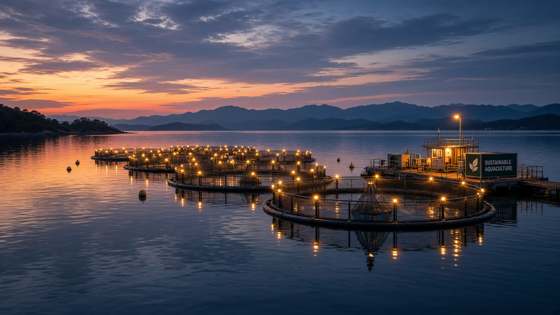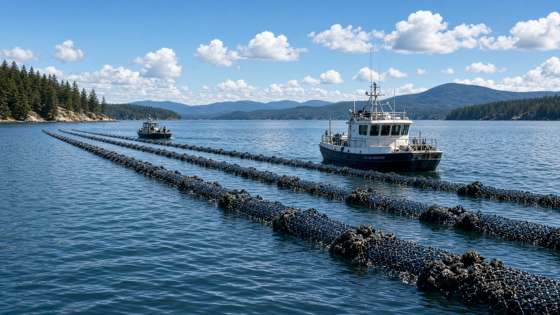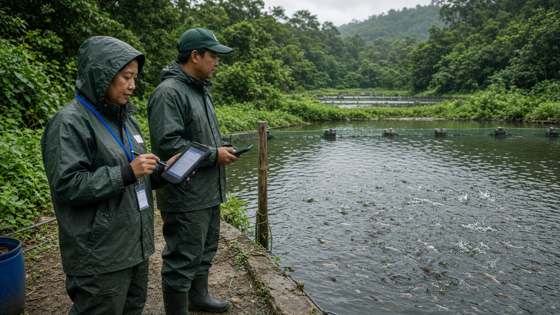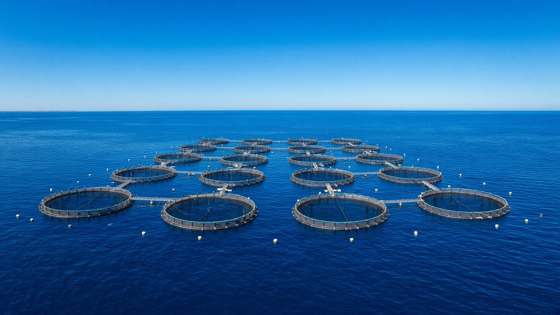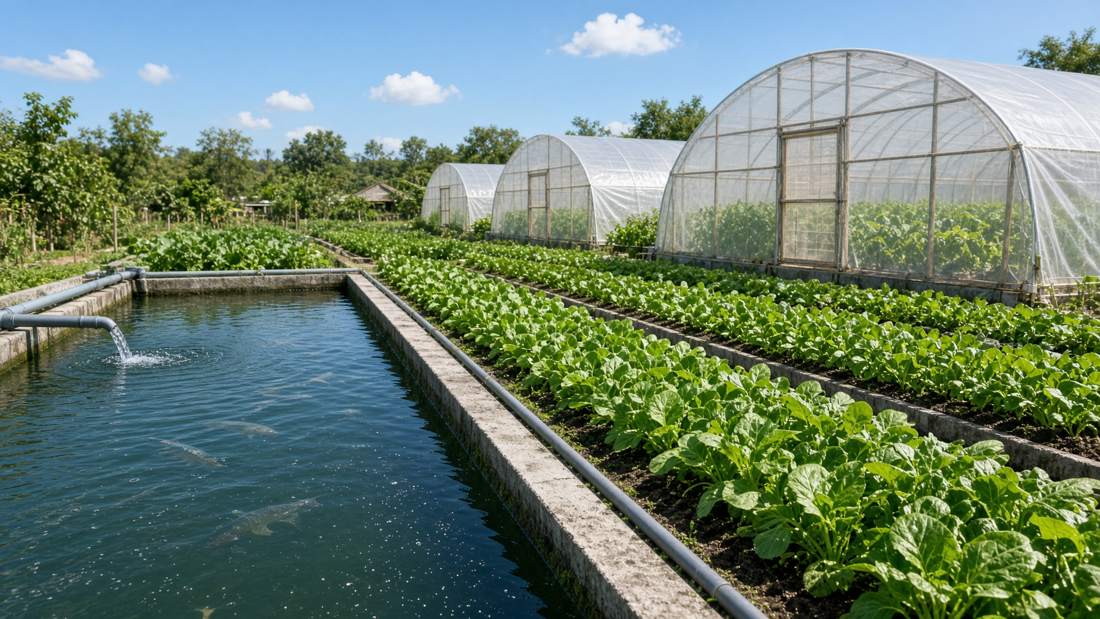
Net pen farming is how most of the farmed Atlantic salmon in your grocery store was raised: young fish are grown in large floating enclosures anchored in coastal waters, where seawater flows through the nets. It keeps prices reasonable and supply steady, but it also draws real criticism. Knowing both sides helps you decide when to buy it and what to look for.
What a net pen farm is
A net pen is a cage of netting hung from a floating frame. Fish are fed by hand or automated feeders, and the open design means water exchange is natural and free. Farms are usually placed in sheltered bays, fjords or coastal sites with good current. Salmon are commonly started in freshwater hatcheries and moved to the sea pens to grow to market size. Other species such as trout, barramundi and some marine fish are also raised this way.
The pros of net pen farming
- Lower cost. The ocean does the water filtering, so these farms avoid the high energy bills of tank systems. That is a major reason salmon is affordable.
- Steady supply. You can buy fresh salmon all year, not just in a wild fishing season.
- Consistent quality. Controlled feeding gives a rich, fatty, predictable fillet.
- Easy to trace. Farms can record each pen and harvest, which supports labeling and recalls.
The cons you should know
Net pen farming and escapes
Storms or damaged nets can let farmed fish escape. Escaped salmon may compete with or breed with wild fish, which is a concern where wild populations are threatened. Our article on escapes and genetic pollution concerns goes deeper.
Sea lice and disease
Crowded fish can pick up parasites such as sea lice, and disease can pass between farmed and wild fish in shared waters. Farms manage this with monitoring, treatments and fallowing, which means leaving a site empty between production cycles. How well that works varies from farm to farm.
Waste and feed
Uneaten feed and fish waste enter open water, so site selection and farm size matter. Feed is another factor: salmon diets have traditionally included fishmeal and fish oil from wild fish, though the industry has been shifting toward more plant-based and alternative ingredients. See alternative proteins in aquafeed.
Taste and handling tips from the counter
Net-pen salmon is rich, with a high fat content that keeps it moist when cooked. That makes it forgiving for baking, roasting and pan-searing. Look for flesh that is bright, moist and springs back when pressed, with no gaps in the muscle and a clean, mild smell. Fillets from the same farm can still vary in fat content by season and diet, so a quick look at the marbling lines tells you something: wider white lines mean more fat and a richer bite. For storage and thawing advice, see thawing seafood safely.
How to buy better net pen farming products
- Check Seafood Watch. Seafood Watch rates farmed salmon by region and production method, and ratings can differ widely.
- Look for the ASC label. The Aquaculture Stewardship Council certifies farms against standards that cover things like escapes, lice and feed sourcing.
- Check the origin. The country of origin is required on retail packaging in the US, and rules and practices differ by country.
- Ask questions. Is it certified, and where was it raised? A good fishmonger will know.
If open ocean pens are not for you, land-raised fish from recirculating systems are an alternative, though they usually cost more.
The bottom line
Net pen farming is a trade-off between affordability and environmental risk, and the best products are the ones with transparent sourcing and third-party certification. If you enjoy salmon often, choosing certified or well-rated options is the simplest way to weigh the pros and cons of net pen farming in your favor.